
Introducing the latest myCWT product and service enhancements
Building on our digital, omnichannel myCWT platform, our new products and services will simplify travel management for you and your employees – anytime, anywhere, anyhow.
Note: Featured services may not be available in your country at this time. Please reach out to your CWT representative for more details.
Hear from Chief Product Officer, Erica Antony as she shares the key product highlights of 2024, along with the key areas driving innovation.
-

2040: Baseline, Boom or Bust
As we enter an era of rapid transformation and unprecedented challenges, it is essential for travel managers, meeting & event planners, and corporate decision-makers to look ahead and frame our current strategic thinking with a clear vision of the future. Business travel and meetings and events (M&E) are poised for significant change over the next decade and a half, driven by a complex interplay of sustainability goals, technological advancements, evolving work models, and geopolitical dynamics.
In this paper to mark the 10th anniversary of our Global Business Travel Forecast, we explore, for the first time, a long-term vision of the future and potential trajectories through three distinct scenarios, each offering insights into how these forces should affect policy-making, budgeting and priorities. By examining these scenarios, we can better understand the diverse possibilities that lie ahead and the strategic imperatives required to thrive in each potential future.
Based on trajectory data analysis and interviews with industry leaders, behaviorists and climate tech founders, this forward-looking approach enables us to anticipate changes, strengthen our strategies, and make informed decisions that align long-term objectives. It is through this lens of foresight and adaptability that we can build resilience, seize opportunities, and navigate the complexities of the future.
We invite you to reflect on the insights presented, and consider how your organization can prepare for the opportunities and challenges that lie ahead. Together we can ensure that travel and meetings remain catalysts for growth, scalability and sustainable practices.
- Scenario development is both an art and a science
- Megatrends Shaping the Future of Business Travel, Meetings and Events
- Sustainability goals the new crux of corporate policy
- Technology Revolutionizes Travel Management
- Modern work models spark new travel patterns
- Changing demographics open doors to new opportunities
- Three Scenarios: Base case, boom and bust
- Future-proofing strategies

-
CWT GBTA Global business travel forecast 2025
When it comes to pricing, global business travel has finally reached an enduring, higher baseline. Prices will continue to rise in 2025, but only moderately, so expect a period of normalized growth.
However, this pricing environment, one of marginal gains and price regularity, is fragile. Global leisure travel has now realized a lot of its pent-up demand, while corporate travel has been resurgent, with 2024 edging at preCovid levels.
There are many factors at play, whether its volatile oil prices, labor costs and constraints, inflationary pressures, and geopolitical factors. As this elevated baseline edges upwards, albeit marginally, travel budgets will come under increased scrutiny, especially as travel patterns and attitudes change.
It’s why business travel can’t be viewed in a silo, and the true value to an organization must be fully realized. This forecast can help with those calculations.
-

Capitalize on emerging technologies in corporate travel
Technological advancements are accelerating at an unprecedented pace. How will emerging innovations like Generative AI, blockchain, and self-sovereign identity (SSI) transform corporate travel?
BTN and CWT probed global CEOs, travel managers, industry consultants and tech experts on the promises, questions, and expectations these innovations raise and how they are set to reshape traveler experience, cost control and service delivery in corporate travel and events.
Download and discover
- The technologies that will have the greatest impact on corporate travel in the next 2-5 years
- How these emerging technologies are poised to control costs, enhance service and security, and boost efficiency
- The critical challenges, opportunities, risks and roadblocks each innovation raises
- What travel managers, buyers and experts anticipate from these innovations
-

The Road Ahead: 5 evolutions in ground transportation to watch for in 2023
After years of being unable to travel as frequently and easily as before the pandemic, the expectations of travelers — especially business travelers — have changed.
We caught up with Don Moore, Senior VP, Business Rental Sales and Global Corporate Accounts at Enterprise Holdings to understand the changes afoot in the world of car hire and business travel:
From a 30,000-foot view, the norms and realities of business travel are constantly evolving. Today, corporate travel managers are opting for longer rentals and optimizing trips by planning several stops along their journey. Travelers are wholeheartedly embracing “bleisure travel,” blurring the lines between personal and professional activities. For short trips, many individuals are opting to drive instead of dealing with potential flight delays.
To meet the new business traveler — in all their unique needs and preferences — travel industry partners like Enterprise must welcome the changing definition of business travel and evolve their offerings to make travel easier and more convenient for customers through a full spectrum of mobility services.
New areas of mobility. As we celebrate our 65th anniversary we are prioritizing opportunities that build on and maximize our core business while also exploring ways to expand our expertise in new areas of mobility, putting time, energy and investments into our existing mobility portfolio (Truck Rental, Car Sales, Commute and CarShare) and in new areas such as connected car, electrification infrastructure and charging, mobility as a solution and fleet logistics.
With travel on the upswing and the workforce undergoing a significant transformation, we are working harder than ever to provide a satisfying customer and employee experience, all while continuing to advance equity, flexibility and sustainability across the business.
There are 5 key lessons that companies are embracing as they meet the new expectations of those hitting the road and skies:
- Convenience and personalization are key. Travelers are looking for optimization at every step of the journey, from the initial greeting at the counter to the final check-out or vehicle return. To ensure that every part of the process remains simple and frictionless, companies such as Enterprise are automating routine tasks like confirming fuel levels and mileage through connected vehicle technology.
- Technology is king. The pandemic increased expectations for a seamless digital experience, and new technology is a powerful tool in serving customers at the pace they desire. As new tech makes waves across the industry, many travel leaders are taking a “test and learn” approach to the user experience—and most importantly, prioritizing customer feedback before integrating these tools into their daily operations. Enterprise is taking a digital-first approach to deliver the convenience, personalization, control, confidence and transparency that customers want and expect from a car rental experience.
- An eye on cost. It’s important travel managers take a holistic look at all ground transportation options and any emerging trends. For example, rideshare costs have gone up in many markets and travelers might consider rental options to keep costs down. Or less experienced travelers might need education on rideshare costs as well as mileage reimbursement versus car rental options to take into consideration how these might influence costs.
- Loyalty programs are powerful incentive. Satisfied customers are three times more likely to return to their business travel provider, and flexible loyalty perks can keep them coming back for more. Enterprise is a pioneer in developing and executing industry-leading, global loyalty programs designed to reward customers and grow brand affinity.
- Building strong partnerships. Proactive communication and building relationships are critical to helping travel managers navigate their business moving forward. And, strong partnerships are especially important amidst such a dynamic environment.
Moving forward, it’s important that companies level set on what the current state of travel looks like for their organizations. While many people want to compare the industry to pre-pandemic levels, travel managers should be focused on what the future state will look like and how they need to tailor their programs to meet the needs of their travelers.
In this ever-changing environment is also important to take into consideration if travel reimbursement and policy adjustments need to be changed in order to help travelers get the best options when traveling. These adjustments can influence traveler satisfaction.
As the trends of tech and travel come and go, one thing is clear: Business travelers expect more from the industry. With 65 years under its belt as a trusted mobility leader, Enterprise understands that providing an unmatched customer experience is more important than ever. By embracing the lessons of the pandemic and evolving with the next generation of travelers, Enterprise believes the industry can emerge stronger on the other side.

Don Moore, Senior VP, Business Rental Sales and Global Corporate Accounts at Enterprise Holdings - Convenience and personalization are key. Travelers are looking for optimization at every step of the journey, from the initial greeting at the counter to the final check-out or vehicle return. To ensure that every part of the process remains simple and frictionless, companies such as Enterprise are automating routine tasks like confirming fuel levels and mileage through connected vehicle technology.
-

CWT extends Wenrix partnership to deepen clients’ airfare savings
CWT, the Business-to-Business-for-Employees (B2B4E) travel management platform, has signed a multi-year partnership with Wenrix, the leading automated, AI-powered, airfare price tracking platform, to power CWT’s best price ‘airfare optimization solution’. Integrated into all of CWT’s booking channels including online, offline, and mobile, Wenrix’s predictive analytics accurately calculates when air ticket prices will change across all GDSs and then automatically rebooks existing flight reservations at a cheaper fare (when the fare difference between the original and new ticket is greater than any change or cancellation fees), where available, passing along savings to the customer.
To deliver improved savings and complement its 24/7 travel counselor service, CWT’s airfare optimization solution includes innovative AI price search capabilities, along with a fully integrated and automated end-to-end rebooking process. Combining the experience and expertise of CWT’s people with Wenrix’s technology, this partnership delivers a market leading price optimization solution, higher airfare savings, and a seamless traveler experience.
“We are always looking to team-up with companies that have innovative and market-leading solutions, and that can help us bring additional value to our customers,” said John Pelant, CWT’s EVP Chief Technology Officer. “Wenrix’s innovative AI and data-science -led forecasting around fare probabilities delivers accurate and insightful price intelligence. With the sharp increase that we’re seeing in average ticket prices for flights, this multi-year partnership with Wenrix will help our clients secure the best possible fares and stretch their travel budgets further.”
CWT has offered pre-ticketing airfare optimization services using Wenrix’s platform since 2020 to its NORAM, and more recently EMEA customers. Following a successful pilot of Wenrix’s post-ticketing optimization tracking platform across 2021, CWT is rolling-out the service this month across all of its wholly-owned markets worldwide, which will allow the entire airfare ticketing lifecycle to be optimized starting from search, through to booking, ticketing, departure and beyond.
CWT is a leading global partner in business travel, meetings, and events. Operating across six continents, we deliver sustainable, tailored solutions that help organizations connect, engage, and thrive in an evolving world. Our myCWT platform integrates advanced technology with human expertise to simplify travel and enhance traveler and attendee experiences. Extensive global coverage, seamless data integration, AI-driven analytics, and carbon-conscious travel tools enable businesses to optimize their travel and meetings programs while delivering measurable value.
With 150 years of industry experience and a deep commitment to partnership, CWT collaborates with clients to shape the future of business travel and events, making them more efficient, responsible, and impactful.
-
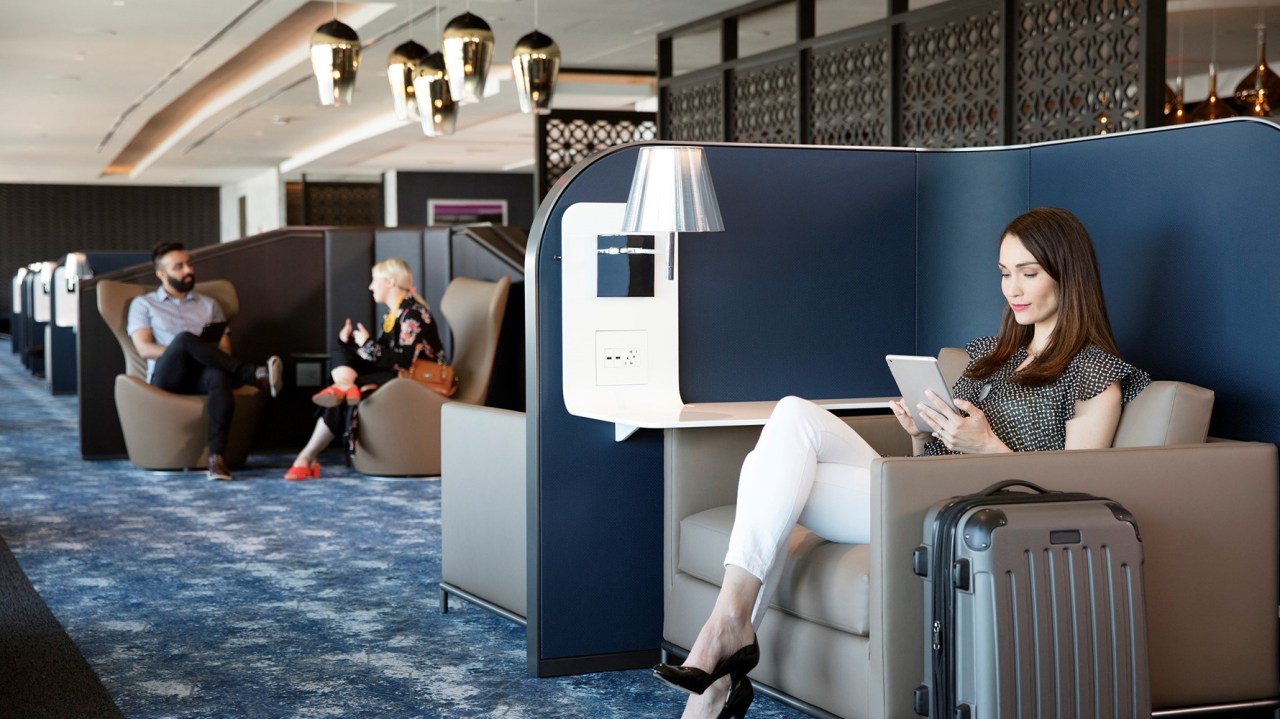
3 air travel trends to watch for in 2023
As the travel rebound continues at pace, changes are afoot affecting how we work and travel for business.
From making history as the first airline to fly a commercial passenger flight using 100% drop-in sustainable aviation fuel (SAF) in 2021 (CWT was the first travel management platform to join Eco-Skies Alliance) to investments in electric flying taxis, United Airlines is at the forefront of evolution and innovation in air travel.
We caught up with Bob Schumacher, Director UK, Ireland, Israel & Off-line Sales at United Airlines to ask him about some of the key trends to watch as we enter a new year.
“Alternative” airports will increase in popularity
10 years ago, the notion of being able to fly from airports other than the world’s main city hubs and experience equal or even superior convenience and service would have been almost unthinkable, but now expectations are fast evolving.
In the next 20 years, passenger demand for air travel is projected to double.
The International Air Transport Association (IATA) expects 7.8 billion passengers to travel in 2036, a near doubling of the 4 billion air travellers expected to fly this year. “Already, the nation’s primary airports are clogged with traffic,” says Schumacher. “Now that the traffic is back, airports want to ensure they are offering a passenger experience that’s too good to forget.”
In the New York City area for example, Newark Airport’s Terminal A is the latest in a series of multi-billion dollar upgrades to the city’s 3 main airports, JFK, LaGuardia, and Newark.
United Airlines plans to move into an initial 12 gates in Terminal A, eventually expanding its footprint to 15 gates, or nearly half of the 33 gates in the new 2.7 billion USD facility.
United’s New York/Newark hub is the airline’s largest transatlantic gateway, with service added to 5 new European destinations in summer 2022.
During Summer 2023, United will operate nearly 450 daily flights to 155 destinations in 46 countries from New York/Newark.
“JFK was originally seen as the New York gateway, but Newark and LaGuardia are today ever more prominent in the landscape of New York and just as well connected.
In 2020, JFK had 8.3 million passengers passing through and Newark had 7.9. They were within a hair’s breadth of one another. New York/Newark is across the bridge in New Jersey but its proximity to Penn Station in the centre of Manhattan is better than the other 2 airports. You can jump on a train and be downtown in 30 minutes. The traveller looks for convenience. The less hassle factor, the better,” says Schumacher.
With passenger demand expected to double and travelers looking for alternative and convenient routes, we’re likely to see more demand for alternative airports in other major world cities.
Greener air travel will remain a top priority
“The travel sector accounts for roughly 8% of global carbon emissions. A lot is happening to reduce these emissions: more sustainable aircraft are being introduced, and sustainable aviation fuels, carbon capture and green certification are being developed,” says Schumacher.
The airline announced a 15 million USD investment in Eve Air Mobility and a conditional purchase agreement for 200 four-seat electric aircraft plus 200 options, expecting the first deliveries as early as 2026.
In addition to electric aircraft, it’s looking at carbon sequestration and storage and investing in hydrogen commercial flight opportunities.
United joins a host of airlines focused on making air travel more sustainable.
“These embryonic initiatives all take seed investment. As one of the largest global carriers we have an important role to play. Over half of the world’s sustainable aviation fuel is consumed by United. We continue to invest in those facilities.”
Travel will become a lighter-touch experience
Are the days of fumbling around your pockets in a harried rush finally over? IATA’s 2021 global passenger survey found that a whopping 73% of passengers are willing to share their biometric data to improve airport processes (up from 46% in 2019).
“During the pandemic, we all learned that the fewer touchpoints we have in our lives, the better. We learned that there are parts of the travel process that simply do not need a human interface,” says Schumacher. “The traveller just wants to get on with it, get through the airport process, and to be in control. People are looking for a one-stop shop and a seamless experience with as few interfaces as possible. Coming through Heathrow, I was diverted through a lane where you leave everything in your bag. Technology is removing the hassle factor.”
-
Paramount Global expands global partnership with CWT
CWT, the Business-to-Business-for-Employees (B2B4E) travel management platform, today announces that Paramount Global (Paramount), the multinational media and entertainment conglomerate that includes the Paramount Pictures, Paramount Media Networks and CBS business units, has awarded CWT the management of its global travel program. This is an extension of the 13-year partnership between Paramount’s filmed entertainment and media network divisions, spanning 39 markets.
CWT’s 24/7 dedicated entertainment travel hub, comprises of specialist teams, delivering services for organizations and their travelers that span TV, film production, news, sports, publicity and corporate teams. Paramount’s travel needs and expectations are as diverse and evolving as the audiences they serve. Their decision to expand their longstanding partnership with CWT is due to a rich combination of specialist media, entertainment & sports industry expertise and the ability to globally deliver technology solutions, service excellence and flexible business models. CWT is also able to offer tailored payment and ticketing solutions specific to Paramount’s evolving business needs.
“We are thrilled to be awarded the opportunity to manage Paramount’s expanded travel business, after a competitive RFP process. We continue to invest in technology and innovation and deliver on our promise to help our customers, such as Paramount, and their travelers, to connect and truly succeed,” said Raphael Pasdeloup, Managing Director, Enterprise Customers at CWT.
CWT is a leading global partner in business travel, meetings, and events. Operating across six continents, we deliver sustainable, tailored solutions that help organizations connect, engage, and thrive in an evolving world. Our myCWT platform integrates advanced technology with human expertise to simplify travel and enhance traveler and attendee experiences. Extensive global coverage, seamless data integration, AI-driven analytics, and carbon-conscious travel tools enable businesses to optimize their travel and meetings programs while delivering measurable value.
With 150 years of industry experience and a deep commitment to partnership, CWT collaborates with clients to shape the future of business travel and events, making them more efficient, responsible, and impactful.
-

The Road to Net Zero: Changing travel patterns to decarbonize business travel
The recently concluded COP27 summit in Egypt once again brought into focus the urgency of making travel—which accounts for an estimated 11% of global greenhouse gas emissions—more sustainable. A report published by the UK-based Travel Foundation described current strategies that rely solely on carbon offsetting, technological efficiencies, and biofuels are “woefully inadequate”, warning that such measures alone would fail to achieve net-zero emissions by 2050.
Changes to purchase behaviors and travel patterns will be key to accomplishing decarbonization. This entails giving travelers relevant information, like the carbon footprint of a flight or hotel stay, at the point of booking. It also means reducing the environmental impact of certain types of trips that generate the most carbon emissions. For example, the Travel Foundation’s research suggests that long-distance trips are “by far, the most polluting”, and need to be capped at 2019 levels. According to the study, these comprised 2% of all trips and 19% of total travel emissions in 2019 – but at the current growth rate, they will account for 4% of trips and 41% of travel emissions by 2050.
One way to limit the proliferation of long-haul trips is for travelers to consider “trip-batching”, which entails visiting multiple destinations in a single trip. Interestingly, this trend appears to have gained momentum during the pandemic. Complicated and expensive covid testing and quarantine requirements prompted travelers to visit multiple cities in one go to make the trip worth the cost and hassle.
CWT’s booking data shows that in 2019, there was an almost even split between simple, point-to-point trips and itineraries with multiple stops – but, in 2021, more than two-thirds of business trips (68%) were multi-destination. While the proportion of multi-city trips has dropped to 56% in 2022 as travel restrictions have been lifted, it still remains above pre-pandemic levels.
“With sustainability becoming a bigger priority, there’s a good chance we’ll continue to see more multi-destination trips than we did pre-pandemic,” says Nick Vournakis, CWT’s Chief Customer Officer. “The idea of carbon budgets, similar to spend budgets, is gaining traction. It’s very conceivable that the more progressive corporates who are really leaning into this will have clear carbon budgets by 2024. So, a traveler based in New York who is planning meetings in London, Paris, and Amsterdam, and now has to be very judicious with their carbon emissions, may look to combine those meetings into a single trip and do some of that travel by train or car, instead of flying back and forth.”
The booking data also reveals a decline in one-day trips. Globally, one-day trips have recovered slightly less than three-quarters relative to all domestic trips, following the pandemic. This trend has been more pronounced in the United States and Europe, where same-day returns have only recovered by around half to two-thirds as much as all domestic and continental trips.
As Akshay Kapoor, CWT’s Head of Sales for Asia Pacific, explains: “These trips were seen as a way to reduce travel budgets as you could save on the hotel cost. But the growing emphasis on sustainability and employee wellbeing has resulted in some of these being replaced by online meetings, with travelers taking fewer and longer trips instead.”
On the flipside, new categories of business trips are emerging. “The shift towards flexible working, for example, is leading some companies to organize regular internal meetings and retreats to boost collaboration and ensure face time for their increasingly dispersed teams,” adds Kapoor.
Even so, does achieving our collective net zero ambitions necessitate less globetrotting altogether?
“Without a doubt,” says Vournakis. “Measures such as choosing airlines that use more sustainable aviation fuel or booking greener hotels will help reduce the carbon footprint of business travel to a certain extent—and these are definitely a step in the right direction. But, at the end of the day, if you want to make real progress towards carbon neutrality, you will have to travel less and take fewer business trips. In this new paradigm, an important part of CWT’s role is to help our customers understand the value of different business trips so they can make informed decisions.”
Image credits: Adobe Stock
-

COP27 may be over but our responsibility continues
COP27, a key event in the environmental calendar, drew to a close at the end of last week. It brought together global leaders, climate groups, and activists to create a collective and collaborative response to the climate crisis.
Whilst the conference closed with mixed reviews, it does offer us the chance to reflect on where we are and where we need to go. The challenges that face us are here and now. Gone are the days where discussions focus only on future impacts and generations. Around the world we’re seeing more extreme and unpredictable weather, an uptick in average temperatures and a change in the Earth’s natural rhythms and cycles (to name just a few impacts).
Referring to a landmark decision to operationalize a loss and damage fund while speaking more broadly about next steps, UN Secretary-General António Guterres said that more needs to be done to drastically reduce emissions, “The world still needs a giant leap on climate ambition.”
“The red line we must not cross is the line that takes our planet over the 1.5-degree temperature limit,” he continued. At CWT, we recognize the importance of COP27 in responding to the urgency of the climate crisis, as well as the role we can play in the transition to a low carbon world. Businesses play a crucial part in reducing emissions worldwide and ultimately, without the cooperation of the corporate world, global goals will not be met.
We want to take this post-COP opportunity to reiterate our public commitment to Science-Based Targets (SBTs); a commitment we made public in 2021. Setting robust targets for our operations is a vital lever in getting CWT to Net Zero and keeping our emissions aligned with the 1.5-degree global warming scenario, which is where we need to be.
We’re currently working towards developing those targets and having them validated by the UN Science-Based Targets initiative; giving us a firm foundation through which to activate our carbon reduction plan across all parts of the business.
Going beyond our operations, we can make our impact go further and are a key player in supporting our clients in their efforts to reduce their own carbon emissions.
In our role as a travel management and events platform, we connect people around the world. We have a responsibility to drive change among our clients – empowering them to make positive choices at every stage of their journey.
We surveyed our customers a few months ago and two in every three said sustainability goals have become more important since the pandemic. One of the top priorities for many companies today is to have carbon emission data and other sustainability information available at the time of booking to help their travelers make more informed choices. In March this year we partnered with Thrust Carbon to add point-of-booking carbon emission indicators in the mobile and web channels of our myCWT platform.
At the same time, companies want robust sustainability analytics and reporting to better understand how much travel contributes to their overall carbon footprint, identify the actions they can take to improve, and track progress towards their sustainability targets. CWT has offered sustainability analytics for over a decade, and we continue to innovate in this space. For example, we help deliver goal tracking and predictive analytics modeling to our clients around their travel volumes and carbon footprint. And in July this year, we enhanced our CO2 reporting capabilities with new Carbon Emission Summary dashboards.
“One of the things that we encourage customers to think about,” Richard Johnson, CWT’s Senior Director Solutions Group recently told BTN TV is sustainability in terms of how it needs to be balanced to ensure the long-term fitness for purpose of your program. It’s the environmental piece (the climate), and it needs to have a positive impact on traveling employees and meet financial objectives. If you can achieve those three things, that’s what makes a program truly sustainable.”
Of course, to succeed, sustainability initiatives must occur at a macro company level as well micro or personal level.
Here are some tips on how to travel with sustainability at front of mind:
- Opt for public transport wherever possible.
- If flying can’t be avoided, select a direct journey where you can – takeoffs and landings are the most fuel intensive part of a flight.
- Select accommodation near to your event to cut down on travel between venues.
- Use digital hotel confirmations, tickets, and itineraries.
- Research the sustainability credentials of your airline or hotel.
-

3 of the most thought-provoking stories in travel and events journalism
“Journalism,” said British journalist Rebecca West in the 1940s, “is the ability to meet the challenge of filling the space.” She could never have imagined how many people would eventually fill the media space and how vast it would become, expanding from printing press to cat videos and photos of people’s sandwiches.
We humans battle a daily onslaught of dopamine-inducing reels, posts and tweets that when consistently consumed, rewire our brains. A recent study published by the World Psychiatric Association found that the impact of social media on our brains most closely resembles “age-related cognitive decline.”
Yikes.
While the democratization of media is usually a force for good it also makes it harder to sort the wheat from the chaff. For every 1000 fake news articles or influencer posts is a well-researched original story angle brought to life by probing interview questions and shrewd analysis.
Great journalism – from mainstream to trade, via feature article or podcast – is a most noble pursuit if only by virtue of being a rarity.
Earlier this week in the crypt of London’s St. Paul’s Cathedral, travel and meetings & events journalists and editors from around the world gathered at a sprawling refectory table overlooked by Lord Nelson’s tomb for the 19th Business Travel Journalism Awards 2022.
Seeing the camaraderie of journos and editors meeting in person after a two-year pandemic hiatus left me thinking about some of the hallmarks of great journalism in the winning entries.
Creating optimism
Europe’s most exciting new train journeys by The Independent’s Simon Calder, Features journalist of the year (ground transportation) begins, “On a train you thread your way through a patchwork of landscape, across rivers great and small, past nameless towns and magnificent cities, gliding past cathedrals and castles, over the hills and far away in the company of like-minded travellers…”
Writers are uniquely placed to shape the future and a problem isn’t solved from the mindset that created it. Headlines can paint a picture of a world predicated on imminent apocalypse and, while truth-telling is critical, so too is hope.
From sleeper trains to new routes, Calder brings to life a sustainable way to travel with a dose of romance and adventure. It’s not all apocalyptic.
Shining a light
“The interest and demand for black history and cultural experiences abroad has grown following the murder of George Floyd by Minneapolis police to the resurgence of the Black Lives Matter movement that followed and the ongoing Covid-19 pandemic,” travel advisors told Best Newcomer Nicole Edenedo in her Travel Weekly piece, ‘On the Road to Discovery’.
Edenedo busts misconceptions and highlights a wealth of black history, art and culture by looking at cities like Paris, Marrakesh and Amsterdam through a new lens in this incredibly evocative and thorough article.
Questioning the new
“Analysts and advisors at Morningstar could soon be wearing virtual reality headsets instead of traveling to meetings in the future, as growing numbers of financial services companies enter the metaverse.
Another company, Accenture, ordered 60,000 Oculus Quest 2 headsets in October last year for its trainees who weren’t able to meet in person. It also created a virtual office environment called the Nth Floor.”
In his winning article that looks at the Web-3 from various angles, Skift’s Matt Parsons, Features Journalist of the Year – Meetings & Events questions: Will the Metaverse create a generation without travel needs?
Great journalism dissects the validity of a new trend or buzzword by looking at it from all angles.
-

2022 Business Travel Journalism Award (BTJAs) winners named
CWT, the Business-to-Business-for-Employees (B2B4E) travel management platform, proudly announces the winners of its 2022 Business Travel Journalism Awards (BTJAs), honoring exceptional journalists and editors from national, consumer, broadcast, and trade media worldwide. Out of hundreds of entries submitted globally, an independent BTJA judging panel unanimously selected 12 winners for their exemplary and innovative business journalism over the last year.
Following BTN’s Global editorial team win last year, this year’s ‘Editorial Team of the Year award’ was scooped by BTN’s European editorial team for consistently delving behind complex issues and news to deliver timely, informative, challenging and original articles – borne from the team’s deep industry expertise and curiosity.
Bev Fearis from The Business Travel Magazine was honored as ‘Editor of the Year’ for the second consecutive year. An ambassador for the wider industry, she continues to evolve the magazine’s breadth and appeal at pace, most notably through revamped newsletters and regular exploratory features, unpicking sustainability credentials within the industry. Nicole Edenedo from Travel Weekly was awarded ‘Best Newcomer’. Nicole’s passion for inspiring others by reporting the truth was eloquently captured in her feature on black travelers and how the impact of Black Lives Matter has intensified the demand for more local black history and cultural heritage tour offerings.
Matt Parsons won the ‘Meetings & Events’ award for his artful dissection of the value Metaverse brings to conferences, training and education for Skift. The ‘New Media’ award was won by Paul Harvey from M&IT for his visual reportage of London’s new Elizabeth Line and the imperative of this rail launch to the commercial wellbeing of London’s meetings and events industry. Jamie Biesiada won the ‘Industry Trends’ award for her rigorously researched article on the risk of unmanaged ‘bleisure’ trips post pandemic, and the value of incentive trips to attract and retain talent, for Travel Weekly.
Gillian Upton won the ‘Technology award’ for her chronological guide published in The Business Travel Magazine, looking at travel tech trends, features and innovations, and how each can practically help travel managers to deliver and keep their travelers safe. The ‘Ground transportation award’ went to The Independent’s Simon Calder for his exploration of rail innovations destined to offer more sustainable and amenable alternatives to flying for business travelers.
The ‘Destination award’ went to Hannah Brandler from Business Traveller for her article on Northern Thailand, a literary feast of well-balanced research and storytelling. Catherine Chetwynd’s Business Travel Magazine feature on the evolution of serviced apartments and the extended stay sector post pandemic scooped the ‘Accommodation award’. The ‘Air award’ went to Amon Cohen for shining a light where most airlines don’t want it shone by delving into ‘carrier-imposed surcharges’ for BTN Europe. He also won this year’s special award for ‘Best contribution to business travel journalism’ for his impeccable reporting, which he delivers with flair, intelligence and a heavy dose of wit.
“The 2022 Business Travel Journalism Awards shines a light on the exemplary standards of journalism upheld within the travel sphere,” says Julian Walker, CWT’s Head of External Market Communications and PR. “The entrants, short-listers and ultimate category winners this year have again proven the importance of the questions they ask our industry, to ensure it continues to progress and strive for excellence.”
Administered and curated by CWT, the BTJAs recognizes distinguished business travel as well as meetings and events reporting for a general audience. Now in its 19th year and open to journalists worldwide, the BTJAs saw a significant influx of entries this year, submitted from across 4 continents, with the winners selected by an expert judging panel of business travel and meetings managers, industry experts, and respected editors.
This year’s BTJA winners:
- Best Newcomer: Nicole Edenedo, Travel Weekly USA
- Editor of the Year: Bev Fearis, The Business Travel Magazine
- Editorial team of the Year: BTN Europe
- Features Journalist of the Year Accommodation: Catherine Chetwynd, The Business Travel Magazine
- Features Journalist of the Year Air: Amon Cohen, BTN Europe
- Features Journalist of the Year Destination: Hannah Brandler, Business Traveller
- Features Journalist of the Year Ground Transportation: Simon Calder, The Independent
- Features Journalist of the Year Industry Trends: Jamie Biesiada, Travel Weekly
- Features Journalist of the Year Meetings & Events: Matthew Parsons, Skift
- Features Journalist of the Year Technology: Gillian Upton, The Business Travel Magazine
- New Media: Paul Harvey, M&IT
- Special Award: Best Contribution to Business Travel Journalism: Amon Cohen, BTN Europe
CWT is a leading global partner in business travel, meetings, and events. Operating across six continents, we deliver sustainable, tailored solutions that help organizations connect, engage, and thrive in an evolving world. Our myCWT platform integrates advanced technology with human expertise to simplify travel and enhance traveler and attendee experiences. Extensive global coverage, seamless data integration, AI-driven analytics, and carbon-conscious travel tools enable businesses to optimize their travel and meetings programs while delivering measurable value.
With 150 years of industry experience and a deep commitment to partnership, CWT collaborates with clients to shape the future of business travel and events, making them more efficient, responsible, and impactful.
-

Podcast: Pricing the future of business travel with trendcaster Dr. Shawn du Bravac
It’s a rare moment when headlines aren’t awash with news of inflation, geopolitical hair-raisers, and the race to combat climate change.
If only there was a crystal ball to help companies plan their business travel and events around uncertainty.
Internationally-recognized thought leader, NY Times bestselling author, futurist, and top-rated keynote speaker Dr. Shawn DuBravac delivers pragmatic and provocative insights on the trends, technologies, and paradigms transforming the globe.
Hot on the heels of his predictions in the GBTA CWT Global Business Travel Forecast 2023 that reveals global and regional price projections and analysis for airfares, hotel rooms, and cost-per-attendee (meetings & events), DuBravac speaks to CWT Communications Chief Julian Walker about the critical issues that could influence pricing and how we travel & meet in 2023.
Find out:
- Is a global recession inevitable and what would one mean for the price of hotels, airfare, care hire, and meetings & events?
- How the macroeconomic outlook could materialize differently around the world.
- How corporates and organizations can reconcile uncertainty with budget planning.
[buzzsprout episode=’11756192′ player=’true’]
-

4 steps to optimize your hotel program for 2023
When it comes to looking at hotel spend and hotel programs from a corporate travel perspective, focusing solely on the corporate’s negotiated preferred rates and travel policy can limit travel managers’ ability to fully optimize the return on their investment. Traveler’s shopping behavior is a fundamental part of the consideration and program mix. This is because the notion that travelers book corporate preferred negotiated rates because they appear at the top of the display no longer holds true. Machine learning algorithms can now show in-policy options based on a traveler’s historic shopping behaviors which help drive higher attachment rates.
Developments such as rules-based displays, a method of segmenting and targeting hotel content to display uniformly to different audiences, may limit policy-compliant options for travelers. Use of search data vs. ‘just booked’ data can validate traveler’s shopping patterns to inform policy, while real-time rate availability and rate competitiveness data can assist with optimizing sourcing strategies.
Blending corporate negotiated rates, global distribution system (GDS) sourced content, travel management company (TMC) negotiated rates, and other non-GDS content sources, in one integrated display is the trick. This provides travelers with more choices, an efficient and effective process to book within their company’s travel policy and more opportunities to deliver savings for the Corporation.
The availability of these innovations, and in light of hotel rate rises of 18.5% this year and 8.5% next year according to the CWT GBTA Global Business Travel Forecast 2023, means travel managers should ask themselves these four critical questions, as they set their 2023 programs:
- Are you sure that your point-of-sale display is in sync with the parameters of your hotel sourcing strategy?
- Is your hotel program distributed consistently across all points of sale?
- Does your written hotel travel policy match your desired outcomes?
- Do your rate re-shopping and re-booking parameters sync with your point-of-booking parameters?
If their answer to any of these is ‘no’, they need to prepare now, to benefit from the pace of technological advances available today.
Look out for my next blog where I will tackle each of the above questions and share some tips.
-

2 ways that companies can build a rewarding customer journey online in 2023
When an industry changes, businesses need to adapt to meet the needs of their customers. In recent years, the business travel industry has gone through unprecedented levels of change as moves were made to navigate the pandemic, accommodate sustainability goals, and adjust to the current state of the global economy.
Amid these changes as we return to business travel, we’ve also noticed a big shift in the priorities of our customers. Today, travelers care more about safety, sustainability, and accessibility than ever before.
As CWT’s Global Digital Marketing Director, I seek, with my team, to understand and optimize the customer experience for travelers and travel managers whose priorities have drastically evolved from just a few years ago.
1. Lead with relevant content
My team saw the need to change how we communicated with our customers to meet these needs and more. Instead of simply trying to sell to them, we altered our mindset to focus on providing relevant content that met their wants and needs. In doing so, we found a noticeable improvement in the performance of our website. Using digital experience analytics (DXA), we were able to learn what content was resonating the most and tweaked it further to get as much out of it as possible.
The next step was to be more empathetic to our customer base. In today’s climate, nerves are high and it’s easy to understand why. Trust in online purchases isn’t as high, and we’re noticing an increased desire to speak to a person directly. With this knowledge, the challenge becomes how can we help people at every stage in the journey and provide answers to their most pressing questions, with the end-goal being to make the overall experience as personalized as possible.
2. Close the loop
Our digital partner Contentsquare found that 46% of traffic in travel and hospitality was made up of returning users last year, meaning less than one in every two visitors on average was an existing customer. Many remained loyal to brands and online experiences in the travel space.
Competition to win back business and gain new customers is more intense than ever. Today’s travel buyers and travelers have more choices than ever before.
By listening to our customers and adjusting to meet their needs and not just our own, we can constantly adjust to preserve and reward their loyalty.
We use journey analysis segmented by user group to make sure that customers aren’t continuously searching to find what they’re looking for. If we notice looping behaviors, that indicates that we need to dive deeper to resolve challenges that aren’t as obvious as a broken link or code. Journey analysis has helped us boost traffic.
With digital transformation occurring at warp speed and priorities shifting, a content-driven, rewarding digital customer journey is more important than ever.
-
CWT appoints Victoria Berwick as Global Marketing Director
CWT, the Business-to-Business-for-Employees (B2B4E) travel management platform, today announces the appointment of Victoria Berwick to the newly created Vice President role of Global Marketing Director, with effect from 1 November 2022. The UK-based position carries a remit to spearhead all brand-, customer-, digital-, event- and product-marketing initiatives, and further develop innovative channels to market.
“Victoria’s immense experience across a diverse set of leading brands in travel and other industry verticals will provide a unique perspective on shaping our marketing activities going forwards,” said CWT’s Chief Growth Officer, Belinda Hindmarsh. “Partnering with our customers, suppliers and all elements of our own business, this is an exciting new development opportunity as we look to build on our recent successes and set new industry standards.”
Prior to her appointment, Victoria was Global Marketing Director with Reed & Mackay Travel Ltd., where she was globally responsible for marketing strategy, brand management, and digital marketing amongst other disciplines. She previously held senior marketing roles with professional services firms EY, Grant Thornton, PWC, and SNR Denton, other communications responsibilities at Bank of New York and CIBC Mellon, in addition to interim global marketing positions with WTT Group and YTKO Group. She is a Communications and Advertising Accredited Professional with the Institute of Communications and Advertising.
CWT is a leading global partner in business travel, meetings, and events. Operating across six continents, we deliver sustainable, tailored solutions that help organizations connect, engage, and thrive in an evolving world. Our myCWT platform integrates advanced technology with human expertise to simplify travel and enhance traveler and attendee experiences. Extensive global coverage, seamless data integration, AI-driven analytics, and carbon-conscious travel tools enable businesses to optimize their travel and meetings programs while delivering measurable value.
With 150 years of industry experience and a deep commitment to partnership, CWT collaborates with clients to shape the future of business travel and events, making them more efficient, responsible, and impactful.