
Introducing the latest myCWT product and service enhancements
Building on our digital, omnichannel myCWT platform, our new products and services will simplify travel management for you and your employees – anytime, anywhere, anyhow.
Note: Featured services may not be available in your country at this time. Please reach out to your CWT representative for more details.
Hear from Chief Product Officer, Erica Antony as she shares the key product highlights of 2024, along with the key areas driving innovation.
-

2040: Baseline, Boom or Bust
As we enter an era of rapid transformation and unprecedented challenges, it is essential for travel managers, meeting & event planners, and corporate decision-makers to look ahead and frame our current strategic thinking with a clear vision of the future. Business travel and meetings and events (M&E) are poised for significant change over the next decade and a half, driven by a complex interplay of sustainability goals, technological advancements, evolving work models, and geopolitical dynamics.
In this paper to mark the 10th anniversary of our Global Business Travel Forecast, we explore, for the first time, a long-term vision of the future and potential trajectories through three distinct scenarios, each offering insights into how these forces should affect policy-making, budgeting and priorities. By examining these scenarios, we can better understand the diverse possibilities that lie ahead and the strategic imperatives required to thrive in each potential future.
Based on trajectory data analysis and interviews with industry leaders, behaviorists and climate tech founders, this forward-looking approach enables us to anticipate changes, strengthen our strategies, and make informed decisions that align long-term objectives. It is through this lens of foresight and adaptability that we can build resilience, seize opportunities, and navigate the complexities of the future.
We invite you to reflect on the insights presented, and consider how your organization can prepare for the opportunities and challenges that lie ahead. Together we can ensure that travel and meetings remain catalysts for growth, scalability and sustainable practices.
- Scenario development is both an art and a science
- Megatrends Shaping the Future of Business Travel, Meetings and Events
- Sustainability goals the new crux of corporate policy
- Technology Revolutionizes Travel Management
- Modern work models spark new travel patterns
- Changing demographics open doors to new opportunities
- Three Scenarios: Base case, boom and bust
- Future-proofing strategies

-

CWT GBTA Global business travel forecast 2025
When it comes to pricing, global business travel has finally reached an enduring, higher baseline. Prices will continue to rise in 2025, but only moderately, so expect a period of normalized growth.
However, this pricing environment, one of marginal gains and price regularity, is fragile. Global leisure travel has now realized a lot of its pent-up demand, while corporate travel has been resurgent, with 2024 edging at preCovid levels.
There are many factors at play, whether its volatile oil prices, labor costs and constraints, inflationary pressures, and geopolitical factors. As this elevated baseline edges upwards, albeit marginally, travel budgets will come under increased scrutiny, especially as travel patterns and attitudes change.
It’s why business travel can’t be viewed in a silo, and the true value to an organization must be fully realized. This forecast can help with those calculations.
-

Capitalize on emerging technologies in corporate travel
Technological advancements are accelerating at an unprecedented pace. How will emerging innovations like Generative AI, blockchain, and self-sovereign identity (SSI) transform corporate travel?
BTN and CWT probed global CEOs, travel managers, industry consultants and tech experts on the promises, questions, and expectations these innovations raise and how they are set to reshape traveler experience, cost control and service delivery in corporate travel and events.
Download and discover
- The technologies that will have the greatest impact on corporate travel in the next 2-5 years
- How these emerging technologies are poised to control costs, enhance service and security, and boost efficiency
- The critical challenges, opportunities, risks and roadblocks each innovation raises
- What travel managers, buyers and experts anticipate from these innovations
-

A picture of health: Why we need a unified approach to Covid-safe air travel
Just as the race to invent a vaccine dominated headlines months ago, the topic du jour at the center of getting back to life’s great pleasures -including cross-border travel– is the health passport. Like most things these days, the race is on to eliminate paper and all of the associated problems and inconveniences. The concept of a health or immunity passport is a digital pass that enables a person’s test results or vaccination status to be registered and proved on our phone (or watch).
Skeptics understandably point to complexities over positive ID match, the specificity of testing, timing, and data privacy. Nonetheless, business travelers looking to return to the road long for ease, bypassing check-in counters and lines at security and border control checkpoints. These proponents see a health passport as the holy grail to resuming life as we knew it, and fast.
Major tech providers and new entrants have made headway working with some airlines, testing multiple solutions and building components of their own out of absolute necessity.
IATA introduced its Travel Pass, which contains a set of modules to help airlines and their passengers understand destination requirements, find testing locations, securely transfer results to a device, and prove they’ve met COVID-19 testing requirements. This week, Emirates became one of the first airlines to announce its partnership.
The Common Project’s Common Pass, backed by the World Economic Forum (WEF), is also being tested by multiple airlines and governments.
So far, the focus remains on proving testing results. Proof of vaccination is not yet a substitute in any travel situation yet seen.
Every week brings new developments and different players putting forth solutions, making for a lot of cooks in the kitchen. It’s understandable, and perhaps a necessary phase of evolution. However, most of us probably yearn for one ‘simple’ solution that brings us back to the good old days of moving from place to place with ease.
A unified approach is no mean feat. There are complexities at every layer around types of tests, timing requirements, and different approaches by different governments
Meanwhile, innovation calls for healthy competition and the ability and opportunity for different players to create superior customer experiences. But if that is done in a patchwork, the industry and ecosystem as a whole will suffer.
Cross-collaboration and the path forward
My belief is that we are in a somewhat necessary but risky period of hyper-competition to find the best path forward and best components of an ideal solution. The risk lies in a patchwork scenario where an individual has to follow a different process or use a different app every time they travel based on their itinerary. If the industry could agree on a common way to make proving covid test results achievable, via digital means, we can recover as a whole more quickly. The other risk we run is without these common standards, we will likely end up managing more paperwork; ripe for error, inefficiency, and potential fraud.
A set of standards around ID verification, Covid testing types and providers, proof of results, and interoperability of QR or barcodes would require collaboration and agreements across governments, service providers such as airlines, and input from tech providers. Those standards – once agreed and adopted – would need to be published and then governed so tech and service providers could map and build to the specifications. A qualification process for testing and technology providers would likely lend to the best blend of healthy competition and a better consumer experience.
Image credits: Adobe Stock
-

Here with an ear: Simple steps to guide a colleague through hard times
It was ‘Blue Monday’ a few days ago, supposedly the hardest day of the year – at least for those in the northern hemisphere – when cold, dark nights and post-holiday blues converge. But for millions still in lockdown, the days of the week can feel like they’re blending into each other.
When it comes to the personal challenges of the pandemic, no single experience is the same. Even those who consider themselves comparatively lucky in the grand scheme of things are finding their resilience tested. Whether it’s the extended isolation and loneliness of being apart from friends and family or juggling home-schooling and full-time work, it’s hard.
The human impact will be felt long after normal aspects of life resume and economies bounce back. One of the best things we can do for each other in our day-to-day to mitigate the negative impact is to lend a non-judgmental ear.
Punam Gill is CWT’s Global Strategic Programme Leader and a trained Wellness Coach. Together with a team delivering several internal initiatives aimed at building a culture of workplace wellbeing, she believes that talking is a critical first step in managing our mental wellbeing. We asked her for advice on how to support a colleague:
Just being able to talk to someone can have a positive effect on mental wellbeing and give them a break from their day-to-day challenges. Here are some simple tips to help create a safe environment to talk and offer practical help.
- Provide a safe space – Create a confidential and non-judgmental safe space to talk. Be fully present and switch off or move away from any distractions. Let them decide if they want the camera on or off, and set the pace of the conversation — do whatever helps to put them at ease.
- Stay calm – Difficult conversations can sometimes make you feel a sense of crisis too, but it’s important to stay calm and offer reassurance to help them feel calm and grounded.
- Listen – Give them time to talk, listen, and don’t interrupt. It takes trust and courage to talk about your feelings and can take a while to speak, do not rush them; let them know you’re there when they’re ready to talk.
- Respect – Be respectful of each other’s thoughts and feelings. If a colleague is struggling, do not force them into anything they are not comfortable with. Do not belittle or dismiss how they are feeling, avoid making assumptions, and honor confidentiality.
- Know your limits – Don’t try to diagnose or make decisions for them – that’s where professional assistance plays an important role. Be there to offer support when they want help.
- Practical help – Ask if there is anything practical you can help with. When someone is suffering, even the thought of looking for support can be a daunting task. If you can help them with some practical support this may take the pressure off and enable them to get help faster. Help them write down questions or issues they want to address (i.e. at work, at home, with a doctor or counselor, etc.).
- Keep in touch – Arrange to connect again to help them feel supported and less lonely. Explore different ways of connecting that work for you both, such as a phone call or a virtual tea/coffee catch up.
Image credits: Adobe Stock
- Provide a safe space – Create a confidential and non-judgmental safe space to talk. Be fully present and switch off or move away from any distractions. Let them decide if they want the camera on or off, and set the pace of the conversation — do whatever helps to put them at ease.
-

Rooms for improvement: 3 ways to approach hotel sourcing in 2021
The crystal ball of 2021 is a little cloudier than many travel buyers would have hoped at the start of the year but with the vaccine rolling out and the hard slog mostly behind us, there’s reason to anticipate a major uptick from 2020 levels, when our industry was operating at about 20% of its usual volume. Exactly when and how much demand will return will partly depend on the success of vaccine programs and traveler’s willingness to hit the road.
In the meantime, how do buyers make sure they’re ready with a safe, reliable, and efficient program to help their people get back to business?
Some industry experts have suggested taking advantage of a once-in-a-lifetime opportunity to push hotels for massive concessions. Others have advised playing it safe and taking a pass on the traditional, annual RFP process, while some recommend abandoning RFPs and static rate structures altogether, in favor of dynamic pricing. It’s no wonder buyers are baffled. Here are three ways to cut through the noise and make sure you’re ahead of the curve in 2021.
- Stay agile – The greatest degree of flexibility — both in terms of availability and pricing as the market comes back — is the only way clients, travelers and hoteliers can realize maximum benefit. Hotel procurement strategies revolving around an annual RFP exercise have a diminished place in the current landscape. A clear example of this new reality is last room availability which is proving less valuable than before as hotels experience historically low occupancies.
- Focus on what matters to travelers — Consider factors that matter to travelers as they return to business travel like location, health and safety, and traveler ratings. Building stronger relationships with these hotels and shifting a maximum number of room nights to them will provide corporate clients with the leverage to negotiate truly competitive rates.
- Sometimes less is more – Before the pandemic, many procurement departments would focus on amassing huge numbers of corporate negotiated rates and chainwide deals. More was always better because, by showing the CFO potential savings across a wide number of properties, procurement teams believed they could highlight the substantial financial benefit their efforts could deliver. One of our clients in its top market had 12 preferred hotels. Another 300 were part of chainwide deals, and these had over 50 percent market share, possibly diluting from the client’s future negotiating power with the 12 primary preferred properties. The traveler, particularly the novice, may not see the distinction, but it is critical for long-term savings. Deals can look great on paper, but corporate buyers need to pay attention to actual outcomes. Some costs are easily avoided, and additional savings may be easily extracted.
Image credits: Adobe Stock
- Stay agile – The greatest degree of flexibility — both in terms of availability and pricing as the market comes back — is the only way clients, travelers and hoteliers can realize maximum benefit. Hotel procurement strategies revolving around an annual RFP exercise have a diminished place in the current landscape. A clear example of this new reality is last room availability which is proving less valuable than before as hotels experience historically low occupancies.
-

Is the ECO approach nominated in BTN Europe’s 2021 Hotlist part of a movement to reshape travel?
The BTN Hotlist is the annual rundown of the people, products, trends, and developments shaping the business travel industry. Close to 200 nominations were received this year to determine who’s driving change, which companies or products are turning heads, and what travel trends are going to punctuate the year ahead.
We are thrilled that the ECO approach to travel management was selected amongst the top 20 people, products, and trends that will shape the industry in 2021.
CWT’s responsible travel consulting, ECO approach is designed to help companies look beyond compliance and cost management and build more balanced travel programs. Using the ECO framework – short for Employee Wellbeing, Climate Impact and Organizational Performance – CWT Solutions Group guides organizations in designing travel programs that advance their triple bottom line. With this approach, business travel becomes an avenue through which companies can simultaneously create an engaged and motivated workforce, reduce their environmental impact, and manage costs more effectively.
As business travel journalist Rob Gill says: “Travel management is only going to become more complicated but the wellbeing of employees and sustainability, alongside travel program performance, are unlikely to be shifted from the top of an organization’s list of top priorities post-Covid. CWT’s ECO framework creates a practical roadmap allowing clients to find the ‘sweet spot’ between what can be competing objectives. Responsible travel has never been more important and initiatives to help corporates navigate through this tricky process will be paramount.”
Amongst the 20 nominations selected in the Hotlist, four are directly related to sustainability in business travel, confirming that sustainability and responsible travel will truly punctuate the year and gain further traction in 2021.
Sustainability considerations will be in the spotlight in a post-covid world and measuring carbon footprint will become a standard reporting in future travel programs. As measuring true climate impact is complex, CWT Solutions Group partnered with Atmosfair, an independent non-profit organization that works to mitigate climate change. Atmosfair provides an advanced CO2 emissions calculations methodology considered as best-in-class standard for emissions accounting in business travel.
A responsible approach to travel is the only approach to travel. The world is changing, our companies are evolving, and the way we define success in business travel needs to move with the times. A transformation to a responsible approach to travel will be one of the most rewarding changes you can make to your program.
Every journey starts with a single step. Check out our 5 step approach to building a responsible travel program to take the first step in your responsible Travel journey.
-
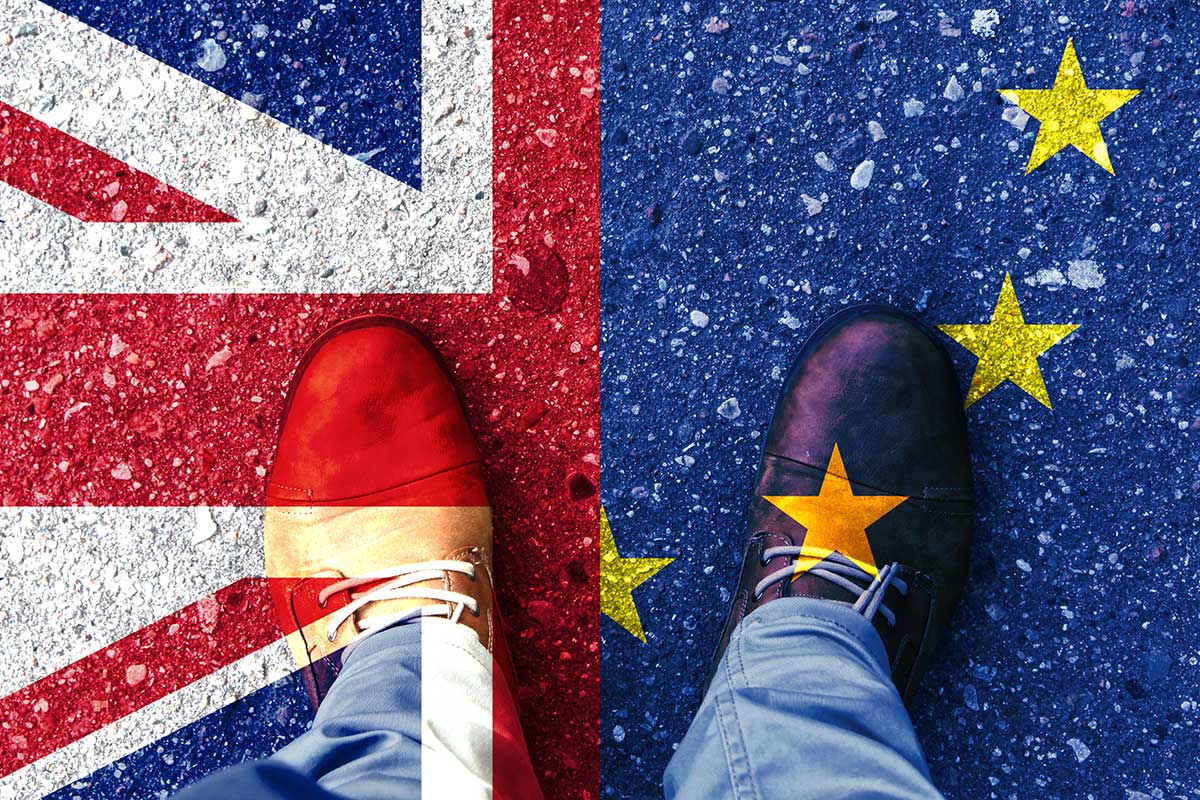
Continental adrift: What does Brexit mean for UK & EU travelers?
After several years of dominating headlines, the Brexit transition period is over. What does the deal mean for EU and UK business travelers and how do we make heads or tails of the new restrictions?
“Ignore the hype,” says CWT Client Executive Andrew Dalton, “yes, there are complexities but don’t get hung up on reading endless articles. As and when lockdowns lift, travel will resume. Companies can use this time to communicate simple instructions to their employees. Meanwhile, travelers can systematically check for requirements such as whether they have enough pages in their passport and if their passport is valid for long enough.”
We asked Andrew Dalton, Aisling Gibbons, and Eric Wynton, all within CWT’s Customer Group, to answer some common questions.
I’m a UK national. When can I travel to Europe?
Because of the new variant of Covid-19, some EU borders are currently closed to UK citizens. However, things can change fast. Check government advice regarding avoiding non-essential travel and use our CWT Travel Essentials tool to check for restrictions and requirements, specific to your travel plans.
Since each EU country has control over its own borders, exceptions might be made for travel for UK citizens when the pandemic abates.
As a UK citizen, what do I need to prepare before I travel to the EU?
- Passports – Check that your passport is less than 10 years old, has 6 months of validity, and blank pages to stamp. When traveling to Ireland, your passport just needs to be valid for the length of your stay.
- Visas – Check whether you need a work permit for certain business activities such as transferring to work at a different branch of your company. You can visit the EU visa-free for 90 days within a 180 day period for activities including business meetings. If you’re a frequent traveler, remember to record your length of stay to ensure that you don’t exceed the allowable number of days, or ask your travel management company to help record it for you.
- Insurance – Review your company travel and health insurance cover. Taking out travel insurance will help your business trip run smoothly.UK nationals can apply for a GHIC card that covers state healthcare. EHIC cards issued before the end of 2020 can still be used until their expiry date for medical care in the EU. If you’re traveling to Switzerland, Norway, Iceland, or Liechtenstein, you’ll need travel insurance with healthcare cover.
Read our blog for further information on mobile roaming and driving.
Can EU citizens travel to the UK?
Currently, EU citizens can travel to the UK without a visa. EU citizens need to fill in a passenger locator form, and must self-isolate for 10 days on arrival (or five days, if using the “Test to Release” scheme) unless they are arriving from a country on the travel corridors list.
EU citizens can spend 6 months in the UK without applying for a visa. The UK is expected to include EU citizens in its ETA visa waiver scheme by 2025.
Are there any benefits to business travel post-Brexit?
While there’s more admin, there may be some upsides. Duty-free will return, and depending on the speed of the vaccine rollout and the depreciation of the pound, the UK may become an increasingly attractive destination for EU citizens.
What can companies do to boost confidence in UK travelers planning trips to the EU and vice-versa?
Consider sending targeted messaging to your staff from now and updating your travel policy to convey clear guidance. Read more tips on preparing your people for travel between the UK and EU.
Disclaimer: Guidance reflects the current advice issued by the UK Government. CWT does not offer specific advice about travel restrictions, or policy changes, change in regulations. The information provided here is not exhaustive, may not address your individual requirements, and is for informational purposes only. The information presented should not be construed as legal advice.
Image credits: Adobe Stock
-

Podcast: Winners of the Business Travel Journalism Awards 2020 on the year that caught everyone on the fly
Winners of the Business Travel Journalism Awards 2020 talk vaccine hope, slow travel, and cutting commutes for good.
At the end of a year that completely altered business travel, meetings & events, and our working lives, who better to reflect on the past and anticipate the future than the editors and journalists at the coalface?
[buzzsprout episode=’7273141′ player=’true’]
-

2020: The year in 5 of our most popular posts
This time last year concepts like ‘social distancing’ and ‘lockdown’ were unknown to most of us. We had no idea that our daily existence – from meetings to weddings – would move almost entirely online or that 2020 would become a deeply challenging year for so many.
As vaccines begin to be administered around the world, there’s hope. Before we charge ahead into greener pastures, here’s a look back at the year that changed our lives and some of the most popular posts.
The Fabric of Business Travel: A message from Kurt Ekert
“The ultimate measure of a man is not where he stands in the moments of comfort, but where he stands at times of challenge and controversy.” – CWT’s CEO evokes Marin Luther King Jr. in a letter about the year that changed everything, and the route back to normalcy.
Lockdown Lingo: 7 words for a return to travel
From ‘coronacoaster’ (to describe the ups and downs of your mood during the pandemic) to ‘fattening the curve’ (eating too much during lockdown), 2020 wasn’t quite the ‘new normal’ but it was certainly the year for new words and phrases.
Ten top tips to tremendous telepresence
To mark the year we temporarily swapped face-to-face meetings for life through a laptop, Julian Walker, CWT’s Head of External Market Communications and PR, explains the art of presenting on screen.
Laptop of Luxury: Why we all need to play a part in closing the digital divide
In lockdowns, connections with friends, health appointments, entertainment – almost every aspect of life moves online; so those who lack access to devices and networks face deeper impacts on learning and wellbeing.
Knowing the transformative power of tech, CWT’s technology team donated over 350 devices to children in underserved communities. John Pelant, CWT’s Chief Technology Officer, explains why working to close the digital divide now will determine our future.
Keep the Change: Will business travel evolve for the better?
From prioritizing duty of care to the importance we ascribe to human connection, will there be positive legacies from 2020?
Image credits: Adobe Stock
-

A travel tree, grandma’s recipe and a neighbourhood knees-up: Our people on their end-of-year traditions
In these challenging times, out of step with ordinary life, many of us will take solace in the chance to reflect and celebrate with loved ones. But in the absence of the usual hallmarks – tales from holidays abroad, hugging older relatives, or a party with the neighbors – how do we mark the end of the year? We asked some of our staff for their 2020 take on tradition.
A travel tree
At home, we have two Christmas trees. Whenever I go to a new city or country I buy an ornament for one – It’s our ‘travels tree’. The baubles depicting something about these places aren’t always my favorite so instead, my tree includes things like keyrings of Venetian masks, a coaster from the Grand Ol Opry, and a fridge magnet from New York. Sadly, I didn’t add to it this year but we will.
– Nicola Gormley, Scotland
My 200-year-old tradition lives on, over FaceTime
My great grandparents on both sides of my family immigrated to the United States (Minnesota and Illinois) in the late 1800s, and their Norwegian holiday traditions have carried on.
On Christmas Eve my Grandma Dahle would make lefse, lutefisk, mashed potatoes, and pitchers of melted butter to drizzle over everything. She would usually make krumkake and sometimes she’d make romegrat to eat on Christmas morning. That’s our main meal but lutefisk is not my favorite (It’s like eating fish-flavored rubber covered in petroleum jelly), so there are always more items to choose from that are more American like turkey or ham.
Grandma Dahle used to make lefse for our family and sell it in her small town of Hayfield, Minnesota. About 10 years ago, she lost her vision and most of her memories. Before she moved to a nursing home, she gave me her lefse-making apron, rolling pin, griddle, and recipe so I could carry on the tradition (but I don’t sell it).
My two cousins, my mother, and I are going to make it together this year, and we’ve asked the nursing home if we can FaceTime with Grandma so she can at least hear her grandchildren carrying on her family’s tradition.
– Shannon Johnson, USA
A knees-up, two meters apart
In my neighborhood in London, there is a fantastic pub where the locals congregate on Christmas Eve. It is heart-warming to see friends and families reunite as the kids return from University or wherever they have been. Young and old regulars hug and greet each other warmly and cards and presents are swapped. Beer and mulled wine are consumed, and a bit later, shots for the brave. The landlord hands out presents for the dogs; steam cheers and carols rise up into the frosty air from the crowded beer garden. This year will not be the same, but the warmth and love will still be felt from our socially distanced seats. Waves and smiles from behind a mask will do. The small gestures matter more this year.
– Tamasine Pritchard, England
Image credits: Adobe Stock
-

Seeing stars: 6 ways to prepare your people for post-Brexit travel
1 Dec 2020 marks the end of the Brexit transition period. As we get closer to this date – the theme tune to the game show ‘Deal or No Deal’ is in the back of our minds – it’s natural to be concerned by the dizzying news emerging from negotiations in Brussels. On the plus side, 2020 has pushed us to new depths of resilience and ease at navigating uncertainty. With that in mind, no matter the outcome of negotiations, organizations can prepare their travelers for the changes that will come into effect, impacting travel in 2021 and beyond. Here’s how.
1. A single checkpoint
Supply an easy-to-use tool like CWT Travel Essentials.
Restrictions can change fast. Enable travelers to make informed decisions and understand entry requirements, any mandatory health documents and individual quarantine policies based on their nationality, dates of travel, and other criteria, in a simple format.
2. Border control
Consider using an automated targeted messaging tool to inform travelers of upcoming airport security changes and documentation requirements.
UK passport holders may no longer be able to use passport and security queues designated for EU, EEA, and Swiss citizens. They may need to show return/onward tickets. In addition, travelers may be asked for their purpose of travel and demonstrate they have adequate funds for their stay.
EU, EEA, or Swiss passport holders should continue to be able to travel to the UK for short trips and cross the UK border using a valid passport. For further guidance, visit the UK government website.
3. Passports and visas
Encourage travelers to verify the validity of their passport for the country they are visiting and renew or replace a passport if necessary.
On the day of travel, UK passports will need to have at least 6 months left and be less than 10 years old (even if it has 6 months or more left).
Company-wide communication may be helpful to inform travelers of the need to check their passport. Additionally, consider running a report to find out how many of your travelers have updated their documentation.
Passport and visa companies such as CIBT can provide further help and advice and assist with specific requirements.
UK nationals will not require a short-stay visa (Schengen visa) for most stays of up to 90 days out of any 180-day period in the Schengen area. Different rules will apply to Bulgaria, Croatia, Cyprus, and Romania. If these countries are visited, visits to other EU countries will not count towards the 90-day total. Travelers may need a visa or permit to stay longer, or for certain business travel activities. UK citizens can check for further guidance.
In the longer term, UK nationals will likely be included in the European Travel Information and Authorisation System (ETIAS), similar to the US ESTA. ETIAS will require an electronic travel authority to be issued by the EU prior to a person’s arrival into the Schengen Zone. Each ETIAS granted will be valid for three years, and will cost €7, with applications completed online. ETIAS will likely be launched in 2022. For further information, visit ETIAS Guidance for UK Citizens.
EU, EEA, and Swiss citizens should continue to be able to travel to the UK for short trips without a visa. Travelers will be able to cross the UK border using a valid passport. For longer stays, a residence permit or visa may be required.
4. Driving licenses & motor Insurance
Review your current travel policy guidance for driving abroad and any additional documentation that may be required to support travelers.
Following the transition period, drivers may require an International Driving Permit (IDP) depending on their destination and length of stay, along with their valid UK license. UK- registered vehicles within the EU will need to carry a ‘Green Card’ from the motor insurer, their V5C logbook, insurance certificate, and display a GB sticker. If renting a hire car, travelers are advised to check with the car hire company.
Check the government website for further information about driving in the EU. IDP’s will cost £5.50 and can be obtained through the Post Office. There are different types of permits depending on which countries are being visited.
EU citizens with a non-UK driving license should still be able to drive in the UK using their regular driver’s license. Vehicles insured in an EU or EEA country will require a motor insurance physical Green Card to be carried.
5. Health cards and insurance
Consider updating your travel policy to convey clear guidance for what your ‘business travel insurance policy’ covers while travelers are on company business, and whether any individual supplementary cover is required.
The European Health Insurance Card (EHIC), which enables UK nationals to state-provided medical treatment in any EU country, will no longer be valid for UK nationals in 2021.
Both UK and EU citizens are being recommended to take out private health insurance. The advice is particularly important for those with underlying health issues or pre-existing medical conditions, as these aren’t covered by most travel insurance policies.
6. Mobile roaming
Examine current telecom contracts for usage policies and advise travelers to check any personal contracts to avoid unexpected fees while on business trips.
From 1 January 2021, the guarantee of free mobile phone roaming throughout the EU, Iceland, Liechtenstein, and Norway will end for UK mobile operators. Travelers should verify any applicable roaming charges with their UK mobile operator.
The UK Government has announced a new law that protects customers from accruing mobile data charges above £45 without their knowledge. Once £45 has been reached, travelers may need to opt-in to allow the continuation of mobile data services while abroad. Phone operators should be consulted for further information.
By running reports, communicating with your travelers, and providing a simple tool to check that they’re prepared, you can ensure that your UK and EU nationals can travel confidently in 2021, deal or no deal.
Disclaimer: Brexit negotiations are ongoing, and the political situation may change. Therefore, guidance reflects the current advice issued by the UK Government.
CWT does not offer specific advice about travel restrictions, or policy changes, change in regulations. The information provided here is not exhaustive, may not address your individual requirements, and is for informational purposes only. The information presented should not be construed as legal advice.
Image credits: Adobe Stock
-

Building back better: 5 steps to a responsible travel program
The pandemic has shaken our industry to the core, but this allows us to re-envision what we want business travel to look like in the future. As we emerge from this crisis, we have a unique opportunity to build a better future, taking a more balanced approach to travel management that embraces climate impact and wellbeing measures.
There’s evidence that the pandemic has led to a growing conscience towards a more sustainable and responsible approach to doing business. Many governments have called for a green recovery and have included “green” recovery measures in their crisis recovery packages through grants, loans, and tax relief directed towards green transport, circular economy, and clean energy research, development, and deployment (Preliminary OECD estimates suggest these amount to about USD 312 billion).
The pandemic has also brought environmental concerns to the fore in the public consciousness, as the enforced pause on industrial output and travel have resulted in cleaner air. CO2 emissions are estimated to be at the lowest level in 14 years. By taking action today we can change the dialogue to ensure the biggest change to come out of 2020 is a more responsible focus on employee well-being and climate impact in the business travel space.
Here’s a 5-step framework towards a more responsible travel program.
- Define
Defining clear and measurable goals is the first and most important step in the responsible transformation of your travel program. Even seemingly intangible concepts such as sustainability and traveler well-being have a way of being measured. From traveler satisfaction scores and employee retention statistics to carbon footprint and reduction monitoring, there is always a way to apply tangible targets to measure the responsible elements of your travel program. - Align
Once your goals are set, you can get started on the process of mapping the path to your goals. It’s great to know where you want to be, but often in areas of responsible business, we might not know where we stand today. While target setting helps you define your ‘end’, an assessment of your current state will help you define your ‘start’.
Quality data is essential for this stage. Consolidate data sources such as travel management company and expense data to get a full view of your current travel program. Integrate HR data to bring insight into employee behavior and incorporate CO2 emissions data to understand the climate impact and overall carbon footprint that your company’s travel produces. Keep data as detailed as possible, to see trends, and identify the best areas to make impactful change. - Assess
Achieving responsible travel goals cannot be done without aligning to supply partners that share your values. When working with supply partners or conducting sourcing exercises, discuss and measure all elements of the partnership as they relate to your organization’s triple bottom line of people, profits, and the planet. By not focusing on spend and volumes alone, we open up doors to stronger partnerships with our suppliers. - Report
Data drives decisions. Ensure you have the most comprehensive and accurate data possible to monitor your progress toward your responsible travel goals. Different numbers will resonate differently with members of your organization. Be mindful of which reports you are sharing with stakeholders and try to make reports as relevant as possible. Colleagues can use this insight to make incremental changes to better manage the way travel is conducted in their department. - Take action
It starts with education. The more travelers know about their ability to influence change through their travel behaviors, the better choices they can make the next time they book.
As vaccine news promises a brighter 2021, a transformation to a responsible approach to travel will be one of the most rewarding changes you can make in the New Year.
Image credits: Adobe Stock
- Define
-
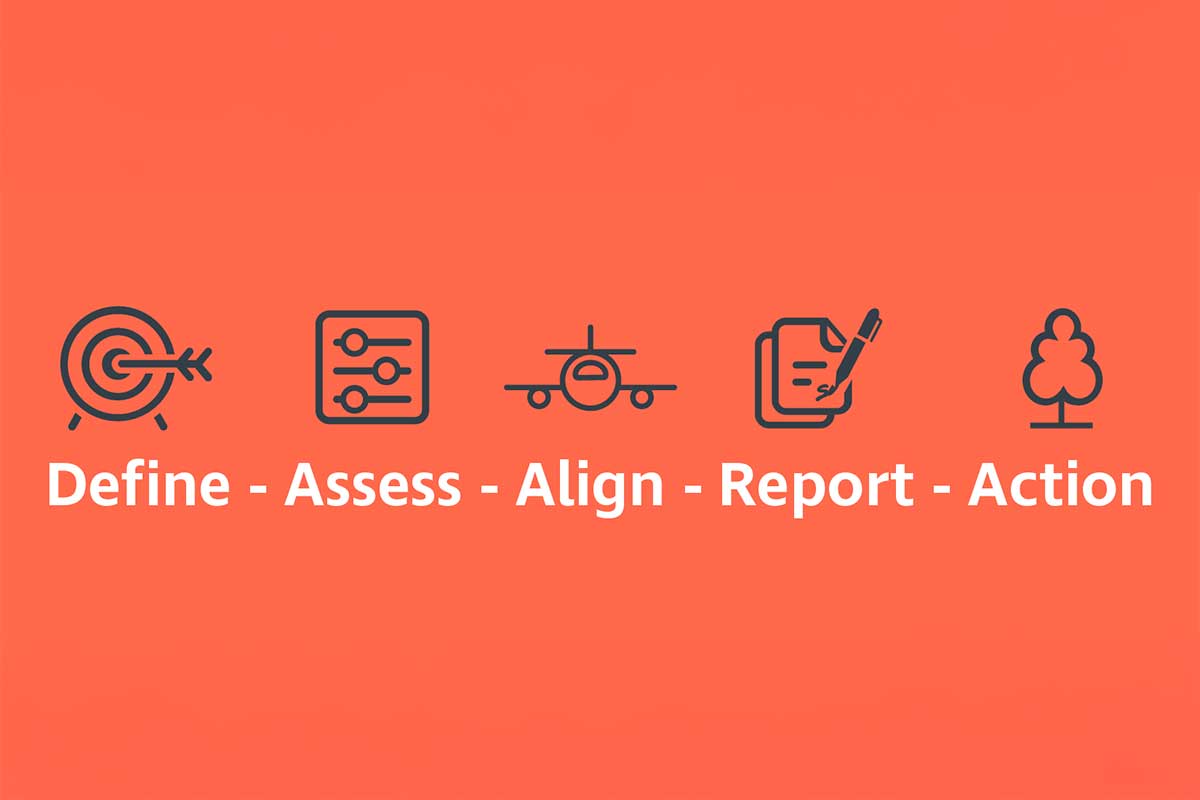
A responsible travel program in 5 steps
In this video, our experts will walk you through the 5 step approach to building a responsible travel program. Sustainable tips for traveling green
For companies looking to manage their impact on the environment, assessing your travel program presents a significant opportunity. To help you operate more sustainably, we’re providing tips from assessing the current state to implementing and monitoring.

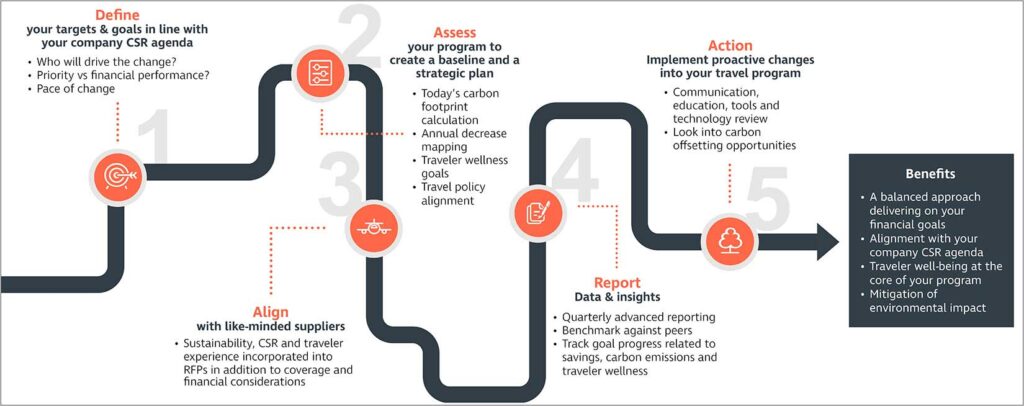
Step 1 – Define your travel program targets and goals in line with your company CSR agenda
Defining clear, measurable, targets and goals is the first and most important step in the responsible transformation of your travel program. Intangible concepts such as sustainability and traveler well-being have a way of being measured. This step will enable the application of tangible goals and targets to measure the responsible elements of your travel program.

Step 2 – Assess your program to create a baseline and strategic plan
Quality data will be essential for this stage. Integrating HR data can help bring insight into the employee behind the trips and incorporating CO2 emission data can add the layer of climate impact and overall carbon footprint your travel program produces.
The assessment stage should equip you with a plan of action moving forward, and help you define the timeline you think your goals can or should be met.

Step 3 – Align with like-minded suppliers
In business travel we rely heavily on our supply partners to achieve our goals, from pricing, to caring for our employees, and being more environmentally conscious on our behalf. Achieving responsible travel goals cannot be done without aligning to supply partners that share these same goals and values.
When working with supply partners, or conducting sourcing exercises, it’s important to discuss and measure all elements of the partnership as they relate to your organization’s triple bottom line of: people, profits and the planet. By not focusing on spend and volumes alone, we open up doors to stronger partnerships with our suppliers.

Step 4 – Report and track goal progress
Data drives decisions, therefore only good data will drive truly good decisions. It’s important to ensure you have the most comprehensive and accurate data possible to monitor your progress towards your responsible travel goals.
Reporting shouldn’t be standard. Different numbers will resonate differently with members of your organization. Therefore, reporting breakdown should mirror your company’s operational structure. This will provide the most insight from your data and be most relevant to the change drivers within your organization.

Step 5 – Implement proactive change into your program
Positive change can be championed by the travel manager through communication and traveler education. The more travelers know about their ability to influence change through their travel behaviors, the better choices they can make the next time they book. Aside from communication, leveraging tools and technology in your travel program can help with change management and implementation of your strategies.
After making all possible efforts to reduce carbon footprint, the final action to take your company carbon neutral is offsetting.
-

What a vaccine means for duty of care
The COVID-19 pandemic has forced all organizations to take a closer look at their travel risk policies. Protecting the health and safety of travelers highlights the increasing importance of having a Duty of Care plan. With the introduction of vaccines, this will remain the case for a while to come.
We’ve seen exciting news of vaccines noting over 90% efficacy. When Covid-19 vaccines were first beginning to be investigated, the decision – at least in the U.S – was that they would be approved if they had at least 50% efficacy. Now everybody is stunned that efficacy is over 90%. The announcements have tremendous implications on public health and achieving herd immunity.
However, In terms of availability, we can’t jump the gun and get excited too quickly. Even after vaccinations begin, the return to our prior normal is not going to be a fast revolution; it’s going to be more of a slow evolution as we monitor the effect on public health and the public’s willingness to receive the vaccine. Distribution may present some challenges. And of course, in the beginning, prioritization is going to be for frontline and essential workers and vulnerable populations.
We can reasonably expect general vaccinations to take place sometime around June and continue through to the end of next year. The first generation of vaccines may not be perfect but the great news is that we’re not just looking at one vaccine with one methodology. We don’t have all of our eggs in one basket and lots of eggs seem to be hatching all at once. It’s probable that there won’t be one clear ‘winner.’ The vaccines will come from diverse backgrounds and technologies and offer different strengths in different populations.
Additionally, there will probably be insufficient supply, at least initially, of a single vaccine. However, collaboration and standardized approaches for assessing different efficacy endpoints will be important to allow meaningful comparison and ensure that the most effective candidates are deployed. There are still questions around a vaccine, which cannot be answered yet such as what the long-term baseline titer going to be. These are important questions, and we need to answer them with appropriate studies.
What’s the relevance of all of this for travel managers? The question arises whether companies will require travelers – or indeed, all employees – to get vaccinated. In the meantime, we’re going to be returning to normal gradually. It’s still critical for travel managers to understand the Covid risk at a destination, and the requirements for social distancing and mask-wearing. It’s going to continue to be incumbent on travel managers to educate travelers and it behooves everybody to prepare for the same risk factors as before the vaccine before they embark on their travels. The emergence of vaccines is wonderful news. In the interim, we can’t take our eye off the ball. We must continue to focus on all of the important mitigating measures.
Image credits: Adobe Stock