
Introducing the latest myCWT product and service enhancements
Building on our digital, omnichannel myCWT platform, our new products and services will simplify travel management for you and your employees – anytime, anywhere, anyhow.
Note: Featured services may not be available in your country at this time. Please reach out to your CWT representative for more details.
Hear from Chief Product Officer, Erica Antony as she shares the key product highlights of 2024, along with the key areas driving innovation.
-

2040: Baseline, Boom or Bust
As we enter an era of rapid transformation and unprecedented challenges, it is essential for travel managers, meeting & event planners, and corporate decision-makers to look ahead and frame our current strategic thinking with a clear vision of the future. Business travel and meetings and events (M&E) are poised for significant change over the next decade and a half, driven by a complex interplay of sustainability goals, technological advancements, evolving work models, and geopolitical dynamics.
In this paper to mark the 10th anniversary of our Global Business Travel Forecast, we explore, for the first time, a long-term vision of the future and potential trajectories through three distinct scenarios, each offering insights into how these forces should affect policy-making, budgeting and priorities. By examining these scenarios, we can better understand the diverse possibilities that lie ahead and the strategic imperatives required to thrive in each potential future.
Based on trajectory data analysis and interviews with industry leaders, behaviorists and climate tech founders, this forward-looking approach enables us to anticipate changes, strengthen our strategies, and make informed decisions that align long-term objectives. It is through this lens of foresight and adaptability that we can build resilience, seize opportunities, and navigate the complexities of the future.
We invite you to reflect on the insights presented, and consider how your organization can prepare for the opportunities and challenges that lie ahead. Together we can ensure that travel and meetings remain catalysts for growth, scalability and sustainable practices.
- Scenario development is both an art and a science
- Megatrends Shaping the Future of Business Travel, Meetings and Events
- Sustainability goals the new crux of corporate policy
- Technology Revolutionizes Travel Management
- Modern work models spark new travel patterns
- Changing demographics open doors to new opportunities
- Three Scenarios: Base case, boom and bust
- Future-proofing strategies

-
CWT GBTA Global business travel forecast 2025
When it comes to pricing, global business travel has finally reached an enduring, higher baseline. Prices will continue to rise in 2025, but only moderately, so expect a period of normalized growth.
However, this pricing environment, one of marginal gains and price regularity, is fragile. Global leisure travel has now realized a lot of its pent-up demand, while corporate travel has been resurgent, with 2024 edging at preCovid levels.
There are many factors at play, whether its volatile oil prices, labor costs and constraints, inflationary pressures, and geopolitical factors. As this elevated baseline edges upwards, albeit marginally, travel budgets will come under increased scrutiny, especially as travel patterns and attitudes change.
It’s why business travel can’t be viewed in a silo, and the true value to an organization must be fully realized. This forecast can help with those calculations.
-

Capitalize on emerging technologies in corporate travel
Technological advancements are accelerating at an unprecedented pace. How will emerging innovations like Generative AI, blockchain, and self-sovereign identity (SSI) transform corporate travel?
BTN and CWT probed global CEOs, travel managers, industry consultants and tech experts on the promises, questions, and expectations these innovations raise and how they are set to reshape traveler experience, cost control and service delivery in corporate travel and events.
Download and discover
- The technologies that will have the greatest impact on corporate travel in the next 2-5 years
- How these emerging technologies are poised to control costs, enhance service and security, and boost efficiency
- The critical challenges, opportunities, risks and roadblocks each innovation raises
- What travel managers, buyers and experts anticipate from these innovations
-

Advanced payment solutions drive value and savings

Brief
- CWT M&E had successfully implemented a centralized SMM program using a lead agency model with integration of internal planning team
- Company policy moving from 45 day payment terms to 60 days with pushback from key suppliers
- Client needed a consolidated payment strategy to optimize cash flow, drive efficiencies and integrate data
Solution
- Collaborated with finance leaders to evaluate payment options with impact on cost, user ease, controls and cash opportunity
- Recognized successful P-card process within other divisions
- Created hybrid P-card solution of physical, virtual and prefunded cards, mainly dependent on meeting type, with procure-to-pay used for ancillary items, such as marketing/promo products
Result
- Achieved cash held days of 69 days on average
- Increased compliance by 28%
- Delivered incremental savings of 4.8% (cash optimization, reduction in resources supporting manual PO and reconciliation process)
- Increased customer satisfaction to a 4.6 rating on a scale of 5
-
What do we have in common with other companies celebrating 150 years in business?
It’s not difficult to do an internet search to discover other companies celebrating 150 years in business throughout 2022.
Diverse companies in motor manufacturing, construction and pest control are celebrating their longevity with a look at the past and how they remain relevant today and tomorrow including Mitsubishi , Sir Robert McAlpine and Octavius Hunt.
Companies and brands come and go. There are some brands we couldn’t imagine being without, imagined they’d be around with us forever, but have fallen by the wayside, having mis-judged the changing marketplace. What we have in common with others celebrating longevity, is remaining relevant. We’ve adapted our services to meet the expectations of our clients and their traveling employees.
From the launch of the first services of the Compagnie Wagonlit in 1872 to investing in product enhancements like real-time carbon footprint indicators. We’ve kept up with market changes to deliver a leading business travel platform for today. myCWT reflects the expectations of today’s business travelers for services wherever they need them, whenever they need them. All the while managed according to their employer’s travel program.
That’s why we’re proud to be celebrating our 150 years in travel. Through our services, we unlock the power of human connection.
Read more about CWT’s 150 year heritage and how things – from embedded sustainability to the Metaverse – business travel and events are evolving for the future.
Image credits: CWT
-

New program saves conglomerate more than US$2 million in first year

Brief
- Design a new global event program aligned to company environment and culture and solve their main pain points:
- Decentralized organization with redundant groups planning meetings
- Disparate processes for sourcing and planning
- Multiple meeting technologies
Solution
- Developed a global meetings and events policy, including a payment solution strategy to support compliance
- Streamlined processes and resources to drive operational excellence
- Created a business intelligence strategy, including technology and data analytics optimization
Result
- Consolidated multiple meetings technologies into one provider
- Stakeholder engagement led to a double-digit adoption increase
- Deployed a centralized organizational plan with a fully outsourced service team
- Saved nearly USD 470,000 in first 6 months and more than USD 2 million in a year
- Design a new global event program aligned to company environment and culture and solve their main pain points:
-

Implementation of preferred supplier program

Brief
- Recommended expanding preferred supplier strategy from transient-only to ensure large global healthcare client maximizes cost savings and contracting efficiencies for all travel
- Developed competitive proprietary RFP, in partnership with client, to focus on targeted M&E pain points and priorities
- Critical success factors:
- Pre-negotiated terms and conditions
- Speed to contract
- Competitive discounts and savings
Solution
- After approximately one year of negotiations, 3 suppliers selected for 2-year agreements based on offer and portfolio variety
- Deployed thoughtful supplier management to ensure client’s position protected
- Provide ongoing reporting of results through bi-annual supplier meetings and client Quarterly Business Reviews
- Develop stakeholder engagement through training and quarterly preferred supplier showcases on topics chosen by suppliers, including new openings, initiatives, etc.
Result
- Since implementation in late Fall 2021, achieved USD 2.1M+ in savings for 2022-2024 programs
- Simple exhibits finalize venue contracts as MSAs replace large client addendums to ensure acceptance of key T&Cs
- As approximately 80% of current meetings are lower complexities with short lead times, each supplier includes ideal options for quick-turn meetings
- With current sellers’ market and staffing challenges, negotiated discounts and ability to contract quickly have resulted in bigger impact than anticipated; agreements may be auto-renewed from previous in-person event
-

CWT to launch car rental and train booking capabilities on myCWT mobile and web channels
CWT, the business-to-business-for-employees (B2B4E) travel management platform, has begun adding car rental and train booking capabilities to the mobile and web channels on its myCWT platform. The new features and functionality will progressively be rolled out in markets around the world this year, giving travelers more options to make and manage these reservations independently. To date, travelers have already been able to book car rental and train content by contacting a CWT travel counselor via phone, email, or messaging, or by using third-party online booking tools.
These enhancements are one of the key outcomes of CWT’s $100 million investment in its myCWT travel management platform.
“Delivering a truly omni-channel experience is an integral part of CWT’s commitment to simplifying business travel,” said John Pelant, Executive Vice President & Chief Technology Officer. “This means ensuring that travelers get the same content and experience no matter how they engage with CWT – whether it’s by contacting one of our expert travel counselors, or using a self-booking channel such as our app, web portal or a third-party online booking tool. These latest upgrades to our platform are a significant milestone in that direction. At the same time, the expansion of our train and rental car content will play an important role in supporting our customers’ sustainability objectives, which is now a top priority for most corporate travel programs.”
Pedal to the metal: global roll-out of car rental bookings on myCWT mobile and web
CWT has begun adding car rental content to myCWT mobile and web in key markets worldwide.
Travelers will be able to book their rental car via the myCWT mobile app (on iOS and Android) and web portal. They will have access to their company’s corporate negotiated rates and preferred suppliers, and can easily search for pick-up and drop-off locations. Loyalty program details from car rental companies are being integrated as well. To help travelers make more sustainable choices at the time of booking, the mobile app and web portal will have indicators highlighting electric and hybrid car options. Carbon emission estimates will be added at a later date.
On the fast-track: API connection with Trainline Partner Solutions will bring train content to myCWT mobile and web in key markets in Europe
For over a decade, CWT has worked with Trainline Partner Solutions, the B2B arm of Europe’s leading independent rail and coach platform, to source UK train content. The two companies are broadening their partnership with an API integration into Trainline’s Platform One technology that will enable CWT to offer train booking and ticketing functionalities — including corporate negotiated fares and discounts, seat reservations and seat preferences — via its digital channels, starting with the myCWT mobile app.
Liz Emmott, Global Distribution Director for Trainline Partner Solutions, commented, “We are delighted to extend our partnership with CWT and to provide a simple and seamless experience for rail travelers across CWT’s full platform. By cutting through the complexity in this way, more business travelers will get access to the rail content they want and will be able to choose a more sustainable way to travel.”
This functionality will initially become available for travelers in the UK in July, and be expanded to other markets in Europe in the following months. CWT will also introduce point-of-booking carbon emission estimates for train travel later in the year.
CWT is a leading global partner in business travel, meetings, and events. Operating across six continents, we deliver sustainable, tailored solutions that help organizations connect, engage, and thrive in an evolving world. Our myCWT platform integrates advanced technology with human expertise to simplify travel and enhance traveler and attendee experiences. Extensive global coverage, seamless data integration, AI-driven analytics, and carbon-conscious travel tools enable businesses to optimize their travel and meetings programs while delivering measurable value.
With 150 years of industry experience and a deep commitment to partnership, CWT collaborates with clients to shape the future of business travel and events, making them more efficient, responsible, and impactful.
-
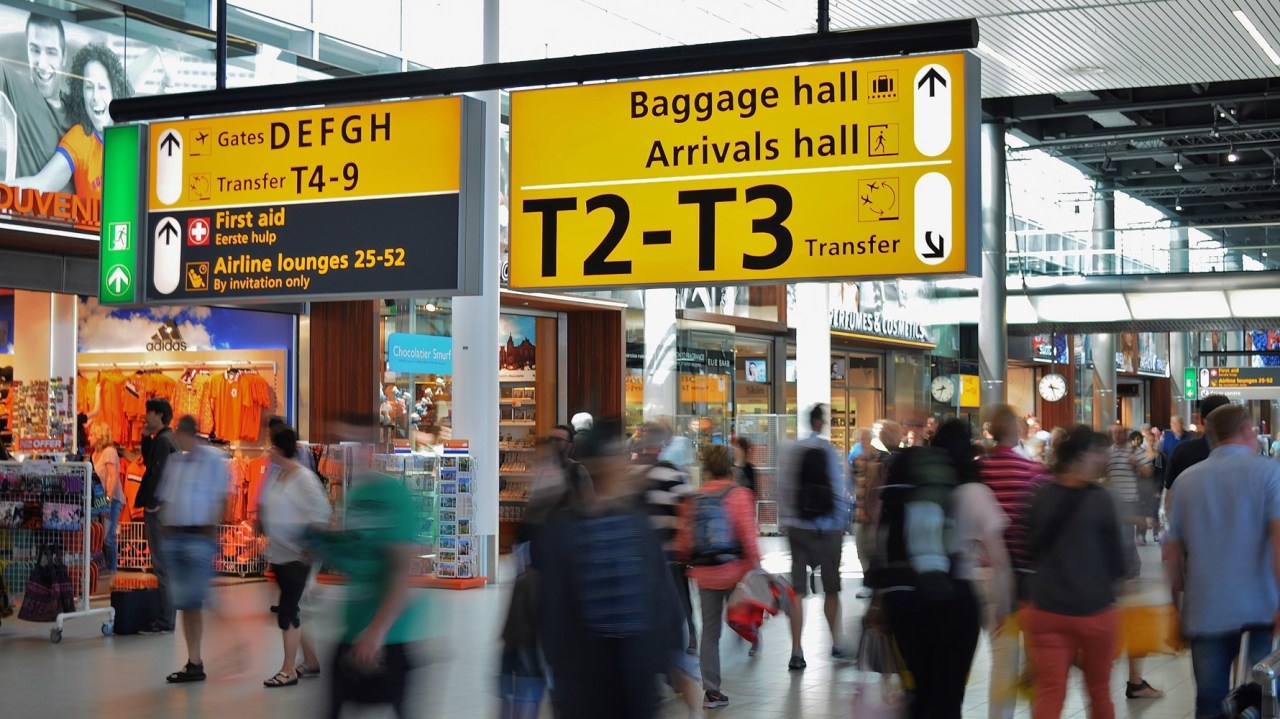
Top tips for corporate travelers as business trips ramps up at pace
Although travel levels still vary across the world, it is a fair statement to say that the world feels fully open for travel once again. We are seeing the highest levels of business travel since the pandemic began. Global transactions have crossed 50% of pre-pandemic levels – a sharp increase from the beginning of the year when transactions were at 20-30% of 2019 levels. That said, some restrictions remain and those traveling – particularly on a business trip – will find the travel experience altered from pre-pandemic. With reduced air capacity, shortages in staffing across the hospitality industry and pressure on the airport ecosystem, travelers are contending with price increases for both hotel and airfares and exposed to the reality of delays and longer wait times.
To ensure a productive and enjoyable travel experience, here are some factors to consider when planning your next business trip.
1. Consider building in one day of buffer – Ensure you have the uninterrupted time you need at your destination to make your trip a success. Business trips are, on average, slightly longer than pre-pandemic due to a number of factors, including reduced flight schedules and covid travel restrictions. Although many covid restrictions have lifted, there are some countries – particularly in Asia – where testing is still required on arrival.
2. Check the latest restrictions and entry requirements for your destination when booking and again the day before departure. Restrictions change frequently. One easy way to do this is to check the travel restrictions in the “Are you ready to travel?” section of the myCWT website. One thing I have found during business trips in recent months is that the Covid situation and levels of comfort within person meetings still varies. For example, masks are still largely worn during business meetings in Japan, however in the Northern Hemisphere masks have largely been put aside in office environments.
3. Don’t assume that Covid protocol is the same everywhere. Check rules and protocol with those you will be visiting to avoid any awkwardness on arrival.
4. Book through your company’s preferred channels. Ensure your safety whilst on the road. With the pandemic no longer dominating the news in the way it once did, it’s harder to anticipate spikes in infections that may impact travel. Booking in your company’s channels keeps you safe and supported at all times.
5. Download your travel apps before leaving home. Ensure you get the most up-to-date information related to your flights, and access to support if scheduling changes. One additional benefit is that many hotels are now allowing you to check in or check out of your hotel room by text or by app, without having to join the queue at the hotel reception, saving you time.
6. Make sure your traveler profile information is up to date with your travel management provider and within your travel tools. Ensure the front desk can contact you should mobile check-in/out options apply, and to save time during the booking process.
7. Be a conscientious traveler. Minimize your carbon footprint for the duration of your trip. In your booking tools look for real-time carbon footprint indicators to help you make a more sustainable choice of airline or hotel and don’t be lured by the buffet breakfast, but chose the a la carte option instead, knowing buffets are one of the largest sources of food waste. To find out more about how to travel conscientiously and support more sustainable business travel, listen to my latest podcast episode, ‘A green standard in hospitality’.
8. Do not travel if you are feeling unwell. On the day of departure take a home covid test. And take an extra with you on your trip just in case you are not feeling well whilst on the road. Many airlines and countries no longer require the use of masks. That said, airports are busy places. Following distancing advice and taking the precautions you feel are appropriate for you will be key to staying healthy on your trip.
9. Depart with the knowledge that the travel ecosystem is not quite back to its full vigor. With scheduling adjustments, longer wait times and delays a reality as staffing levels and capacity are added back into the system, following these tips can help mitigate some of the friction and ensure your business trip is not only successful, but also an enjoyable experience.
-
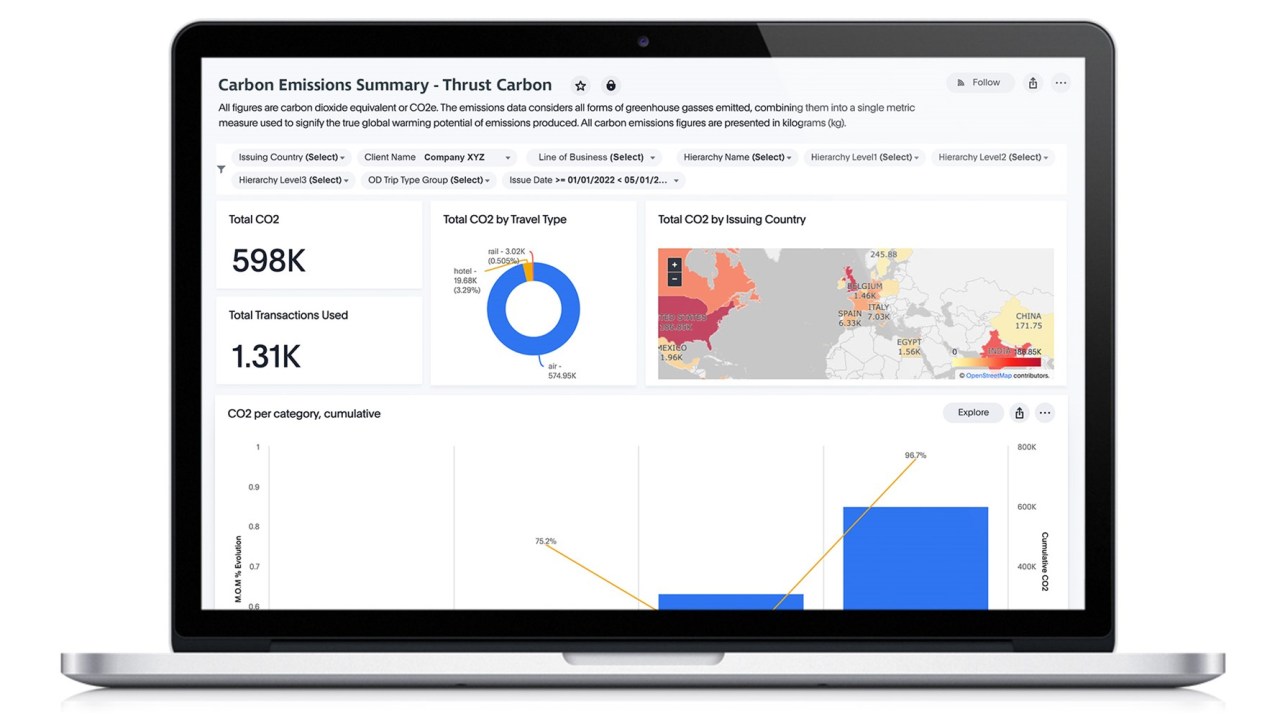
CWT launches enhanced CO2 emission reporting to underpin responsible travel programs
CWT, the Business-to-Business-for-Employees (B2B4E) travel management platform and a leader in responsible business practices, today launches the next phase in its product evolution to support sustainable travel programs. Following the launch of carbon footprint indicators in March, CWT continues to work with award-winning carbon intelligence platform, Thrust Carbon, to bring further enhancements to its existing CO2 reporting capabilities.
Integrated into CWT’s business intelligence solution, customers now have access to new Carbon Emission Summary dashboards, providing a simple, all-in-one view of a company’s emissions using either DEFRA or Thrust Carbon methodology. Available to all CWT customers globally, the new dashboards help companies understand their CO2 footprint resulting from corporate travel, improve their environmental impact, and effectively reach their responsible travel program goals.
“We know that when it comes to CO2 data, greater accuracy and clarity supports greater accountability and better choices,” said Charlie Sullivan, Head of Product Management, Travel Management Portfolio, CWT. “Companies pursuing climate initiatives are looking for more comprehensive greenhouse gas emission data and analytics. 79% of our global customers have told us as such, in a recent survey. With that in mind, and in keeping with our longstanding commitment to providing clients with tools and services to build more responsible travel programs, these latest enhancements are designed to help integrate corporate sustainability goals easily into all of our customer’s travel programs.”
Over the next 18 months, CWT has a number of initiatives underway to further evolve its sustainability capabilities and portfolio, enhancing and expanding existing and new capabilities in myCWT web and mobile.
CWT is a leading global partner in business travel, meetings, and events. Operating across six continents, we deliver sustainable, tailored solutions that help organizations connect, engage, and thrive in an evolving world. Our myCWT platform integrates advanced technology with human expertise to simplify travel and enhance traveler and attendee experiences. Extensive global coverage, seamless data integration, AI-driven analytics, and carbon-conscious travel tools enable businesses to optimize their travel and meetings programs while delivering measurable value.
With 150 years of industry experience and a deep commitment to partnership, CWT collaborates with clients to shape the future of business travel and events, making them more efficient, responsible, and impactful.
-

There’s nobody like you: From personalization to hyper-individualization
As we celebrate 150 years in travel, we’re exploring 5 key technology trends that will impact travel in the future. One of these trends, in the world of digital commerce, is the shift from personalization to hyper-individualization. That’s a lot of ‘ization’, so what are we talking about?
Personalization works on providing targeted proposals of content or services based on a users’ segment. The segment criteria will include geolocation and demographics, for example. Consumers or users are segmented based on largely similar choices, but that segment doesn’t always reflect a truly individual need. This explains why when a segment is targeted, the individual user doesn’t always get a relevant offer.
AI and real-time data
Taking a step forward, a hyper-individualization strategy uses artificial intelligence and real-time data to help understand the true intent behind the behavior of individuals. This allows organizations to curate and deliver content, product/service offerings specific to each individual –based on factors such as their purchase history, social media interests, and searches. With the speed at which the data is analysed, the offers can be made at just the right time.
Adopting a hyper-individualization strategy results in a user or in- the case of business travel -a traveling employee, getting information based on their needs at that time. And extending the right services and support needed at that time. So for example, a traveler is navigating a rail concourse, that’s crowded after disruption to the rail services. The traveler could be provided with a message providing alternative ways of traveling to their destination, while a chat opens up with a counselor ready to help re-book with knowledge of the existing rail booking and preferences the traveler may have.
To find out what hyper individualization means for business travel and how CWT is getting ready for this new approach to delivering the right services, at the right time, watch this video.
-

Canuck style: 5 ways to celebrate Canada Day
Happy Canada Day! Bonne fête du Canada!
With the 4th of July approaching, many of our American colleagues are preparing to celebrate their Independence Day. As Canadians we are used to being mistaken for Americans and are often asked if we also celebrate the 4th of July. Well, the answer is NOPE! We have our own big day to celebrate and that’s Canada Day on July 1st. Whether inside our borders or as expats across the sea, Canadians all over the world love to celebrate this date that marks the birth of our nation when we gained independence from Britain. And “Oh Canada” we know how to celebrate!
With school normally finishing at the end of June, Canada Day is the official start of summer for almost everyone in the country. We celebrate with parades, barbecues, carnivals, citizenship ceremonies, fairs and fireworks, and of course lots of travel across the country to visit family & friends. You will see red and white maple leaf flags waved across the land, people with maple leaves painted on their faces or temporary tattoos on their cheeks, arms and foreheads.
The biggest public celebration is held in Ottawa, our nation’s capital. Parliament Hill hosts half a million people on its grounds, with picnics and family events running through the day and concerts with headline artists coming alight on stage in the evening. The party ends with majestic fireworks over the newly restored Parliament buildings.
If you are lucky you might even spot royalty in the crowd. The Prime Minister and the Governor General (the Queen’s representative in Canada) always attend the Ottawa party, but we have also hosted the Queen, Queen Mother, Prince Charles, and Diana, the Princess of Wales over the years.
As many in-person festivities are back this year and travel restrictions being lifted to enter Canada (vaccinated travelers no longer require pre-arrival COVID testing), we expect a lot of visitors. If you are planning to experience Canada Day yourself and want to celebrate like a true “Canuck”, here are some great ways to say “Happy Birthday” to this great nation that are uniquely Canadian:
- Enjoy a Beaver Tail – sounds kind of weird but it’s delicious. It’s a fried- dough pastry pulled by hand to resemble the long flat tail of the Beaver (the national animal of Canada). It’s then topped with all kinds of delicious garnishes like cinnamon, sugar or chocolate paste.
- Find a food-truck and enjoy the ultimate in comfort food: Poutine. It is a Québécois dish made of fresh-cut french fries topped with cheese curds and gravy.
- Eat pancakes with homemade maple syrup. Did you know about 80% of the maple syrup in the world is produced in Canada? That’s the reason Maple is part of many symbols representing Canada.
- Go moose sighting. We have over 45 national parks across the country and if you’re lucky you may catch a glimpse.
- Visit our famous lakes. Canada is blessed with more lakes than any other country in the world, with 563 lakes and the longest coastline in the world so grab a chair with a Molson Canadian beer, and take in the beauty of this vast country.
-

The evolution of Strategic Meetings Management to Total Meetings Management – A new approach
The recent pandemic highlighted the priority and importance of effective risk management in meetings and events. As the pandemic unfolded and lockdowns and travel restrictions were imposed, organizations scrambled to figure out what meetings their employees had booked, who was organizing them, and the financial impact of cancellations. Meetings, events and travel are returning and CWT is revolutionizing the approach to a managed meetings program strategy, demonstrating that NOW is the time to fortify their M&E programs for present and future risk.
Strategic Meetings Management (SMM), a disciplined approach to managing meetings and events across an organization, is considered a highly effective way to manage risks associated with meetings and events and develop an effective meeting and event strategy that will lay out other key benefits. The Global Business Travel Association’s (GBTA) Meetings & Events Committee developed the first SMM ‘wheel’ back in 2003, identifying for the first time the necessary components for a robust SMM program. Over the years, the wheel has been through several iterations, adapting to the changing landscape, with the most recent version being released in 2017. Since then, we have heard repeated echoes throughout the industry begging the question “What’s next in the evolution of SMM?”, and today, we are ready to provide some answers.
We recognize the challenges some organizations encounter despite using the wheel as the foundation for their SMM programs. CWT has enhanced the wheel methodology to address the gaps that are sometimes created when implementing an organization wide strategy of SMM. It’s important to include CWT’s unique guiding principles of Infrastructure, Governance, and Administration to create a SMM program that delivers maximum results.
We often see certain meeting types such as small, virtual, hybrid, executive, congresses, events, and healthcare professional (HCP) meetings in the life sciences sector are left out of SMM programs. SMM must evolve to include the totality of ALL meetings and events activity in a way that creates trust through customization and careful stakeholder outreach.
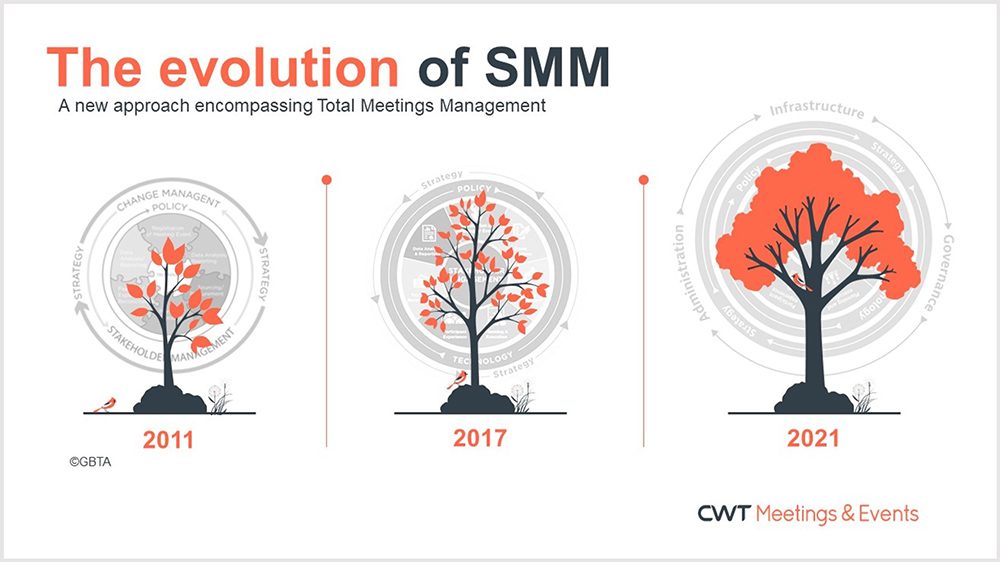
Total Meetings Management (TMM) is based on the reality that all meeting types derive benefit from inclusion in your SMM strategy. The objectives of governance and visibility are only achieved with true visibility. TMM will not replace SMM but becomes the apex of your overall meeting and event strategy and can be easily incorporated as part of a phased approach.
The key is to focus on totality to break down the meeting silos – developing a strategy and process, if needed, for each meeting type and intentionally designing a spot for them in your program. You can begin to gain trust and advocate for those meetings and events that are currently outside of your program by showing those meeting owners your commitment to partnering on a solution that embraces their needs while enriching the overall value of your program.
One of many actions to take when incorporating TMM as a strategy is simply to ensure that your stakeholders are registering all meetings within your chosen meeting tech tool. This gives you the ability to collect auditable data, support demand management strategies, manage financial and legal risks of meetings, and provide reporting that drives business decisions. Taking these steps creates visibility into your program, allowing you to be proactive rather than reactive in your response to future crisis scenarios, successfully mitigating financial and legal risk in the process.
Want to learn more about this unique approach? Contact our SMM Consulting Solutions Team for more information.
Image credits: CWT & Adobe Stock
-

ESG: A compliance exercise or competitive advantage?
The terms sustainability, diversity & inclusion, responsible business practices, and net-zero emissions are just a few that have become part of our normal business lexicon, and for good reason in a decade of critical importance for balancing profit with people and planet. Each reflect the increased cultural and political interest in organizations’ impact on the environment and society, and are being measured by more organizations in tangible Environmental, Social and Governance (ESG) scores. Although ESG is not a new concept its importance is increasing, especially in industries such as financial services.
Heading up CWT’s global sales efforts in the financial services vertical I am engaged with individuals and teams managing travel programs for some of the largest organizations globally. Very few conversations occur that do not include some stage of an organizations’ ESG initiative.
Organizations have a wide range of stakeholders that have an interest in their approach and results in managing ESG, namely customers, investors, employees, government, and the public – each with the ability to have a significant impact on the success (favorable or unfavorable) of an organization. Organizations are rapidly reaching a watershed moment and have an important decision to make: Is ESG an initiative they must comply with or one where they can create a competitive advantage?
Assessing the risk factor
Most of an organizations’ key stakeholders share a common interest. They want to buy from, invest in, be employed by, support and – in general – be associated with organizations that demonstrate good environmental and social responsibility. At minimum organizations should understand and be complying with government, industry, and/or social standards for ESG. Non-compliance puts organizations at significant risk in the loss of customers, investors, and employees, in addition to potential regulation fines and poor public relations. Compliance can mitigate risk. However, it can be perceived as reactive. There is still risk with stakeholders that want more than a ‘tick-the-box’ exercise. They want to see that organizations are ethical, authentic, and producing results.
According to a recent survey conducted by PwC of consumers and employees, 83% of consumers believe companies should be actively involved in creating ESG best practices and 86% of employees prefer to work for companies whose beliefs align with their own. 76% of consumers reported they would discontinue relationships with organizations that treated employees, communities, or the environment poorly.
Stakeholder vs. shareholder
In addition to risk based on their own organizations actions they have risk associated with the actions of 3rd parties they have elected to do business with. Buyers want these 3rd parties vetted for their actions, and those in the financial services space – as in all industries – have a responsibility to vet organizations that are part of their lending & investment strategies.
According to EcoVadis, an independent corporate social responsibility ratings agency, 91% of companies take sustainability into account when making purchasing decisions, and 85% of consumers are now more likely to purchase from a company with a reputation for sustainability or diversity & inclusion. 3rd parties can present a potential risk. However selecting the right partner can benefit an organizations’ ESG strategy and performance.
CWT provides travel management services to organizations and are market leaders in verticals including financial services. Corporate Social Responsibility is embedded in our organization. As with many of our clients, it is a key driver in not only how we do business but also who we partner with.
A signatory to the UN Global Compact and Science Based Targets Initiative, CWT has been recognized for the past five consecutive years (2017-2021 inclusive) by EcoVadis in the top category (and top 1% of businesses rated) for its responsible business practices.
We help clients reach their sustainability goals, create responsible travel choices and integrate sustainable travel into the overall performance of their program by investing in products that enable our customers to reach their sustainability goals to calculate, reduce and offset carbon emissions.
Making ESG a competitive advantage
A comprehensive ESG plan and good scores are important for the environment, society, governance, and good for business. According to Robin Nuttall, author of ‘Five ways that ESG Creates Value,’ ESG performance is improving capital cost by an estimated 10% and attributes this to the following factors:
- Top line growth
- Efficiencies that reduce cost
- Relationships with regulators
- Talent acquisition and retention
- Investment optimization
To make ESG a competitive advantage requires commitment and resources, knowledge, planning, and execution.
Staying informed
ESG expectations seem to change daily, and the global nature and increased regulations only add to the complexity. Increased awareness and practical experience from developing and executing plans are not only a great opportunity for organizations to make ESG a competitive advantage, but also for individuals to develop a new skill set that will be a value to the organization and their personal and professional development. There are countless resources and articles available on this topic and I encourage anyone in a position to have an impact to make an investment in your organization and yourself by absorbing as much information as you can.
At the core of all ESG developments is a five-step process:
- Define ESG targets & Goals
- Assess your current state and develop a strategic plan
- Align with like-minded partners
- Action Implement proactive changes
- Report data & Insights
Just one in four CEOs rank ESG as a top-three priority, according to a new survey by the research firm Verdantix. I encourage all stakeholders to learn more about ESG and remain current. Understand your organizations position, and its impact on your current and future performance.
-

CWT at Business Travel Show Europe 29 – 30 June: Should you take a traveler-centric approach to staffing?
Hiring and retaining talent are becoming strategy drivers for travel managers around the world. Getting to grips with how is one of the topics CWT experts will be advising on at the Business Travel Show Europe 29 – 30 June.
In 2021, the Bureau of Labor Statistics saw the largest exodus of employees on record in the US. The American Staffing Association notes that “employers are pulling out all of the stops and using all tools in their toolkit to try to get talent to notice them.”
In fact, shifting priorities is the zeitgeist of our times. Even Beyonce has an opinion about your workforce. The newly released single by one of the world’s most famous singers, ‘Break My Soul’ signals “the death knell for grind culture” with references to quitting a job and building a new foundation.
People today place more importance on their well-being, work-life balance, safety and impact on the environment.
Companies that don’t keep up with these values will lose out.
The expectations around business travel and travel policies are often the clincher for people when applying for roles, as well as helping companies avoid burnout and build stellar cultures. Today’s traveling employees prioritize the planet and purposeful work and travel.
Planet
“We believe sustainability is the new digital – it will create the most powerful force of change in our generation.” – Accenture
Today’s environmentally-conscious traveler is much more aware of the impact travel can have on our planet. They want to make sustainable choices and understand their personal carbon emissions when traveling.
We surveyed our global customer base at the end of 2021, and an overwhelming 87% expressed that they would like information provided to their employees at point-of-booking to help reinforce responsible travel choices. That’s why tools like CWT’s carbon indicators, empower travelers to make more sustainable choices when booking travel.
Purpose
One third on business travelers do not want to go back into the office, saying they are happy to work remotely according to a PWC survey. Gone are the days of unnecessary meetings that are easily achievable online.
Instead, travelers want to make sure they travel for the right reasons. In addition to cost-saving, business travel needs to align with their personal values, make an impact on their objectives and contribute to personal success. Otherwise, employees might not consider a trip valuable enough for maintaining their well-being and environmental balance. If you’re going to wear shoes and commute it needs to be worth it.
People
Humans are social creatures. After extended isolation there’s a newfound appreciation for business travel and meaningful meet-ups with colleagues and clients. Many feel a renewed sense of emotional importance when it comes to in-person meetings. Having not seen colleagues, clients or suppliers for more than two years –if at all– and there is a profound desire for a deeper connection and quality interactions.
Find out how to build program optimization, cost-saving and traveler experience objectives around changing values.