
Introducing the latest myCWT product and service enhancements
Building on our digital, omnichannel myCWT platform, our new products and services will simplify travel management for you and your employees – anytime, anywhere, anyhow.
Note: Featured services may not be available in your country at this time. Please reach out to your CWT representative for more details.
Hear from Chief Product Officer, Erica Antony as she shares the key product highlights of 2024, along with the key areas driving innovation.
-
2040: Baseline, Boom or Bust
As we enter an era of rapid transformation and unprecedented challenges, it is essential for travel managers, meeting & event planners, and corporate decision-makers to look ahead and frame our current strategic thinking with a clear vision of the future. Business travel and meetings and events (M&E) are poised for significant change over the next decade and a half, driven by a complex interplay of sustainability goals, technological advancements, evolving work models, and geopolitical dynamics.
In this paper to mark the 10th anniversary of our Global Business Travel Forecast, we explore, for the first time, a long-term vision of the future and potential trajectories through three distinct scenarios, each offering insights into how these forces should affect policy-making, budgeting and priorities. By examining these scenarios, we can better understand the diverse possibilities that lie ahead and the strategic imperatives required to thrive in each potential future.
Based on trajectory data analysis and interviews with industry leaders, behaviorists and climate tech founders, this forward-looking approach enables us to anticipate changes, strengthen our strategies, and make informed decisions that align long-term objectives. It is through this lens of foresight and adaptability that we can build resilience, seize opportunities, and navigate the complexities of the future.
We invite you to reflect on the insights presented, and consider how your organization can prepare for the opportunities and challenges that lie ahead. Together we can ensure that travel and meetings remain catalysts for growth, scalability and sustainable practices.
- Scenario development is both an art and a science
- Megatrends Shaping the Future of Business Travel, Meetings and Events
- Sustainability goals the new crux of corporate policy
- Technology Revolutionizes Travel Management
- Modern work models spark new travel patterns
- Changing demographics open doors to new opportunities
- Three Scenarios: Base case, boom and bust
- Future-proofing strategies

-
CWT GBTA Global business travel forecast 2025
When it comes to pricing, global business travel has finally reached an enduring, higher baseline. Prices will continue to rise in 2025, but only moderately, so expect a period of normalized growth.
However, this pricing environment, one of marginal gains and price regularity, is fragile. Global leisure travel has now realized a lot of its pent-up demand, while corporate travel has been resurgent, with 2024 edging at preCovid levels.
There are many factors at play, whether its volatile oil prices, labor costs and constraints, inflationary pressures, and geopolitical factors. As this elevated baseline edges upwards, albeit marginally, travel budgets will come under increased scrutiny, especially as travel patterns and attitudes change.
It’s why business travel can’t be viewed in a silo, and the true value to an organization must be fully realized. This forecast can help with those calculations.
-

Capitalize on emerging technologies in corporate travel
Technological advancements are accelerating at an unprecedented pace. How will emerging innovations like Generative AI, blockchain, and self-sovereign identity (SSI) transform corporate travel?
BTN and CWT probed global CEOs, travel managers, industry consultants and tech experts on the promises, questions, and expectations these innovations raise and how they are set to reshape traveler experience, cost control and service delivery in corporate travel and events.
Download and discover
- The technologies that will have the greatest impact on corporate travel in the next 2-5 years
- How these emerging technologies are poised to control costs, enhance service and security, and boost efficiency
- The critical challenges, opportunities, risks and roadblocks each innovation raises
- What travel managers, buyers and experts anticipate from these innovations
-
CWT adds new trip planning, management and collaboration functionalities to its myCWT platform
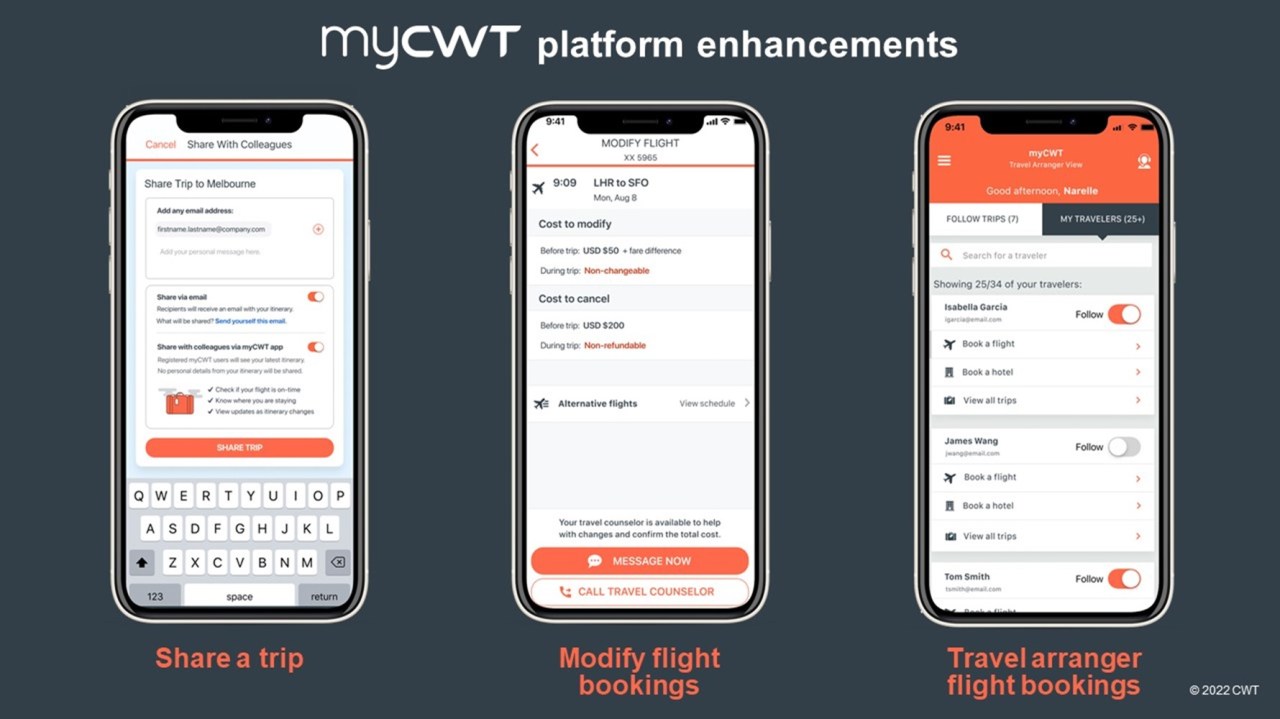
CWT, the business-to-business-for-employees (B2B4E) travel management platform, has introduced several new features to its myCWT platform, making it easier for business travelers and travel arrangers to plan and manage trips, collaborate with their colleagues, and cope with the ongoing travel disruption.
The new share-a-trip feature, designed to facilitate team travel, lets travelers give colleagues a real-time view of their itinerary via the myCWT web portal and mobile app. Recipients can see the traveler’s flight and hotel details, including any changes in the itinerary after the trip has been shared. Later this year, travelers who want to join their colleagues on a trip will be able to replicate a shared itinerary by shopping for the same flights and hotels with the click of a button, further streamlining the booking process for teams traveling together.
Flight booking modifications are also being simplified. Enhancements to the myCWT web and mobile channels will allow travelers to quickly view the change and cancellation rules, shop for alternative flights, and understand the cost of changing their booking.
Meanwhile, travel arrangers such as office managers and executive assistants can now search and book flights on behalf of their colleagues using the myCWT web portal and mobile app. When a travel arranger selects a traveler in the system, that traveler’s policy information and loyalty programs are automatically pulled from their CWT profile and applied to the booking. Travel arrangers can already make hotel bookings via the myCWT web and mobile channels, while car rental and train booking capabilities for travel arrangers will be added in the near future.
“Creating a seamless and productive digital experience remains a central focus of our innovation efforts,” said Erica Antony, CWT’s Chief Product Officer. “These latest enhancements to our platform will facilitate better collaboration between colleagues as the nature and purpose of business trips continues to evolve. For example, with remote and hybrid working becoming the norm, we expect people will travel more for small meetings to get some face-time with their teams, increasing the importance of simple ways to coordinate itineraries and make changes quickly on the go.”
Earlier this year, CWT announced plans for a $100 million investment in its myCWT travel management platform and innovative product offering, centered on optimizing CWT’s digital-first proposition, achieving traveler experience excellence, and providing truly integrated solutions.
CWT is a leading global partner in business travel, meetings, and events. Operating across six continents, we deliver sustainable, tailored solutions that help organizations connect, engage, and thrive in an evolving world. Our myCWT platform integrates advanced technology with human expertise to simplify travel and enhance traveler and attendee experiences. Extensive global coverage, seamless data integration, AI-driven analytics, and carbon-conscious travel tools enable businesses to optimize their travel and meetings programs while delivering measurable value.
With 150 years of industry experience and a deep commitment to partnership, CWT collaborates with clients to shape the future of business travel and events, making them more efficient, responsible, and impactful.
-

4 ways to unblock your ears after a long-haul flight
You’ve made it through the queue for security. You’ve gotten through the flight. You’ve left the airport, eaten, and arrived at your accommodation ready to take in the sights and sounds of your trip. There’s one problem, however – you can’t hear a thing.
Although not necessarily painful, few things sour arriving at a new destination more than having ears that haven’t popped. Despite the rise in prices forecast across the industry over the next 18 months, travel is making a comeback. This means things like new experiences, memories, and stories are back, but it also means the return of the little niggles we’d rather go without.
So, if your ears are still blocked, what can you do? Luckily at CWT we have plenty of seasoned road warriors with decades worth of travel tips and tricks up their respective sleeves. We spoke to some of them – not all, there’s simply too many – and gathered a few simple solutions that will help you get your auditory powers back after a long flight.
- Try the Toynbee Maneuvre: This is a simple technique that you can do on the plane, in the car on the way to your hotel or anywhere else for that matter – provided that you don’t mind people seeing you do it. Start by pinching your nose than take a couple sips of water to help you to swallow.
- Try the Valsalva Maneuver: Like the Toynbee method, start by pinching your nose. Then close your mouth and blow softly. Be careful not to blow too hard as this could damage your ear drums.
- Try chewing gum or sucking candy: Swallowing activates the muscles that will open your Eustachian tube, but sometimes that alone isn’t enough to unblock your ears. Chewing gum, sucking on candy, or swallowing liquid can help to encourage the tubes in your ears to open once more.
- Try steam: Just like when you’re congested with a cold or flu, steam can help to unblock your ears. Boil some water and pour into a large bowl. Grab a towel, place your head over the bowl (not too close) and place the towel over your head so that it creates a cover to trap the steam. Breathe the steam in for 5-10 minutes until you feel your ears open again. A long shower at your accommodation can also have a similar effect.
Now that we’ve equipped you with some tried and tested secrets from our experienced travelers, to your new experiences, and long-awaited reunions with colleagues and clients, we say, hear, hear!
- Try the Toynbee Maneuvre: This is a simple technique that you can do on the plane, in the car on the way to your hotel or anywhere else for that matter – provided that you don’t mind people seeing you do it. Start by pinching your nose than take a couple sips of water to help you to swallow.
-

Getting started with Net Zero: 3 practical steps from Radisson Hotel Group’s SVP Sustainability
Heat records, draught and forest fires this summer make it clear that we are living in a climate emergency and that massive, immediate and tangible action is needed to bring Tourism & Travel to Net Zero. The IPCCC (the UN climate scientist organization) confirmed in their 2022 report that in a ‘business as usual’ (BAU) scenario the world is heading for 3 degrees of warming by the end of the century.
We need to act now towards Net Zero if we want to avoid this catastrophic scenario.
Net Zero is a big goal but the good news is that it can be achieved by any type and size of organization. The solutions we need for a 1.5° future are available today. Those who want to read more can consult Project Drawdown, the top 100 solutions to meet the Paris accord targets.
In short, becoming Net Zero means reducing your carbon footprint to a maximum, preferably to zero by using less energy and by going 100% renewable for the energy that you use.
What cannot be reduced can be offset by buying quality carbon offset certificates.
What does that mean for a hotel operator like Radisson Hotel Group (+1000 hotels in over 100 countries), for a meeting planner, corporate client or business traveler?
First, you need to know that carbon footprints are expressed in Scope 1, 2 and 3 indicating where the carbon is generated and the sphere of influence of the company on that part of the footprint.
Scope 1 emissions are those generated onsite where your business generates its products or services. Scope 2 emissions are those from energy that is purchased. Scope 3 emissions are generated by a company’s supply chain and products in service.
Each organization should take responsibility for each Scope, but most organizations have the majority of their footprint in Scope 3 – your supply chain, franchise partners, and transportation. In short: The places where you have the least control.
The good news is that your Scope 3 equals someone else’s Scope 1+2. So, transparency, consultation and cooperation can get you a long way. For example: for a meeting planner or a corporate client, the hotel location you choose for an event has a carbon footprint. For the planner or corporation, this is Scope 3; for the hotel – let’s assume it is one of the 9 Radisson brands – it is our Scope 1+2 (1).
So, the important element is to ask your suppliers (like Radisson) what they are doing to reduce their carbon footprint. For all meetings at Radisson Hotel Group properties, we make it easy with our 100% carbon neutral Radisson Meetings. Since 2019, we’ve been reducing and fully offsetting the footprint of all meetings held at our hotels worldwide at no cost to our customers. This gives them peace of mind. We track the footprint, reduce it and offset the remainder in verified projects.
If you look at Scope 3 for an event, the main elements will be transportation of your employees, flights and train rides to the event. Obviously, train rides or public transport have a much lower carbon footprint than flights.
All services and products linked to an event, make up the event’s carbon footprint. So, it’s essential to choose the right partners: venues, hotel groups, airlines, transportation providers, etc.
Radisson Hotel Group (RHG) has committed to Net Zero by 2050, which means halving our footprint by 2030 as an intermediate target. The key steps to achieve these ambitious targets are:
- Increasing energy efficiency of our buildings: Building on the excellent efficiency gains of 30% in the past 10 years, invest and achieve more. We are on track to certify an increasing number of hotels on green building certificates.
- Switching to renewable energy: We have developed a tailored playbook for key markets around the world and are implementing renewable energy installation and purchasing strategies.
- Engaging our staff and hotel building owners in the journey:
Since only 6% of our hotels are in our Scope 1+2 with investment decisions controlled by RHG, we need to engage our staff, clients and hotel owners, our key partners, in awareness and energy reduction actions. To engage hotels in our network and in the hotel industry, even those who are at the starting point of their sustainability journey, the hotel industry has defined Hotel Sustainability Basics (HSB) – a common set of sustainability criteria to help them get started on essential actions for Planet and People. HSB is defined ‘by the industry for the industry’ under the leadership of the World Travel & Tourism Council, is being adopted by thousands of hotels, and is becoming the standard of reference for hotels and clients alike.
Net Zero may sound daunting, but it is a necessary and achievable target. The important thing is to get started. After all, as philosopher Lao Tzu taught us: “The journey of a thousand miles begins with one step”.
Image credits: Adobe Stock
- Increasing energy efficiency of our buildings: Building on the excellent efficiency gains of 30% in the past 10 years, invest and achieve more. We are on track to certify an increasing number of hotels on green building certificates.
-

How meetings & events programs can navigate a volatile planning environment
The events industry is booming after the pandemic hiatus. This resurgence comes with challenges for the industry as agencies and suppliers struggle to keep up with client demand. During the pandemic, many staff at all levels were let go, agencies folded or people left the industry altogether. From hospitality staff to baggage handlers, not one area of travel and events was unaffected. The biggest challenge facing agencies right now is rebuilding teams and attracting the right talent.
Client budgets will be more expensive. According to the CWT GBTA Global Business Travel Forecast 2023, the cost-per-attendee for meetings and events this year is expected to be around 25 % higher than in 2019, and it’s forecast to rise an additional 7 % next year.
In a people-based industry, attracting talent comes at a higher cost, meaning client rates will increase as part of the event planning process. Prices are likely to continue rising in 2023. If you are able to plan ahead, it is recommended that services are booked well in advance to try and lock in pricing. The clear message here is that clients need to think about planning and booking their future events further in advance than they have ever done before.
Lead times
Being prepared and having as long a lead time as possible allows for better availability and room for negotiation on supplier rates. Our meetings & events specialists will be able to provide more options for your meeting. For this to happen we recommend booking at least 3 months in advance for a low complexity event and at least 6 months for a complex event.
Short lead times on higher complexity events may be challenging. Large venue space will be extremely limited and dates/days of the week may have to be flexible to accommodate your event. AV/Production and niche technology companies providing staff to set up your event and provide services for virtual and hybrid meetings could also be challenging to find. Supply chains are fully booked for months.
Budgets
High demand for meetings & events together with soaring inflation rates have raised budgets for meetings and events worldwide. There is a talent shortage and staff costs have increased across the entire industry. Here we share some ideas to consider to ensure your event budget is manageable:
- Be specific with attendee numbers and what event space is actually needed. Now more than ever, ensuring your numbers add up truly matters. Determining exact space needed rather than estimates can result in stable budgeting. Your event wastage including food & beverage and giveaways will be minimal as you are only ordering in what you need.
- Limit your suppliers. Being a customer of choice and having less suppliers that you work with will enable preferential rates and prioritisation.
- Consider a virtual or hybrid meeting. This will save cost on travel, accommodation and F&B for attendees that do not need to attend live. It is also a sustainable option and allows you to reach more attendees for less. If you need to book flights, do so well in advance to save money and book group space which is often cheaper and more flexible than individual tickets.
- Maximize the use of M&E technology and mandate the use of meeting management tools. For example, having a robust attendee registration solution in place could reduce your planning time and build excitement from attendees. We also recommend using a self-booking tool like CWT easy meetings to booking your venues, and allowing your own staff to book meeting space and food & beverage.
Cancellation clauses
Ensure that you read the small print! While COVID restrictions are loosening, in some parts of the world, testing and last minute restrictions may still apply. You may need to reconsider your plans at short notice. In addition, check that your venue has a flexible COVID cancellation clause in place, allowing you to negotiate terms and allow postponement in case of disruption.
Attendee wellbeing
Staff may not be so willing to travel post COVID, so do strongly consider their wellbeing. Alternatives such as virtual & hybrid events and holding meetings in locations which are easy for attendees to get to are key. Attendees may also wish to arrive earlier and leave later at their own expense, allowing them more time for relaxation and airport delays.
Food and beverage
Inflation has soared not only on venues and air travel but on food & beverage, in some cases up to 120% more.
While it is hard in the current environment to reduce menu choices due to the long list of attendee dietary requirements, consider other options such as self-service food stations or packed lunch options.
For global and regional insight into cost-per-attendee for meetings & events, and 2023 travel and events trends, download the CWT GBTA Global Business Travel Forecast 2023.
Image credits: Adobe Stock
-

Alexa, Reserve my Seat: Will voice activation change the future of travel?
Back in 2012, Google launched voice search, which at the time was somewhat of a novelty. Since then, voice activation has become increasingly widespread. One estimate by digital agency DBS Interactive puts the percentage of adults using voice search at least once per day at 41%. Everything from asking your smart speaker for the weather forecast to turning the lights on and off is becoming common place.
What is voice activation?
Activating a service using your voice relies on voice recognition technology. It’s a software program that has the ability to decode the human voice, sometimes referred to as voice-activated or speech recognition software. The spoken language is converted into text by speech recognition algorithms. It’s a particularly accessible way of getting help with information.
The use of smart speakers and mobile phones has driven increases in use of voice activation. However adoption has also increased with advances in artificial intelligence (AI) and machine learning that are better able to recognize words and phrases in order to learn and provide better responses.
Voice activation in business travel
Most of us are already familiar with the increasingly everyday uses of voice activation at home, with devices such as mobile phones and smart speakers. However, the potential applications for the technology are much further reaching.
In business travel, we’re already seeing voice activation employed by some hotels, allowing guests to easily control heating, lighting and other environmental preferences in their rooms. Meanwhile, one leisure brand is using the technology to facilitate rapid reservations and itinerary management.
A global airline company is using it to help their customers pack smarter, offering an assistant that tailors the information provided based on their trip.
These are all significant steps to what CWT believes will be a more widescale adoption of voice activation to get the right services simply by speaking to a device, moving from an everyday technology in our personal lives, to supporting business users taking their next trip.
As we celebrate our 150 years in travel, we’re looking ahead, eager to see what these and other innovations will mean for the future of travel — and excited to be at the forefront in forging that future.
Watch CWT’s Senior Director Global Innovation Joel Hanson and I as we explore how your voice could be the key to unlocking how you travel in the future:
Image credits: Adobe Stock
-

CWT joins Global Sustainable Tourism Council
CWT, the Business-to-Business-for-Employees (B2B4E) travel management platform today announces it has become a member of the Global Sustainable Tourism Council’s (GSTC) global network. A longstanding advocate of sustainable corporate travel, this partnership will see CWT become an active contributor to the critical work GSTC delivers, towards its drive to widespread adoption of universal sustainable travel and tourism principles.
“GSTC is delighted that CWT joins the rapidly growing list of major brands that see the value in applying the GSTC Criteria and our programs as part of their commitment to enhance the sustainability of their extensive operations and supply chain,” said Randy Durband, Chief Executive Officer of GSTC.
With its broad portfolio of responsible travel products, services and measures to help customers attain their sustainability goals, most recently (in June 2022), CWT launched enhanced CO2 emission reporting to underpin responsible travel programs. This followed the launch of carbon footprint indicators in March 2022. Committed to building momentum for change in its industry for the future, CWT continues to work with pioneers such as award-winning carbon intelligence platform, Thrust Carbon, to bring further enhancements to its responsible travel consulting and portfolio.
“CWT has worked collaboratively with its customers and partners for over a decade to provide innovative sustainable corporate travel solutions and insights. We are thrilled to be part of the GSTC family, combining our efforts and influence to drive awareness and adoption of standards for sustainable travel,” said Charlie Sullivan, VP Product Management at CWT.
CWT is a leading global partner in business travel, meetings, and events. Operating across six continents, we deliver sustainable, tailored solutions that help organizations connect, engage, and thrive in an evolving world. Our myCWT platform integrates advanced technology with human expertise to simplify travel and enhance traveler and attendee experiences. Extensive global coverage, seamless data integration, AI-driven analytics, and carbon-conscious travel tools enable businesses to optimize their travel and meetings programs while delivering measurable value.
With 150 years of industry experience and a deep commitment to partnership, CWT collaborates with clients to shape the future of business travel and events, making them more efficient, responsible, and impactful.
About the GSTC
The GSTC is a nonprofit organization created jointly by United Nations agencies and prominent conservation organizations to establish and manage global standards for sustainability in travel and tourism, known as the GSTC Criteria. The Criteria are organized around four main themes: effective sustainability planning, maximizing social and economic benefits for the local community, enhancing cultural heritage, and reducing negative impacts to the environment. As the global authority on quality sustainable tourism standards, the GSTC engages with a worldwide network of members – from leading tour operators and international hospitality brands to government organizations and national tourism boards. Along other leading sustainability schemes, GSTC is an ISEAL Community Member.About Responsible Business at CWT
CWT is deeply committed to sustainability and corporate social responsibility (CSR) governance and innovation. For the past five consecutive years (2017-2021 inclusive) CWT has been recognized by independent CSR rating agency EcoVadis, for sitting within the top 1% of rated businesses with exemplary responsible business practices. Over the last decade, CWT’s dedicated CSR commitments have guided its approach to taking sustainable action across everything it does and delivers to its customers. -

TMM success for global healthcare company
Background
Upon selecting CWT M&E as their lead agency, we learned that this client, a large global healthcare company did not have visibility into much of their spend data as business units and departments were using individual technology instances or manual processes.
Another key challenge was proper control for meeting budget approvals. Historically, a meeting owner would manually input information tied to the meeting, which can translate into human error as well as potential circumnavigation of company process. With more than 300,000 global employees, an unregulated process can have critical cost and quality control implications. CWT M&E assisted them with a central tool to manage spend and to provide an enhanced experience including:
- Optimized workflow approval through key controls for budget approval
- Customized Meeting Request Form (MRF) to drill down into components, such as key indicator metrics and business trends
- On-demand reporting for individual events
- Centralized hub for resources and information

Challenge
Two years after we began our partnership, this client had reached maturity with their Strategic Meetings Management (SMM) program, yet still missed critical cost and quality control elements in the M&E process. The client wanted greater visibility into total spend as internal planners and other external agencies were not using their centralized technology.
Their non-mandated environment provided opportunity for leakage and lack of oversight and governance. Additionally, the client was experiencing challenges due to an influx of acquisitions that brought with them loyalty to legacy agencies, processes, technologies, etc.
We have worked with the client to elevate their strategic program into a Total Meetings Management (TMM) strategy by creating a plan to transition all meetings and events into their program and make holistic recommendations and solutions for critical gaps.
Solution
The foundation of the Total Meeting Management strategy was created when we worked with them to develop a preferred hotel supplier strategy to maximize savings and contracting efficiency. A preferred supplier RFP was sent to targeted suppliers and brands to ensure fit for a wide breadth of meeting sizes and complexity. It also has achieved the following critical success factors:
- Pre-negotiated terms and conditions
- Speed to contract
- Competitive discounts and savings
As their lead agency, CWT M&E remains agnostic in respect to our client’s roster of preferred meeting and event suppliers to provide non-biased expertise and guidance. For each event, we review the client’s entire ecosystem of preferred M&E suppliers to recommend the supplier that is the best fit for that event. Sometimes the best fit is determined by price, sometimes availability, and sometimes past successful experience. Without this consultation, many clients may see leakage from their preferred supplier’s utilization. For TMM success, it is critical to socialize a client’s entire M&E supplier ecosystem, not just services provided by CWT M&E. Doing this offers users choice and the ability to select service delivery based on attendee and meeting planner experience as well as price.

For example, although CWT M&E provides production services, the client has long-standing preferred relationships with other production suppliers. As an expert in production, we educate each stakeholder to help them understand what supplier may be best for a specific event and its unique needs. This is helpful especially when you have stakeholders that may have been using a particular supplier for some years and are unaware of other suppliers that may be better suited to deliver differently or more cost effectively.
In parallel, this client had a large number of acquisitions being onboarded regularly which meant stakeholder engagement was a full-time effort to ensure adoption and education around the strategic program. To do this, we worked with the client to implement a dedicated role to educate newly acquired stakeholders on the importance of the centralized program in place and the crucial information needed to request services and engage suppliers.
We provide detailed reporting that brings awareness to opportunities where stakeholders and business units are using services and suppliers outside of the program, providing visibility into potential future savings. As the client’s lead agency and sole venue sourcing provider, we provide a comprehensive reporting package providing critical data advising on potential lost savings and spend.
Finally, to keep all M&E processes and visibility centralized, we made sure the meeting intake process is scalable to efficiently track data, including virtual meetings and events. This includes cancelled hotel space and their associated credits, budgets, and new categories of vendors. We have helped this client see the full journey of their data to pull valuable reporting and metrics around their portfolio of products and changes in spend from previous years with mainly live events. This process is optimized by using a common M&E technology for which we have contracted on their behalf.

Results
We have helped our client achieve 80% preferred supplier program compliance in the first six months through extensive stakeholder engagement. We are working with them to reduce their 20% leakage to non-preferred suppliers by socializing all M&E suppliers and increasing program awareness with stakeholders as their overall M&E subject matter expert.
The client has achieved a mastery level of maturity by encompassing the totality of meetings and events through unique stakeholder education and advocacy and advancement of policy and governance.
Additional data collected on a regular cadence from their other agency providers and integrated into their technology tool ensures visibility of total spend.
By leveraging the selected preferred hotel suppliers, the client has achieved $2.1M+ in year one savings.
The client is thrilled with program success and is focused on elevating, simplifying, and adapting additional TMM concepts. Their leadership continues to appreciate complete visibility into meeting spend and vendor feedback surveys, which directly tie to our SLAs and significantly raise the trust and transparency of our partnership.

“Our ability to administer an enterprise-wide solution with complex data requirements was the wise choice for this client. The continued enhancements and auxiliary products have proven beneficial to managing the client’s business needs.”
Senior Director, Global Customer Management
-

Mapping the future of your hotel program
Optimizing the hotel booking experience for travelers is at the heart of what we do at RoomIt and we are seeing how the rapid rebound of travel is impacting supply and demand dynamics and what that means for our clients and their hotel programs.
A global hotel platform, trusted by 20 million business travelers to book 30 million room nights each year, RoomIt resides within the CWT ecosystem to incubate, curate and advance global hotel programs for businesses and their travelers, providing the tools and insights to manage our clients’ hotel programs and provide best-in-class content, while delivering savings, and ensuring the safety and security of travelers.
We’re supporting some of the largest hotel travel programs on the planet and we’re seeing patterns change rapidly from an increase in shorter length of stays to short booking windows lengthening and levelling out to pre-pandemic levels.
Changes to booking behavior and the macro-economic situation resulting from global inflation, the Russia/Ukraine conflict, and labor shortages creating uncertainty makes hotel sourcing a headache for many travel managers right now.
Average daily rates (ADRs) have been growing at pace driven, in part, by an increase in bookings for slightly higher caliber hotels than pre-pandemic. In looking at a sample of customers on the platform, there is a slight shift from 2* to 3* hotels, and from 3* to 4* hotels.
Our 2023 CWT GBTA Global Business Travel Forecast predicts that hotel rates will rise 18.5% in 2022 followed by an 8.2% lift in 2023. Hotel prices have already eclipsed 2019 levels in some areas such as Europe, the Middle East & Africa and North America and are expected to do so globally by 2023.
Sharpening your strategy
With travel patterns changing, there are a myriad of variables to consider. We recognize that when it comes to building a hotel program, each customer has unique needs and objectives to consider. There’s the purpose of the trip, destination, price, and traveler profile plus many other variables that can play a role in determining the right hotel and level of support needed. Although each hotel program is unique, working with a team of hotel experts can provide travel buyers with key insights such as booking trends and recommendations on finding the sweet spot between the number of properties selected offering travelers choice, but also ensuring every hotel in program is part of a strategic plan.
As we look ahead and with pandemic-related barriers coming down in many parts of the world, our RoomIt roadmap remains focused on simplifying travel programs and providing peace of mind to travel managers and travelers alike, by solving for every element of hotel management.
Our RoomIt platform allows us to bring together the various components of a hotel program at scale and tailored to meet the unique needs of each customer. We collaborate with hotel suppliers and clients to fine-tune and future-proof every aspect of a travel program. From sourcing through optimization, RoomIt provides the tools and data needed to ensure travelers have the technology, tools, and support to find the hotel that is right for them, and that they can easily book the most appropriate room and rate type.
Here are 3 ways to navigate the unknowns and build a hotel program fit for the future.
- Review your policy – Make sure your travel program is still fit for purpose. Have the reasons for travel and therefore destinations changed? Is it mandatory for travelers to book within policy for safety and compliance reasons? Is there a need to review star rating recommendations for certain locations or countries due to virus concerns? Is your travel policy aligned with your non-refundable air policy? Could changing the hotel travel policy to incorporate and encourage usage of non-refundable rates help offset rapidly growing ADRs? Travel policies need to be updated more frequently given the constantly changing travel landscape.
- Prepare for sourcing season –Be selective and ensure you strike a balance between offering variety in hotel choice for travelers to keep them booking in policy and provide a great traveler experience, but also ensure you don’t dilute your negotiating power at a time when ADRs remain high. Introduce challengers offering lower rates, changing the profile of your past hotel program with alternative properties. Reset pricing could be materially higher than the rolled over or grandfathered rates of the last two years many large accounts have seen. Inflation remains elevated and hotel pricing is likely to remain volatile in the next 6-12 months, particularly as we see in-person conferences and in-person events return, which has had a slower recovery than other travel segments. Negotiate static corporate rates, ensure you have the flexibility of leveraging your travel management company or hotel provider content where it makes sense to do so as prices fluctuate, in order to address real-time needs.
- Build sustainability and wellbeing into your hotel program – Although the primary area of focus for sustainability in travel tends to be air travel, now is the time to begin building sustainability into your hotel program if you have not yet done so. Providing carbon emission data at the point of sale can help travelers make informed decisions about their carbon footprint and where they stay. Providing educational tips on how to be eco conscious whilst on trip can also help raise awareness and make an impact as can careful consideration around the purpose of the trip. Find out more in ‘A green standard in hospitality’, my recent podcast with Kit Brennan of carbon intelligence platform Thrust Carbon.
There is no crystal ball to foresee exactly what the needs of your hotel program will be or how the market will react in the next 12-18 months ahead. That said, by revisiting organizational objectives, reviewing your travel policy and partnering with a supportive and compatible hotel provider, there are ways to future-proof your hotel program on the bumpy path to recovery.
Find out more about how to future-proof your hotel program in the 2023 CWT GBTA Global Business Travel Forecast.
Image credits: Adobe Stock
- Review your policy – Make sure your travel program is still fit for purpose. Have the reasons for travel and therefore destinations changed? Is it mandatory for travelers to book within policy for safety and compliance reasons? Is there a need to review star rating recommendations for certain locations or countries due to virus concerns? Is your travel policy aligned with your non-refundable air policy? Could changing the hotel travel policy to incorporate and encourage usage of non-refundable rates help offset rapidly growing ADRs? Travel policies need to be updated more frequently given the constantly changing travel landscape.
-

6 steps to achieve more sustainable meetings & events
We recently published a blog on best practices for hosting a sustainable event. The conversation continues to gain momentum, perhaps more so than ever before and we have the pandemic to thank for that. The volume of waste from personal protective equipment (PPE) alone is absolutely staggering plus we have seen how much our climate benefitted during the lockdowns.
Like many businesses, we are seeing volume pick up again which is truly wonderful to see. Face-to-face meetings and events have rebounded sharply — 65% more by mid 2022 versus 2021 — whilst virtual event volumes have scaled back by 70% in the same timeframe. However, I’ve found myself wondering over the past few weeks whether the pandemic has really helped change behavior for the long term. Have you tried to meet up with friends and discovered the next available weekend is 5 weeks away or beyond? Doesn’t it feel like we have just reverted to 2019 ways of doing things without really stopping to breathe and think about whether there could be a better way?
So how then do we really adopt a way of working and meeting so that sustainable practices become habitual? This is something our clients are looking for too – how to make long term, meaningful change. Here’s some food for thought:
- Company sustainability goals need to be infiltrated through every department and team, so it becomes part of day-to-day business culture. We have seen sustainability questions in RFPs for years, however often the individual meeting owner does not seem as engaged and the budget can get in the way. Start small, and build upon your strategy.
- Look beyond the agenda of your next meeting. What behavior is it driving? What is the purpose of the overall trip? More people are choosing to trip batch, which may well save cost but also may make for hectic itineraries. Make time to see the place that you have travelled to and meet the people. Make memories with your team beyond the office or conference room. Your attendees will thank you for it.
- Encourage sustainable behavior from the outset and throughout the event communication campaign and onsite. Look at more sustainable travel routes or methods. Can you encourage your attendees to car share? Are your flights using sustainable aviation fuel? What about having attendees share what greener behaviors they are adopting in their personal lives?
- Decide what carbon emissions you want to measure and do that consistently across your programme of events so you have a baseline you can then improve upon. Metrics for measurement vary greatly globally and the industry lacks standardisation in this area. This is gradually getting easier with more accessible emissions calculators which is good, but then challenge what you are going to do with the output. Share ‘visual guilt’ with the attendees rather than just a number of tonnes of CO2 as this will be more meaningful and generate positive action. Publicise what projects have been supported through offsetting measures.
- The M&E supply base needs to shout, and I mean shout, about their eco-credentials. That info needs to be readily available to those sourcing suppliers for events so that this information can be visible to decision-makers.
- Consider the circular economy in every element of the event planning process. Where have items come from? Where will they go afterwards? Can they be re-used or shared with the local community?
There’s still a long way to go for the industry to adopt a more consistent approach. However, by working with clients and suppliers on overall sustainability aims of events from the outset (however small to start with) and continually coming back to them through the planning cycle will ensure a positive output and one that can be continually improved upon.
Image credits: Adobe Stock
- Company sustainability goals need to be infiltrated through every department and team, so it becomes part of day-to-day business culture. We have seen sustainability questions in RFPs for years, however often the individual meeting owner does not seem as engaged and the budget can get in the way. Start small, and build upon your strategy.
-
Celebrating stories, cultures and languages on Indigenous Literacy Day in Australia
Since 2004, Australia has celebrated Indigenous Literacy Day on the first Wednesday of September. It’s a day to celebrate of the diversity of First Nations People’s stories, cultures and languages. At the same time, it’s an occasion to reflect on the difficulties faced by Aboriginal and Torres Strait Islander peoples, particularly in the areas of education and literacy, while advocating for greater progress and equality in this regard.
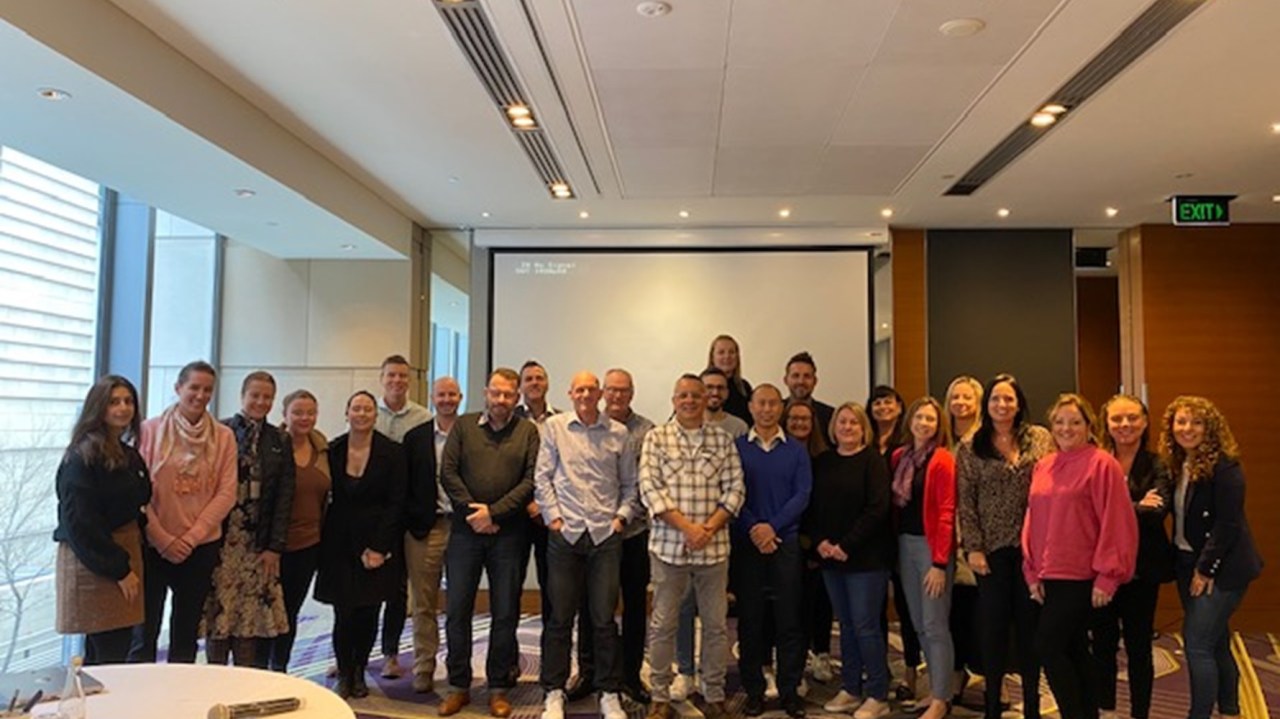
We recently held a Cultural Confidence training session, delivered by John Briggs, in which our employees in Australia were educated on facts about historical and contemporary issues affecting Aboriginal people and the broader Aboriginal community. The session focused on practical strategies to acknowledge these issues and how they can impact indigenous people entering the workforce.
One key takeaway for many of the attendees was the importance of the Welcome to Country, the language involved in this tradition, and how it may be used as part of their day-to-day work. Language is not only a crucial tool we use every day to communicate our ideas and culture with others but also a critical aspect of our identity.
Promoting diversity, inclusion and equal opportunities for all is a central tenet of CWT’s corporate social responsibility program – what we call Responsible Business (RB). In Australia, we are a proud ambassador and partner of the Indigenous Literacy Foundation (ILF), a not-for-profit, community-led organization that responds to requests from remote communities for culturally relevant books, including early learning board books, resources, and programs to help them create and publish their stories in languages of their choice.
This year, the ILF is on track to publish 40 books in 22 First Languages, helping to preserve Aboriginal and Torres Strait Islander languages and stories for generations to come. They are also translating several well-known titles such as The Very Hungry Caterpillar and Where is the Green Sheep? into 10 languages. Making books with communities that children can relate to and in their own language is essential to developing preliteracy skills and creating long-term equality.
To commemorate Indigenous Literacy Day on 7 September, CWT’s offices in Australia will hold book swap events to raise funds in support of the ILF’s mission, and the company will match donations from our employees.
Learning about the First Nations language of your local area is a great way to celebrate Indigenous Language Day and connect with the historic culture.
CWT looks forward to celebrating this year’s Indigenous Literacy Day with the ILF, as we continue to work towards a more inclusive society for all.
Image credits: CWT
-
The challenges and opportunities of retaining customers in a changed travel & meetings environment
The conversation around customer retention in corporate travel is nothing new but we have seen the pandemic, the ‘great resignation’, economic recession, and employee-shortages putting more emphasis and pressure on us. It’s a perfect storm. Operational capacity is strained, airlines are under pressure, rental cars harder to come by, and hotel amenities – and to a certain extent – services are pared down.
For the last couple of years, most of the corporate travel industry identified customer retention as an important key performance indicator (KPI) and priority in our strategic plans.
Customer retention measures not only how successful we are at acquiring new customers, but also how successful we are at satisfying existing customers. Ultimately, customer retention increases return on investment (ROI), boosts brand loyalty, and can play a vital role in bringing in new customers.
Just a 5% increase in customer retention can increase company revenue by 25-95% according to research by Frederick Reichheld of Bain & Company (the inventor of the net promoter score). On top of that, it is more cost-effective to retain customers. It’s a whopping 6 to 7 times more expensive to acquire a new customer than it is to retain one. It’s widely accepted that it’s easier to retain an existing customer, but in the current climate where we are all struggling for resources, I want to challenge that notion.
Our industry has been hit by a unique combination of forces. This includes the ongoing rise of automation and machine learning, coupled with the complexity of a global pandemic. Artificial intelligence, for example, has affected how our data is collated and processed. Manual approaches to predicting customer retention are no longer competitive. To meet the growing needs of a remote workforce, to the specific requirements and behaviors of our customers and their travel programs, a monumental shift was inevitable. Also, we need to keep in mind that the last three years has affected our customers on multiple levels.
The current situation has made our customers reconsider how and where they spend their travel budget. As travel volumes increase and we see our beloved business travelers return, we are starting to see a wave of dissatisfaction as the entire travel industry contends with a surge in pent-up demand coupled with labor shortages. This comes at a time when brand loyalty is up for grabs.
Best practice to next practice
In this changing landscape, those who prioritize Customer Experience (CX) will be in a better position to gain loyalty, build resilience, and future-proof their business. CX is so much more than a feeling, more than a department, and more than a phase in our overall customer journeys. It is a customer-centric way of doing business, one that requires analytical leadership, cross-functional collaboration, and continuous iteration to deliver a great customer experience.
Travel buyers have a tough nut to crack. Their travellers’ buying behavior is shifting. Well-being, technology, and value dominate the scene. Tech disruption is challenging the status quo and changing our industry faster than ever before. These are important considerations for our customers. As a result, we must assess the ability of our teams to adapt, deliver, and exceed evolving expectations. On top of that, travellers’ willingness to share information and opinions has influenced buying behavior significantly in recent years, and the nature and pace continues to evolve. This requires the industry to step-up and stay on top of their game when it comes to customer retention.
The long game
Customer retention strategies are mostly related to creating strategy and vision, demonstrating value, being a trusted advisor, and solidifying longevity with your customer.
It’s important to start retention activities early. 24 months before any contract expiration is the (bare) minimum. I would set expectations early and often, create a clear roadmap for the future of the partnership, and don’t be afraid to ask for feedback – and act on it! And don’t be complacent thinking your relationships are solid. Make sure there are multi-level relationships, and your customer knows your entire team.
Customer retention in the travel industry should be at the forefront of all our plans. We need to move from best practice to “next practice.” Creating a robust customer retention strategy to increase CX can help us thrive in the current climate. We must make a real commitment to our customers and to ourselves – taking better care of the customers we keep, being pro-active, personal, and thoughtful will be a necessity for many years to come.
Maura Geertsma is Head of CWT’s Customer Experience Center of Excellence.
-

Figures matter – How a comprehensive approach to data can benefit your meetings and events program
Let’s begin by saying that data is not a technology issue. It is a people challenge. Today, corporations encounter vast volumes of data, as well as new sources of data, which include figures from diverse sources, text, pictures, and other forms of unstructured data. When we focus on meetings and events activity, data is pulled from many directions: hotel reservations, travel bookings, instalments paid to venues, payments made to large suppliers or small suppliers, card payments and even cash payments in some parts of the world. Event costs and payments are only one part. Think for a moment about all of the attendee data needed to organise an event. From email addresses to dietary requirements, personal information needs to be stored securely and used wisely.
There are crucial questions that only data can answer. For example, how many people attended the meeting? Did they stay for the full length of the event? What was the most popular part of the event? What was the overall satisfaction level? What was the final price per attendee?
The responses to those questions may interest different departments that, after all, belong to the same entity. However, at a company, what is relevant for one department may not be for another. For example, a marketing department in a particular country decides to run a big event aimed at their local prospects focussing on quality while global procurement is inclined to achieve cost control. Recognising these differences requires stakeholders’ engagement and agreements to make changes. A strategic meetings management (SMM) space can facilitate these conversations and find mechanisms to make them work. How can these expectations converge? With figures. Data can cement the idea that you can work together and get expected results.
One step ahead
We subscribe to the philosophy that what gets measured gets improved, and that data leads to better decision making. With improved processes, using our total meetings management (TMM) methodology, you can easily adapt to tracking elements of the meeting that were typically outside of SMM. Before the pandemic, most organizations spent around 70% of their budget on small meetings, a spend category rarely tracked or managed. Other examples include the shift from live to virtual events and then how quickly they began to shift back or the importance of sustainability. Many organizations are working towards making their events more sustainable and then assessing how they stack up against other companies in their space.
It‘s argued that an estimated 80-90% of all new data is unstructured, according to research by digital publication Analytics Insight, meaning that it is not easily captured or made quantifiable. The fluidity of events data compounds the complexity of managing this category in a way that consistently delivers value for your program. Data cuts across traditional organizational boundaries, often without clear ownership. Many companies prefer to collect and own their own data. The challenge that can arise here is knowing what to do with the intelligence collected. Simply reporting results is not enough and we need to utilize data to drive business decisions and expand program reach. With increased global visibility, program value can be delivered in the form of savings, efficiencies, reduction of risk, and improved service quality.
The right technology
A comprehensive business intelligence strategy begins with having the right technology, configured in the right way to track and uncover opportunities that exist while supporting overarching organizational objectives. By tracking your meeting at every step of the event life cycle you are supporting company goals, enabling efficiencies, and driving the importance of policy adoption.
The TMM approach to data
SMM is and will continue to be the foundation of meetings management and without it you cannot establish the baseline for your overall program. It is also how you measure the health and maturity of where your program is within the life cycle. Taking the next step into TMM allows you to be a pioneer in the industry, tracking data elements when they are important to your business and helping you make real time decisions in a strategic and comprehensive way. With a TMM approach to data and heightened data visibility, focused strategies can be put in place to showcase meetings as an enabler to business. In summary, it will allow you to:
- Negotiate more competitive deals
- Drive accountability to suppliers
- Expose expenditure versus budget
- Reduce risk and adhere to compliance policies
- Ensure adherence to preferred rates and concessions
- Design behavioral analytics for more targeted communications to attendees
- Measure customer satisfaction and adapt as necessary
The data, when structured in the right way, will allow you to engage, educate, and influence different stakeholder groups and gain momentum against organizational objectives.
As you can see, collecting data is only part of the equation. Data analysis and the insights that can be drawn are essential to the success and evolution of your program.
Rachel Lunderborg – Senior Director | Global Process and Technology CWT Meetings and Events