
Introducing the latest myCWT product and service enhancements
Building on our digital, omnichannel myCWT platform, our new products and services will simplify travel management for you and your employees – anytime, anywhere, anyhow.
Note: Featured services may not be available in your country at this time. Please reach out to your CWT representative for more details.
Hear from Chief Product Officer, Erica Antony as she shares the key product highlights of 2024, along with the key areas driving innovation.
-
2040: Baseline, Boom or Bust
As we enter an era of rapid transformation and unprecedented challenges, it is essential for travel managers, meeting & event planners, and corporate decision-makers to look ahead and frame our current strategic thinking with a clear vision of the future. Business travel and meetings and events (M&E) are poised for significant change over the next decade and a half, driven by a complex interplay of sustainability goals, technological advancements, evolving work models, and geopolitical dynamics.
In this paper to mark the 10th anniversary of our Global Business Travel Forecast, we explore, for the first time, a long-term vision of the future and potential trajectories through three distinct scenarios, each offering insights into how these forces should affect policy-making, budgeting and priorities. By examining these scenarios, we can better understand the diverse possibilities that lie ahead and the strategic imperatives required to thrive in each potential future.
Based on trajectory data analysis and interviews with industry leaders, behaviorists and climate tech founders, this forward-looking approach enables us to anticipate changes, strengthen our strategies, and make informed decisions that align long-term objectives. It is through this lens of foresight and adaptability that we can build resilience, seize opportunities, and navigate the complexities of the future.
We invite you to reflect on the insights presented, and consider how your organization can prepare for the opportunities and challenges that lie ahead. Together we can ensure that travel and meetings remain catalysts for growth, scalability and sustainable practices.
- Scenario development is both an art and a science
- Megatrends Shaping the Future of Business Travel, Meetings and Events
- Sustainability goals the new crux of corporate policy
- Technology Revolutionizes Travel Management
- Modern work models spark new travel patterns
- Changing demographics open doors to new opportunities
- Three Scenarios: Base case, boom and bust
- Future-proofing strategies

-
CWT GBTA Global business travel forecast 2025
When it comes to pricing, global business travel has finally reached an enduring, higher baseline. Prices will continue to rise in 2025, but only moderately, so expect a period of normalized growth.
However, this pricing environment, one of marginal gains and price regularity, is fragile. Global leisure travel has now realized a lot of its pent-up demand, while corporate travel has been resurgent, with 2024 edging at preCovid levels.
There are many factors at play, whether its volatile oil prices, labor costs and constraints, inflationary pressures, and geopolitical factors. As this elevated baseline edges upwards, albeit marginally, travel budgets will come under increased scrutiny, especially as travel patterns and attitudes change.
It’s why business travel can’t be viewed in a silo, and the true value to an organization must be fully realized. This forecast can help with those calculations.
-

Capitalize on emerging technologies in corporate travel
Technological advancements are accelerating at an unprecedented pace. How will emerging innovations like Generative AI, blockchain, and self-sovereign identity (SSI) transform corporate travel?
BTN and CWT probed global CEOs, travel managers, industry consultants and tech experts on the promises, questions, and expectations these innovations raise and how they are set to reshape traveler experience, cost control and service delivery in corporate travel and events.
Download and discover
- The technologies that will have the greatest impact on corporate travel in the next 2-5 years
- How these emerging technologies are poised to control costs, enhance service and security, and boost efficiency
- The critical challenges, opportunities, risks and roadblocks each innovation raises
- What travel managers, buyers and experts anticipate from these innovations
-

Hyper-Personal: The road to a highly-customized experience
One of the top priorities in our quest to strengthen our position as a truly B2B4E platform is to keep improving the personalization of our services so our clients and their traveling employees can benefit from a seamless experience.
Over the last decade, huge advances in artificial intelligence-driven techniques like machine learning and deep learning have made it possible to crunch an enormous amount of data, both numeric and non-numeric, and generate a highly-optimized outcome. Put simply, and in the context of travel, this means we now have the tools to assist in the prediction of travelers’ needs at each and every point in their journey with enormous accuracy. This might sound simple to do but is quite challenging to accomplish.
Let’s use an analogy: If a person orders pizza for dinner three nights in a row, it might seem logical to predict that she will order pizza a fourth time as well, right? Not quite.
There are several reasons why this prediction is fallible. First, just because someone ate something a few nights in a row doesn’t mean they will repeat that endlessly. So, the best we can do is to assign a probability that this person will be ordering pizza. Secondly, it’s important to know the context. Did the person order pizza first three nights in a row because there were no other dinner options around? Or did the person have a kids’ sleepover? Or has the person been working late and pizza is the only option at that time of the night? The variables are endless.
It is only after factoring in all possible contextual variables that you can determine with very high accuracy what the person will or will not order. In technical jargon this is called multi-variable testing or multi-variate regression. Machines can do it far more efficiently than humans.
These techniques can also be used for many other facets of your travel journey to make the experience more enjoyable and frictionless. At CWT, for instance, we now have an increased ability to predict well in advance of a trip if the flight is likely to be delayed or cancelled with a high degree of accuracy. Based on this intelligence we can – first of all – give a fair heads-up to the travelers and also recommend alternative options tailored to their needs as well as their companies’ requirements.
Another new innovation at CWT is our personalized chatbot, which can notify travelers when it detects there is a booking with overnight stay and the hotel is missing from the itinerary. Not only will the bot notify the travelers alerting them of the situation, it also makes hotel recommendations based on the travelers preferences and their company’s travel policy. The same logic can be extended to predicting and recommending other on-trip services like ground transfer and things to do in a highly-contextualized environment.
All of these innovations are quite a feat given that each individual can assume an unlimited number of consumer personas depending on the context, timing, and several other factors. To be able to sift through all of these seemingly endless combinations in real-time and home in on that specific need with a corresponding relevant offer at the right time, is the secret sauce. To be able to do this for every single person, every single time, across dozens or perhaps hundreds of possible offers, is the new frontier.
Today, we are getting progressively close to this ideal paradigm where we are able to move away from just offering something routine to being able to anticipate a very focused and discrete need and to make a highly relevant and curated offer toward that exact need at the exact time. In other words, hyper-personalization.
And although there has been remarkable progress in technology and techniques to personalize content, we still have a long way to go to create what I call “empathetic AI” – technology that can sense things and situations. It doesn’t yet exist and possibly may not exist in the near future.
This is where human-touch comes in. We, humans, are astonishingly adept at “sensing” things. Not just stark differences between good mood and bad mood, but even highly-nuanced things like sarcasm, subtle body language, hesitation, eagerness, and the list goes on. Humans add enormous value in such instances, and this is where we can complement technology.
Image credits: Adobe Stock
-

CWT appoints Nick Vournakis to head-up newly expanded Global Customer Group
CWT, the B2B4E travel management platform, today announces the appointment of Nick Vournakis as head of the CWT Global Customer Group. This newly expanded position will encompass his existing responsibilities as President of CWT Sato Travel, CWT’s military and government division, as well as assuming responsibility for all of CWT’s global customer accounts.
Under the title of Managing Director Global Customer Group, and taking effect from 1 July 2020, Nick will continue to report to Kelly L. Kuhn, CWT’s Chief Customer Officer.
Current Global Customer Group lead, Cathy Voss, will be appointed to a new role of Senior Strategic Advisor, as she transitions towards retirement, having handed over to Nick. With effect from 1 July 2020, in her new position, she will support strategic commercial initiatives for the customer organization, and continue to report to Kelly L. Kuhn.
“Nick has an outstanding track record of supporting customers and delivering incredible results across some of the most complex and specialized travel programs imaginable. The breadth of his experience across two decades at CWT, provides an exciting platform for this new position,” said Kelly L. Kuhn. “Cathy is also a rock star, and having worked here for 35 years has finally persuaded me to agree to her retirement ambitions, so it is with elation, tinged with a bit of sadness, that I wish them both every success in their new roles.”
In his 20 years with CWT, and prior to running CWT Sato Travel, Nick has held a variety of senior leadership roles across the business including SVP General Manager CWT Canada, SVP Global Marketing, and VP Solutions Group Worldwide. A graduate of Miami University, he is also a former Manager of the Ernst & Young Consulting Strategy Practice.
CWT is a leading global partner in business travel, meetings, and events. Operating across six continents, we deliver sustainable, tailored solutions that help organizations connect, engage, and thrive in an evolving world. Our myCWT platform integrates advanced technology with human expertise to simplify travel and enhance traveler and attendee experiences. Extensive global coverage, seamless data integration, AI-driven analytics, and carbon-conscious travel tools enable businesses to optimize their travel and meetings programs while delivering measurable value.
With 150 years of industry experience and a deep commitment to partnership, CWT collaborates with clients to shape the future of business travel and events, making them more efficient, responsible, and impactful.
About CWT Sato Travel
For over 70 years, CWT Sato Travel has served as the largest provider of global corporate travel services for the U.S. military and government agencies. As a division of CWT, we have access to resources that help our customers travel more efficiently and economically, while still providing an enjoyable experience.
We issue more than 6.3 million transactions annually to U.S. military and government travelers, in nearly 187 sites worldwide, and handle more than $2.6 billion in annual sales. And we do all this while staying compliant with each agency’s policies and procedures to help them achieve their specific mission requirements. -

The deed is done: What’s next after Brexit?
The deed is done. Brexit is begun.
The United Kingdom is no longer a member state of the European Union (EU).
And how did we recognize this historic moment? With the false chiming of Big Ben.
So perhaps I could beg forgiveness and paraphrase a stanza in WH Auden’s poem, Funeral BluesThe Euro-stars are not wanted now: put out every one;
Pack off the loons and dismantle the fun;
Pour away the champagne and stop stockpiling food;
For nothing now can ever come to any good.Or can it?
The United Kingdom (despite two countries not voting to leave, so perhaps the ‘united’ could be a misnomer) is now in a transition period until at least 31 December 2020, while our government negotiates the nature and style of our future relationship between with the EU – based on the Political Declaration agreed between the EU and the UK in October 2019. This means that, with the exception of treaties and acts (which were not binding to the UK before the entry into force of the Withdrawal Agreement), there is, in fact, no change in our adherence to EU policies and laws. We continue to:
- Apply the EU’s Justice and Home Affairs policy (we can still, as before, opt-in or –out of amendments, enhancements, or replacements).
- Be subject to the EU’s enforcement mechanisms.
- Be subject to the jurisdiction of the EU’s Court of Justice.
- Remain in the EU Customs Union and in the Single Market with all four freedoms, and all EU policies applying.
- Respect all international agreements the EU has signed, and will not be able to apply new agreements in areas of EU-exclusive competence unless authorized to do so by the EU.
And for my industry, the good news is that there is no impact on travel and tourism to or from the UK during the transition period.
But the dust has not yet settled, and we have the prospect of watching what will be the fastest-ever set of international negotiations if we are to finish by 31 December 2020.
For now at least (and back to Mr. Auden’s own superb words), there is no need to:
Stop all the clocks, cut off the telephone,
Prevent the dog from barking with a juicy bone,
Silence the pianos and with muffled drum,
Bring out the coffin, let the mourners come.Image credits: Adobe Stock
-

CWT M&E shifts to total meetings management under Kari Wendel; Hires new leader for SMM strategy
CWT Meetings & Events, the global M&E division of CWT, the B2B4E travel management platform, has created a specialized team focused on strategic customers within its new global operating model.
Kari Wendel, Global Vice President, Strategic Customers, CWT M&E, will lead the group, which will provide all services, including Strategic Meetings Management (SMM) and end-to-end meetings and events, under one roof to M&E’s top global strategic clients. These clients were selected based on criteria that include size and opportunity for growth and program expansion.
With this new strategy, CWT M&E’s global strategic customers will benefit from optimizing their visibility to all of their meetings spend and taking advantage of the best that CWT has to offer across all services areas, including best practices applied consistently across the enterprise, markets, and regions, and ranging from product launches to incentive programs to industry-specific events.
“Total meetings management is where the industry is heading, based on recent competitive bids, and we are leading the way. This is the next step in our evolution as experts in both SMM and all things meetings and events,” says Kari Wendel, who is stepping away from a purely SMM leadership role to embrace both SMM and meetings and events for strategic customers.

In her place, Kari has tapped Monica Dickenson, CMP, SMMC, as Senior Director of the newly-created Global SMM Center of Excellence (COE) within her team.
“As part of our new strategy, we are formalizing for the first time a Global Center of Excellence specifically for SMM. We are thrilled that Monica is leading the Center and our overall SMM strategy,” she adds. “Monica is a significant asset, not just to our already strong SMM teams, but to CWT M&E and its clients as part of our new global operating model.”
Under Monica’s direction, the SMM COE will support the entire global M&E organization to ensure advancement by county/region, continued wins with clients that are striving for SMM success, and providing thought leadership in the industry through public speaking engagements, authoring best practices pieces, and sharing information on advanced SMM principles.
Prior to joining CWT, Monica served as Head of Global Meetings and Events at Shire. She also previously worked with Amex GBT, where she led venue sourcing and supplier contract management strategy, and at BCD, where she worked with global clients on their strategic meetings management strategy.
CWT is a leading global partner in business travel, meetings, and events. Operating across six continents, we deliver sustainable, tailored solutions that help organizations connect, engage, and thrive in an evolving world. Our myCWT platform integrates advanced technology with human expertise to simplify travel and enhance traveler and attendee experiences. Extensive global coverage, seamless data integration, AI-driven analytics, and carbon-conscious travel tools enable businesses to optimize their travel and meetings programs while delivering measurable value.
With 150 years of industry experience and a deep commitment to partnership, CWT collaborates with clients to shape the future of business travel and events, making them more efficient, responsible, and impactful.
CWT Meetings & Events
CWT Meetings & Events (M&E) is an award-winning global corporate events management service. Representing all industry sectors, CWT M&E delivers comprehensive live, virtual and hybrid event solutions for thousands of customers every year. Ranging from end to end productions of some of the world’s largest and complex global conferences, through to intimate national teambuilding experiences.
Follow us on LinkedIn, Facebook and Twitter. -

NDC: Display and going for the last mile
This is the final piece of our three-part blog series on NDC. On our first two posts we talked about how airlines and the industry will distribute content via New Distribution Capabilities, or NDC, followed by why content with demonstrative value to the customer is critical in driving mass adoption.
In our third offering today, we’ll discuss the importance of enabling business travelers to consume this content – at the point of sale – in a way that’s efficient and engaging.
There is a classic philosophical thought experiment that asks: If a tree falls in a forest and no one is around to hear it, does it make a sound? If we apply a similar logic, with an NDC twist, one could ask: If NDC’s infrastructure is in place and content with clear value to the traveler is available, will it matter if travelers can’t intuitively view what’s on offer and make easy comparisons that lead to an informed purchasing decision?
While NDC addresses some of the elements needed to make rich content available via any channel, it doesn’t really address the challenges of displaying richer content. For example:
- How do we efficiently differentiate and retail new airline products and bundles?
- How do we compare airfares and bundles across airlines to assist travelers and travel counselors in making an efficient and informed decision?
- How do we improve the user experience using rich content and measure the impact?
- As the medium itself becomes increasingly complex, how do we account for an evolving platform that includes mobile and virtual assistants?
It’s clear that if we solve for distribution and content without display, we gain minimal to no value. In effect, NDC becomes a two-legged stool unless the limitations around how you actually shop for airline products, bundles, and services are addressed in a way that satisfies not only travelers’ user experience, but also airlines’ retailing opportunities, without significantly increasing the cost to operate such a system.
We can achieve this only through an omnichannel solution that makes it easier to understand and purchase rich content across all airlines. An alignment around a global standard, like ATPCO’s Next Generation Storefront (NGS), or something similar, is a necessary first step and is the most efficient way we can do this across all channels.
CWT strongly supports a global, collaborative approach and believes the road to enhanced display today is best navigated through NGS. We are encouraged by the momentum we are building: ATPCO’s NGS advisory board has already successfully created a North America standard, and is rapidly pursuing global alignment. To fully support this third leg – display – that will enable NDC to stand on its own, global engagement, buy-in, and action across the entire ecosystem is critical.
To date, there has been a lot of attention paid on NDC’s infrastructure and customer-driven content, the subjects of our first two blogs, but the benefit of solving challenges related to both are lost if we don’t get enhanced display that provide consumer-grade experience right. The industry needs to come together and solve this ‘last mile’. In retail parlance, the last mile is typically the most expensive and inefficient – and utterly inescapable – you need to close that last mile in order for products to ultimately reach the end-users.
A lot has been made on how complex this New Distribution Capability standard is. In these three blogs, we argue that the journey to realizing NDC is quite straightforward — as long as we collaborate as an industry and align our goals on delivering value end-to-end with our customers always top of mind.
Image credits: Adobe Stock
-

CWT Names Richard Thompson as Vice President, Global Internal Communication & Culture
CWT, the B2B4E travel management platform, has appointed Richard Thompson Vice President, Global Internal Communication & Culture. In his newly expanded role, Richard and his team will be responsible for development of CWT culture, employee engagement, people strategy and HR analytics, in addition to continuing his charge of global internal communication.
Richard reports to Catherine Maguire-Vielle, Executive Vice President & Chief Human Resources Officer, at CWT. He is a member of both the Human Resources and Traveler Experience leadership teams.
“Having spent the last three years transforming, shaping and successfully delivering on CWT’s global employee communication strategy, Richard’s knowledge and understanding of our business, people and culture is second to none,” said Catherine Maguire-Vielle. “It’s this experience alongside Richard’s extensive change communication acumen that positions him perfectly to take our people strategy to new heights as a source of measurable value for our employees, customers and company operations alike,” concluded Catherine.
Richard and his global team will partner with executive leaders across the business to accelerate strategic projects around people strategy, company culture and employee community, employee empowerment and engagement. With a particular focus on embedding culture in company operations and grassroots empowerment, his Internal Communication and Culture team will drive employee understanding and engagement with CWT’s priorities as a leading B2B4E travel management platform.
Having joined the company as a Global Employee Communication Director in 2016, Richard was promoted a year later to head of Global Internal Communication, providing strategic advice and business partnership to leadership. He and his team were instrumental in building CWT Buzz, the company’s award-winning enterprise social intranet and online employee community. As part of Richard’s new mantle, he will relocate next month from Paris to CWT HQ in Minneapolis. Having lived in and worked in several countries over the span of his career, this move will bring his global perspective to the company US headquarter operations.
Prior to joining CWT, Richard spent over 25 years consulting in the automotive, manufacturing and B2B spaces with companies like Nissan Europe, Capgemini, Technip and Cargill where he successfully addressed the change and corporate communication challenges faced by multinational companies during global transformations. He holds a Bachelor of English Literature from the University of California, Santa Cruz.
CWT is a leading global partner in business travel, meetings, and events. Operating across six continents, we deliver sustainable, tailored solutions that help organizations connect, engage, and thrive in an evolving world. Our myCWT platform integrates advanced technology with human expertise to simplify travel and enhance traveler and attendee experiences. Extensive global coverage, seamless data integration, AI-driven analytics, and carbon-conscious travel tools enable businesses to optimize their travel and meetings programs while delivering measurable value.
With 150 years of industry experience and a deep commitment to partnership, CWT collaborates with clients to shape the future of business travel and events, making them more efficient, responsible, and impactful.
-
Doing business responsibly at CWT
Today, conducting business responsibly is an imperative. Our own employees and customers are expecting that from us. With that in mind, we are constantly working on expanding our Responsible Business program. This short video highlights some of our key Responsible Business achievements of 2019.
We are particularly proud of:
- Our Gold rating by EcoVadis for the third consecutive year;
- RoomIt by CWT donating $100,000 to support the World Childhood Foundation to fight against human trafficking;
- The offsetting of more than 1,300 tons of carbon emissions from several CWT client events and internal meetings;
- And the 32.000 hours invested by our employees in volunteer activities during the 2019 Carlson Community Giving Campaign.
This success inspires us to look ahead to 2020 with excitement.
We are looking forward to continue bringing a positive change in the world.
Image credits: CWT
-

Ridin’the Rails: 3 reasons to tågskryt
Train travel is gaining traction, there is no doubt about it. After the flygskam concept, the Swedish have coined a new term: tågskryt, train-bragging. But what are the factors that make trains so appealing?
- Sustainability
The sustainability of the travel industry is at the forefront of companies’ minds. It’s driven by climate change but, more importantly, it’s supported by the next generation of travelers – millennials, who are poised to become the biggest group of business travelers globally from 2024 onwards, and the centennials who are right behind them.
Deloitte’s Global Millennial Survey 2019 found that climate change is the greatest concern for this generation. With that in mind, it will be a key priority for companies to factor sustainability in their travel policies if they want to attract and retain talent. Offering train travel as an alternative will be an excellent way of doing so. - Comfort
Who doesn’t like to travel from one city center to the other? Aside from convenience, this can save a significant amount on taxi fares and airport fees.
There is also the convenience of arriving with very little time before departure because the security checks are less tedious. Plus, you can bring water, your big bottle of moisturizer, your tweezers… You name it. And you do not need to worry about the size or weight of your luggage.
Once onboard, even if you are in economy class, the seat pitch is far wider than on a plane, and you can always stand up to pop to the toilet or the onboard cafeteria. There’s no seatbelt sign to keep you imprisoned.
Another perk of train travel is that you can use your phone and your computer as much as you want. Sometimes it can be a bit overwhelming to hear people around you talking on the phone for two solid hours non-stop but you can always wear earplugs or ask for a seat in the quiet car. - Poetry
It is undeniable that there is a halo of magic surrounding train travel. The Orient Express and the Trans-Siberian, along with the many musical, film and literature references have added to the mystique.
As Johnny Cash said in 1974 documentary Ridin’ the Rails, “You know, there’s nothing that stirs my imagination like the sound of a steam locomotive. That lonesome whistle cuttin’ through the night, and that column of black smoke and steam throwin’ shadows across the land.”
Image credits: Adobe Stock
- Sustainability
-
CWT Simplifies its EMEA Operations to accelerate its Customer Service proposition
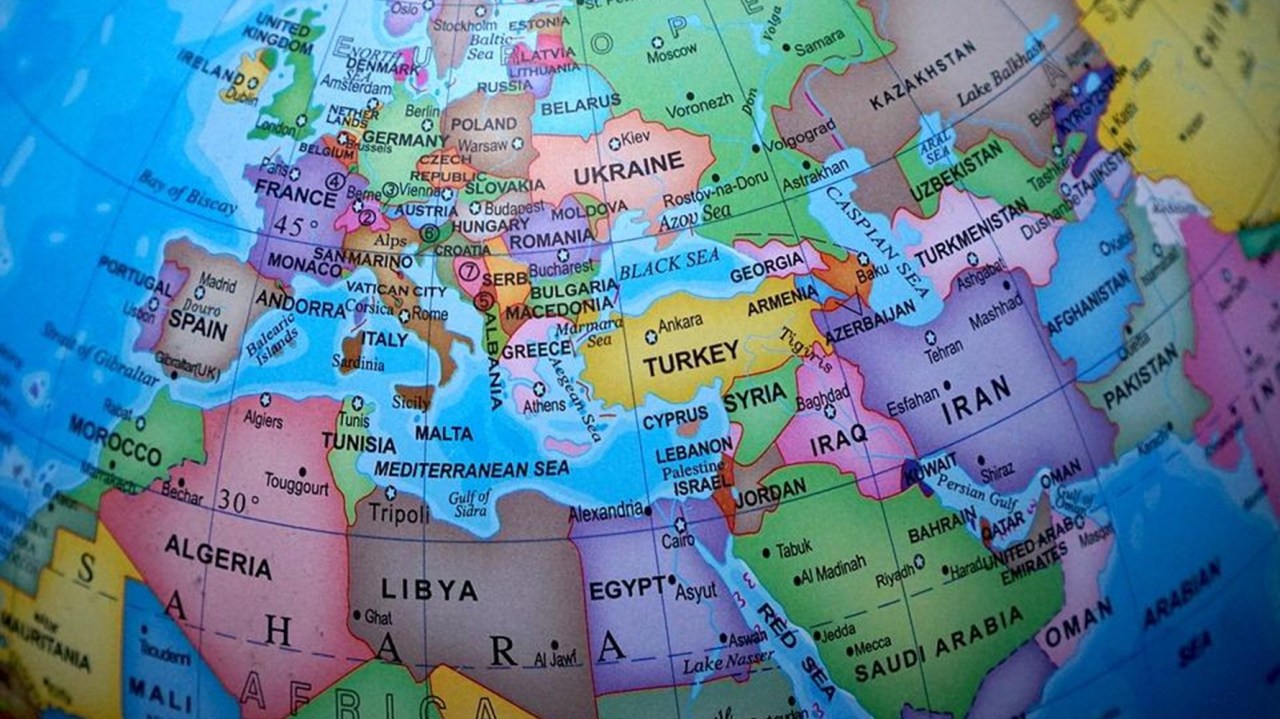
CWT, the B2B4E travel management platform, announces plans to simplify its EMEA operating model within four geographies this month. Following the successful move from a country to a cross-functional EMEA operating model across several major markets last year, CWT is to move its Greece, Morocco, Eastern Europe & Baltic local market management this month into cross-functional Market Management Teams.
“I am delighted with the positive customer response we’ve had over the last year following adjustments made to our customer organization within Germany, Italy, Benelux, UK & Ireland, France, and Spain. Moving from Country Directors to Market Management teams has made us more agile and responsive to our clients’ needs across EMEA,” said Chris Bowen, CWT’s Managing Director, EMEA. “The cross-functional, local management approach has been successfully tried and tested over the last year —and well received by customers who see it as proof that CWT knows how innovate internally as well as with our service offering.”
As part of these changes, the role of Country Manager has been removed for Greece, Morocco, Eastern Europe and The Baltics, incorporating Bulgaria, Hungary, Latvia, Estonia, Lithuania, Czech Republic, Romania and Ukraine.
As a result, the following people are leaving the company at the end of the month: Anthony Venios, Country General Manager Greece; Abdelhamid Bernoussi, General Manager Morocco; Carmen Alexandru, Country Manager Romania; Judit Kollar, General Manager Hungary; Jiri Homolka, Country Manager Czech Republic; Pauls Gusts, Deputy General Manager Latvia and Rasa Barisiene, General Manager Lithuania and Latvia. Kateryna Tarkhanova, Country Manager Ukraine; will leave the company at the end of February.
“I thank Anthony, Abdelhamid, Carmen, Judit, Kateryna, Jiri, Pauls and Rasa for their hard work and dedication and wish them all the best in their future endeavors,” said Chris Bowen.
CWT is a leading global partner in business travel, meetings, and events. Operating across six continents, we deliver sustainable, tailored solutions that help organizations connect, engage, and thrive in an evolving world. Our myCWT platform integrates advanced technology with human expertise to simplify travel and enhance traveler and attendee experiences. Extensive global coverage, seamless data integration, AI-driven analytics, and carbon-conscious travel tools enable businesses to optimize their travel and meetings programs while delivering measurable value.
With 150 years of industry experience and a deep commitment to partnership, CWT collaborates with clients to shape the future of business travel and events, making them more efficient, responsible, and impactful.
-

Fly Zone: What we learned from creating a podcast
It’s launch week for Business Travel On The Fly, the monthly podcast that dives into issues affecting those of us who spend time up in the air, out of the office, and away from home on work trips.
Business travel and the world of work are changing fast. We set out to create a show that supports travelers through unique opportunities and challenges in a format they can access, well, on the fly.
Taking off on the 20th of each month, each episode speaks to industry topics and issues, tackling a hot topic with a guest interview. We had a lot of fun creating our launch editions. Here’s what we learned.
- Experience beats theory
When it comes to business travel, the people who know best are the ones who live it. For the Travel Tips segment, we ask frequent travelers all over the world to give us their best travel hacks. From how to use social media in lieu of loyalty status to getting by when you don’t speak the local language, we’re officially inspired by our peers. Next time you’re on a plane, put down your phone and chat to a fellow passenger. - For intel, ask a cab driver
Whether it’s an analysis of local politics or street-food tips, every traveler knows that taxi and ridesharing drivers are the eye and ears of a city. That’s why our episodes include a Taxi Talk segment. Turns out, many drivers are keen behavioral scientists too.
In episode #1 Julie, a driver in Minneapolis weighs in on how different generations interact with their phones: “I don’t think I’ve ever had a 60-year-old person get in my car and just start to text.”
We’re not saying to scrap your market research. But for anecdotal evidence, check the front seat. - Technology is changing everything
Of course, we know this one. However, our launch episodes with host Christine Kashkari and featuring Tel-Aviv based A.I specialist Ziv Baum and Eric Magnuson, VP of Air Distribution Capabilities at CWT, show us the extent of innovation in the business travel space today, “Technology disruption is creating a situation where you’re going to see a lot of new things,” says Eric.
Look for Business Travel On The Fly on channels including Spotify, Stitcher, and Buzzsprout.
Image credits: Adobe Stock
- Experience beats theory
-
CWT Launches Business Travel On the Fly – a new monthly podcast aimed at business travelers on the road
CWT, the B2B4E travel management platform, today announces the launch of its inaugural monthly podcast, Business Travel On the Fly, that speaks to industry topics and issues affecting business travelers.
“We are constantly looking at ever more meaningful ways to engage with business travelers, and podcasting is a logical and easily accessible innovation in this area,” said Julian Walker, Head of External Market Communications at CWT. “Podcasts are an exciting channel that is growing in reach, relevance and diversity, and Business Travel On the Fly is targeting an audience of on-the-road employees, with relevant issues, in a 15-minute radio show-style format.”
Following positive response to a December pilot episode focused on New Distribution Capabilities (NDC), On the Fly, will tackle one main topic each month with a guest interview, and also provide useful tips and fun commentaries on global travel, plus observations from those helping travelers get to where they’re going, such as taxi or ridesharing drivers. January’s formal launch edition focuses on the use of artificial intelligence and chatbots in travel.
Hosted by CWT’s Christine Kashkari, On the Fly’s launch edition, pilot, and succeeding episodes can be accessed through all the main podcast platforms, including Stitcher, Spotify, and Buzzsprout, as well as through CWT’s website.
Business Travel On the Fly will take off on the 20th of each month, with special editions planned that will cover ad hoc topical developments.
CWT is a leading global partner in business travel, meetings, and events. Operating across six continents, we deliver sustainable, tailored solutions that help organizations connect, engage, and thrive in an evolving world. Our myCWT platform integrates advanced technology with human expertise to simplify travel and enhance traveler and attendee experiences. Extensive global coverage, seamless data integration, AI-driven analytics, and carbon-conscious travel tools enable businesses to optimize their travel and meetings programs while delivering measurable value.
With 150 years of industry experience and a deep commitment to partnership, CWT collaborates with clients to shape the future of business travel and events, making them more efficient, responsible, and impactful.
-

Invisible Health: 3 ways to prioritize the well-being of your traveling employees
Traditionally, January is the month of wellness. With New Year resolutions at the forefront of people’s minds, companies are also considering the health and productivity of their employees.
According to a report by CWT ERM, our energy, resources and marine division, there’s a growing recognition that workers need to be healthy to be productive and to do their best work. This underpins the attention employers are giving to workplace wellness programs generally, and it’s a particular motivation for employers to do more for the well-being of traveling employees.
After all, employees who are fresh and alert and feeling strong, despite the demands of their travel, are likely to make better decisions and be better leaders.
And with the U.S. unemployment rate around a 50-year low and labor markets tight in other parts of the world, companies are being forced to compete for top talent with more than just pay. They need to recognize that potential employees seek to work where they feel their well-being is valued and supported. Yet, some employers have a ways to go, “So far, only about a third of companies say they have a formal system to measure and report on traveler health and well-being,” says Peter Brady, VP Global Technology and Services, CWT ERM.
Here are three ways to prioritize the health of your workforce.
- 1. Shift your mindset
“As a society, we’ve come to realize that it’s okay to not be okay,” says Anne Bridgeman, Director of Customer Group, CRM. It’s critical to align your workplace culture with a wider evolution and reflect that in your policy and communications. For example, in addition to destination information about safety and security, some employers provide mental health information, access to health amenities and technology, such as apps to track jet lag. - Consider the impact of jet lag and fatigue
Many employers in the energy and mining sectors, where safety culture is all-important, have made this connection, but many companies will find value in adding well-being to the program.
“If executives and senior managers are flying business class around Europe but workers making a long trek to reach an oil rig off the coast of Africa are flying coach, a company’s policies may not be properly aligned with its health and safety goals,” adds Stephen Burghardt, CWT ERM’s Director Business Development, EMEA. - Measure and deliver
Metrics matter. It’s important to survey employees to better understand how they are affected by travel-related issues such as fatigue, stress, and nutrition. Use the data to define targeted interventions such as changes in the design of travel policies or adoption of new tools and services to support wellness while traveling.
Find out more in 2020 Vision: A close look at the well-being of traveling employees.
Image credits: Adobe Stock
- 1. Shift your mindset