
Introducing the latest myCWT product and service enhancements
Building on our digital, omnichannel myCWT platform, our new products and services will simplify travel management for you and your employees – anytime, anywhere, anyhow.
Note: Featured services may not be available in your country at this time. Please reach out to your CWT representative for more details.
Hear from Chief Product Officer, Erica Antony as she shares the key product highlights of 2024, along with the key areas driving innovation.
-
2040: Baseline, Boom or Bust
As we enter an era of rapid transformation and unprecedented challenges, it is essential for travel managers, meeting & event planners, and corporate decision-makers to look ahead and frame our current strategic thinking with a clear vision of the future. Business travel and meetings and events (M&E) are poised for significant change over the next decade and a half, driven by a complex interplay of sustainability goals, technological advancements, evolving work models, and geopolitical dynamics.
In this paper to mark the 10th anniversary of our Global Business Travel Forecast, we explore, for the first time, a long-term vision of the future and potential trajectories through three distinct scenarios, each offering insights into how these forces should affect policy-making, budgeting and priorities. By examining these scenarios, we can better understand the diverse possibilities that lie ahead and the strategic imperatives required to thrive in each potential future.
Based on trajectory data analysis and interviews with industry leaders, behaviorists and climate tech founders, this forward-looking approach enables us to anticipate changes, strengthen our strategies, and make informed decisions that align long-term objectives. It is through this lens of foresight and adaptability that we can build resilience, seize opportunities, and navigate the complexities of the future.
We invite you to reflect on the insights presented, and consider how your organization can prepare for the opportunities and challenges that lie ahead. Together we can ensure that travel and meetings remain catalysts for growth, scalability and sustainable practices.
- Scenario development is both an art and a science
- Megatrends Shaping the Future of Business Travel, Meetings and Events
- Sustainability goals the new crux of corporate policy
- Technology Revolutionizes Travel Management
- Modern work models spark new travel patterns
- Changing demographics open doors to new opportunities
- Three Scenarios: Base case, boom and bust
- Future-proofing strategies

-

CWT GBTA Global business travel forecast 2025
When it comes to pricing, global business travel has finally reached an enduring, higher baseline. Prices will continue to rise in 2025, but only moderately, so expect a period of normalized growth.
However, this pricing environment, one of marginal gains and price regularity, is fragile. Global leisure travel has now realized a lot of its pent-up demand, while corporate travel has been resurgent, with 2024 edging at preCovid levels.
There are many factors at play, whether its volatile oil prices, labor costs and constraints, inflationary pressures, and geopolitical factors. As this elevated baseline edges upwards, albeit marginally, travel budgets will come under increased scrutiny, especially as travel patterns and attitudes change.
It’s why business travel can’t be viewed in a silo, and the true value to an organization must be fully realized. This forecast can help with those calculations.
-

Capitalize on emerging technologies in corporate travel
Technological advancements are accelerating at an unprecedented pace. How will emerging innovations like Generative AI, blockchain, and self-sovereign identity (SSI) transform corporate travel?
BTN and CWT probed global CEOs, travel managers, industry consultants and tech experts on the promises, questions, and expectations these innovations raise and how they are set to reshape traveler experience, cost control and service delivery in corporate travel and events.
Download and discover
- The technologies that will have the greatest impact on corporate travel in the next 2-5 years
- How these emerging technologies are poised to control costs, enhance service and security, and boost efficiency
- The critical challenges, opportunities, risks and roadblocks each innovation raises
- What travel managers, buyers and experts anticipate from these innovations
-

Mapping the door-to-door travel experience: Quantifying traveler wellbeing
Results at a glance
- Average end-to-end trip time of 9.5 hours for a typical flight between 4-6 hours on selected routes suggesting the entire journey is far more intensive than just flight time
- Scores averaging 7-out-of-10 or higher on our travel experience index based on a shift from business to economy/ premium economy
- 7% cost savings on total APAC spend projected based on the same shift scenario
- Opportunity to segment policy allowance by either job hierarchy or travel frequency to maintain savings with an even smaller impact to experience
Challenge
A global Energy, Resource and Marine client required an impact analysis on the implications of changing policy from business class to economy/ premium economy on medium haul routes (flights between 4-6 hours) from a cost and traveler experience standpoint.
The organization wanted to ensure they remained competitive in the market to attract and retain top talent among key travelers.
They were looking for a complete study on the traveler experience from booking to trip completion with an aim to balance cost with experience and wellbeing.
Solution
CWT Solutions Group identified the key routes impacted by the proposed change to policy. With a majority of APAC routes falling between 4-6 hours, finding the balance between cost saving and employee experience was crucial.
The client’s current travel policy and booking behaviors were both benchmarked against peer group to evaluate alignment within industry.
A custom 12-point model to consider the complete door-to-door journey of a traveler was developed. Mapping the travel experience by:
- Pre-flight: distance to airport, lounge to priority boarding
- Mid-Flight: flight length, day of travel, to flight timing
- Post-Flight: distance to office/hotel
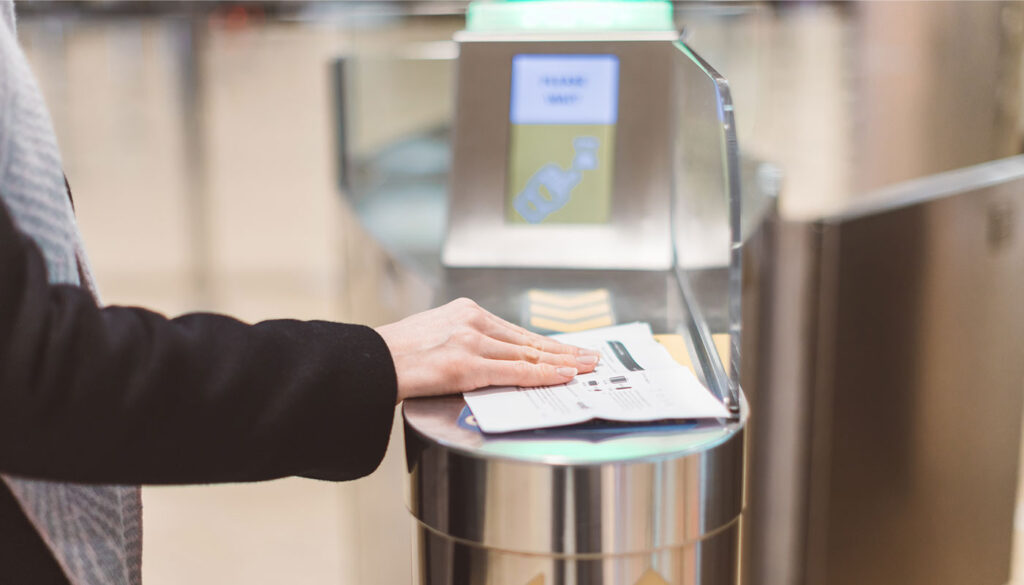
Results
The travel journey is far more intensive than flight time alone. A typical flight between 4-6 hours has an average end-to-end trip time of 9.5 hours, which is important to evaluate.
A shift from business to economy/ premium economy-maintained scores averaging 7-out-of-10 or higher on our travel experience index. Ensuring a continued positive travel experience.
The same shift scenario projected a 7% cost savings on total APAC spend. Showing clear benefit from a financial perspective.
Further analysis suggested an opportunity to segment policy allowance by either job hierarchy or travel frequency to maintain savings with an even smaller impact to experience, which is common practice in APAC Region.
-

Back into the thick of it
2020 is a year we will always remember, with the same vividness of key personal and world events – where you were, how you felt, how you were affected. The interest will be in others’ stories. our experiences and perspectives are unique and very personal.
For me it began as 2019 ended – a frenetic calendar of early morning calls, late meetings, and quick catch ups – all wrapped up in energy and enthusiasm with colleagues and customers.
But it had ground to a halt by mid-March and, anticipating travel bans in Asia (where I was based), I made a personal decision to leave Singapore and work from the US for a few weeks, so as not to miss my daughter’s wedding.
But it was a bitter-sweet return to Chicago. My travel was incident free, but my daughter’s wedding had to be postponed indefinitely due to COVID gathering restrictions, and I soon joined many people across the US on full time leave without pay (LWOP).
It was disorienting, but as I look back over the past few months, I split it into three phases. The first being a maniacal need to fill my days – working out, multiple daily dog walks, writing letters, etc.
The second phase was all about self-reflection and self-improvement – books, podcasts, online courses, meditation, etc.
And the third phase was, unexpectedly, one of gratitude – a deep realization that amidst all this craziness and uncertainty, I had been given the gift of time and the ability with which to spend it however I choose – and so I lived life to the full (or as fully as COVID allowed) and engaged with colleagues, tuned into all employee calls, and realized that I was still playing a vital part in my company’s future.
And then the call back to work came.
A completely different job, based in the US, and a chance to put my learnings from LWOP into practice – and it was like jumping into a refreshingly cool swimming pool on a hot summer’s day.
It is still early days, and I am finding my feet, but I have been made to feel so welcome that the culture of inclusiveness and caring has made me feel even more optimistic about the possibilities.
I am already working with so many talented colleagues across the world, building a post-COVID value proposition for our customers – many of whom are in the same new position as me. What more could I ask for … how fortunate am I?
We have already had our first socially distanced (of course) leadership team meeting and the focus and drive for our future was palpable.
Coming back in refreshed, I can see that my new colleagues have not been idle while I was away. And I see through new eyes how people and connections are the heart of any company and that a culture of personal caring and camaraderie is essential.
And I guess I am lucky. I get to do what I love, create value for our customers, work with my old customer team, and have a new corporate family.
The road ahead for many of us may still uncertain, and it will most likely be long. But teamwork, as always, is the recipe for success – and I am delighted to once again be one of the ingredients.
Image credits: Adobe Stock
-

Natural Progression: Can the pandemic act as a catalyst for more sustainable events?
After long periods of isolation, meeting planners and attendees are breathing a sigh of relief as safe, small meetings resume. Without a doubt, the situation remains fluid and restrictions are changing daily as some countries experience second and third waves, and so there remains a sense of caution.
But as we celebrate small victories, could now be a chance to seize the moment? Can companies use the lessons of the pandemic to stop paying lip service to “sustainability” and create events that contribute to a new, more meaningful, healthier and equal society; one that exists in equilibrium with nature? COVID-19 has taught us that we can make big changes fast, that the world is – for better or worse – hyper-connected, and we need gatherings more than we thought.
“While ensuring the safety and wellbeing of attendees is by far the top priority for event planners at the moment, creating more sustainable events still remains high on the agenda,” says Armando Mastrapasqua, CWT Meetings & Events‘ Senior Director for the Southern EMEA region. “We were able to pivot quickly at the start of the pandemic to new ways of working, and we have been able to develop strategies that help clients achieve both these objectives simultaneously.”
Since 2018, CWT Italy has been one of a small number of companies to achieve the ISO 20121 certification for sustainable events. Recently, it has worked with the certification agency, TÜV Rheinland, to add epidemic/pandemic risk management to its ISO 20121 certification and on 14 October, two events organized by CWT M&E Italy were officially certified as “Sustainable Including Epidemic/Pandemic Risk Management”. We asked the team that organized those events for three ways that planners can boost event sustainability while managing risks associated with the coronavirus at the same time.
Go virtual (or hybrid) – When a financial services company approached CWT M&E to organize a one-day sales conference for 100 people, the team proposed a concept where the speakers would gather at a physical location while complying with local safety requirements, but the attendees would join the event virtually.
The client’s Italian HQ was identified as the preferred location to host the nine speakers. Specific site inspections were carried out to check that the required safety measures could be implemented, and numerous risk management actions were taken – for example, speakers kept fixed distances on set and each presenter had their own microphone.
To replace the buzz of an in-person event, participants were sent a gift box which included a cocktail kit. CWT M&E created a dedicated web-based platform to host the event, which participants could access seamlessly by clicking a link sent to them via email. A director working behind the scenes controlled the flow of content to create an experience similar a traditional “live” event.
The event was a success and attendees praised the client for their emphasis on duty of care. Hosting virtual or hybrid events can boost your sustainability credentials, eliminating the risk of infection and pressure on the environment resulting from travel – without skimping on creativity.
Embrace all – Sensible management and attention to diversity is core to sustainability. COVID-19 has emphasised the need to embrace everyone in the planning of events by ensuring that vulnerable individuals are able to participate. Virtual or hybrid events mean they will not have to leave their home, eliminating the risk of contagion.
Buy local – COVID-19 has put a new spin on the importance of using seasonal, local produce. Supply chain disruptions due to the pandemic highlight the importance of local goods. Plus, buying local provides much-needed economic stimulus for producers and farmers while reducing an event’s carbon footprint.
CWT M&E organized a two-day virtual team-building exercise for a life sciences client around the theme, “a recipe for success.” A well-known Italian chef led a virtual cooking class. In advance of the class, attendees were sent a “mystery box” packed with, seasonal Italian ingredients needed to create the recipes at home, taking into account intolerances and dietary requirements. The event met the sustainability targets of local sourcing and reduced waste and was fully paperless. 82% of attendees ranked the event highly.
Image credits: Adobe Stock
-

Tearing up the BCP rulebook: 3 ways to approach business continuity during a time of uncertainty
The phrase ‘BCP’ (Business continuity planning) borders on a misnomer as companies around the world continue to navigate and plan around the impact of Covid-19. BCP is the process of creating a framework to prevent and recover from potential threats. In addition to prevention, BCP planning enables ongoing operations before and during disaster recovery; threats like a local flood, for example, or building works at the office.
Nothing has shaken the concept of ‘business continuity’ quite like the global pandemic that we’re still living through. Companies are adapting on the hoof, sometimes changing business models entirely.
When a disruption like this hits all regions simultaneously rigid thinking has no place. When work-from-home directives were introduced, CWT had to rapidly deploy new solutions to enable our highly-skilled staff to work from home in a secure manner, and to ensure that appropriate levels of service were delivered without interruption. It hasn’t been business-as-usual for business travel and meetings & events in recent months.
Harshal Mehta, VP and Chief Information Security Officer, oversees CWT’s BCP framework. He shares three ways that companies can tear up the BCP rulebook and adapt for a new world.
Set up a crisis-response team
The global pandemic created unprecedented operational, economic, and social challenges for the entire world, specifically for the travel sector. Our company felt disruptions across all regions, necessitating an effective and decisive response from our management. To that end, we activated a cross-functional Crisis Response Team comprised of key leaders from each line of business to provide strategic leadership with three key objectives:
- Ensuring the safety of our employees
- Ensuring the availability of critical business services in a remote environment
- Delivering services for our clients
The Crisis Response Team met on daily basis to track the safety of our employees, analyze risks and emerging issues, and look at the need for additional resources along with ever-changing dynamics in the pandemic situation. We prepared daily reports for our Executive leadership team covering multiple domains such as finance, legal, technology, communications, and operations. The reports facilitated faster decision-making.
From a risk perspective, we enabled additional parameters such as identifying any new risk (either financial, cyber or technology) and flow back to the crisis response framework to assess whether additional controls or measures need to be taken. A strong framework should be an enterprise initiative and not reside with any particular business unit or department. Owners need to identify risks and make sure they get collated and viewed by the leadership through a single lens.
Change, adopt, rinse and repeat
Any crisis brings new opportunities and areas that can be improved for better planning. Global companies should consider the expanded use of ‘work from home’ as a business continuity solution and look at anticipating outages that impact the entire globe rather than looking at individual country or region specific. With this crisis, CWT is better prepared for moving away from a regional crisis model with fall-back mechanisms in place for global disruptions.
Stay agile
BCPs are often produced and remain static for two to three years, becoming progressively less relevant as organizational changes take place. A strong approach develops capabilities in people and is supported by practical content and control mechanisms that keep the system current and working. Our BCP framework is updated twice per year and tested annually with real life scenarios to keep it current and reliable when needed.
There are always opportunities to learn and improve. We’re putting the experience of the global pandemic to use to understand how our solutions and strategies can be modified to mitigate the impact, not just of pandemics, but of any unplanned business disruption we may face in the future.
One of the operational changes Covid brings to the fore is the mindset of people working more remotely. This can spur more innovation in technology, ensuring that the environment for home workers is as seamless and reliable as working from physical offices.
Enabling remote working for the majority of our staff without compromising on service and security was a big win. Global companies can only execute such fast and effective changes by working together, adapting and staying agile.
Image credits: Adobe Stock
-

Embrace Your Inner Yogi: Meetings & Events in a Post-Covid-19 World
As countries continue to grapple with controlling the spread of COVID-19, the meetings and events industry has begun the long and challenging road to recovery. Around the world, including parts of Asia Pacific, restrictions are being eased and face-to-face meetings and events are gradually being allowed to resume. In Australia, for instance, both indoor and outdoor events have been allowed to restart since July, albeit with various restrictions around capacity and safe distancing. Similarly, Singapore recently announced that organisers can apply to hold events with up to 250 people from 1 October.
At CWT Meetings & Events, we are seeing positivity amongst our clients in various markets, with corporates starting to make domestic event inquiries and arrangements for Q4 2020. Companies are rethinking their meeting strategies for the last quarter of this year, as well as for next year, to ensure they’re able to secure the venues and accommodation of their choice.
However, even as live events start up again, it’s becoming clear that things aren’t going back to “normal” – at least not for a while. Safety remains the top priority, and till a vaccine is developed we will have to take precautions that were not necessary prior to the pandemic. The choice of destinations and venues will be smaller. And we can expect to see a lot more events with hybrid formats that combine live and virtual concepts.
In this new and somewhat unfamiliar landscape, if our industry is to successfully re-build itself and emerge stronger from this crisis, we need to think and act differently.
Now, for those of you who read the headline, whipped out your yoga mat and assumed the downward dog position, I apologise – I was, of course, speaking analogically.
First, we need more flexibility. The situation remains highly unpredictable and restrictions can change at the last minute, so corporates are naturally cautious about planning meetings and events. In response, many airlines, hotels, venues and other suppliers have introduced simplified contracts, as well as revised policies to allow changes or cancellations at short notice without severe penalties. Hotels are also being more adaptable in how they allocate space – for example, giving organisers exclusive use of certain sections of the property in order to limit contact with attendees from other groups. These initiatives have certainly helped companies plan and book with more confidence.
We also need more patience. Many suppliers now have smaller teams, and in some cases junior staff with less experience have had to step up to handle sales. This has resulted in longer turnaround times for RFPs and made the negotiation process more time consuming. As such, it’s a good idea for organisers to build in longer lead times when planning events.
And, of course, we need more wisdom. Never has it been more important for meeting and event management companies to step up our game and become trusted advisors to our clients. Organisers are seeking clarity around restrictions. They want to know what options are available to them, and the risks involved. And they are looking for guidance on how to create unique, engaging and memorable experiences for their attendees in the safest possible way. Companies like ours need to leverage our extensive experience, our domain knowledge, and our vast network of supplier partners, convention bureaus and other stakeholders, to provide organisers with the heightened level of support and counsel they need during this period of uncertainty.
A version of this article was first published on Meetings & Conventions Asia and is republished with permission.
Image credits: Adobe Stock
-

Ties that bind: How to build professional relationships when travel is restricted
Whether it’s for work, leisure, or both, traveling to new places and meeting with other people is essential for connection and motivation. It’s not surprising that after a year of restrictions and lockdowns, The Guardian reports that millions of Chinese people are traveling across the country in a spate of “revenge tourism.”
Just as things have started moving, some geographies – including a large swathe of Europe – are facing another wave of temporary restrictions. It can be hard to stay upbeat while plans are put on hold again, however temporary. “Today marks 5 years since we’ve been in 2020,” reads a meme. Just as companies need collaboration more than ever, how do we nurture relationships remotely?
- Keep it real
That viral TV interview in which a professor is interrupted by his two kids live on air has lost its shock factor at a time when the pandemic has put a kibosh on separating the personal from the professional. That’s not such a bad thing. Personal conversations are necessary for thinking outside of the – laptop-shaped – box.
“Authenticity leads to trust, and trust can grant major boons to your organization, “ writes the author of Charismatic Leadership, Kevin Murray, “you can innovate faster. And customers, suppliers, and partners will feel more comfortable working with you.”
Share your struggles, hopes, and stories with colleagues or go further and acknowledge the need for emotional connection in a company-wide charter, “The goal is simple,” says Catherine Maguire-Vielle, CWT’s Chief HR Officer, “to make sure we support each other and make life easier and more comfortable for everyone working from home.” - Love thy tech
I find being on video disconcerting. It’s not because I’m wearing a grubby sweatshirt (I am) but because the sight of my own talking head distracts me from the topic at hand. Others love being on video, complete with comedy backgrounds that make them look like they’re on a tropical beach or outer space (coincidentally, both equally exotic at the moment).
Different tools suit different folks. If your team member insists that “everyone must be on video,” let them know that you prefer audio in certain instances or that you’ll go on video for part of the call. You need to feel comfortable for the conversation to flow. - Have more fun
According to consultancy McKinsey, 97% of employees believe that a lack of connection within a team impacts the outcome of a project. If we are not crossing paths in the office kitchen, it is time to consider strategies to bond virtually – such as a catch-up to discuss a book, virtual Friday drinks, or a WhatsApp thread earmarked for jokes and chit-chat. And where guidelines permit meeting up with colleagues, nothing beats doing so in-person through a platform like CWT M&E’s easy meetings.
Image credits: Adobe Stock
- Keep it real
-

Podcast: Why HR is crucial to helping your employees back to travel
Employee wellbeing is back on top of the corporate agenda, so it is vital your travel policy tackles the issues that matter most to your employees and addresses their concerns in this new world.
In this episode, On The Fly spoke with Valdís Arnórsdóttir, Director of HR Operations, Marel to explore why travel managers should be working closely with their HR professionals to set new policies and procedures in the COVID-19 era.
[buzzsprout episode=’6103171′ player=’true’]
-

Saving face: 7 steps to a safe small meeting
We all know of somebody who has started a complex new role but is yet to meet their colleagues in person, or hosted a creative virtual team brainstorm that started off fizzing with ideas until audio and visual connectivity gave out.
Centuries-old codes of in-person sociability and connectivity have been turned on their heads due to the pandemic; replaced by protocols, policy, and tiny screens. At best, the move to virtual can lead to super focused and efficient conversations and behaviors, at worst tiny screen interactions can hamper motivation and complicate decision-making processes.
Undeniably, some professional situations simply call for face-to-face vs virtual, because networking hurdles are removed, distractions are removed and there is less chance of something being taken out of context. And whilst large scale global corporate meetings are still off the table, the demand for small business meetings is building in geographies where it is safe to do so and nominal travel is involved. In Australia, for instance, both indoor and outdoor events have been allowed to restart since July and the same for Singapore from October, albeit with various restrictions around capacity and safe distancing.
Following the launch of CWT M&E’s easy meetings, an online booking tool to find and directly book meeting rooms around the world, our resident meeting planning experts have identified the seven steps to follow to ensure small meetings are hosted safely – leaving you with the mental headspace to bring the essential ingredients of charisma and connection. That way, the palms of your hands may be sanitized but the social atmosphere needn’t be.
- Go contactless – Avoid shaking hands, hugs and kisses. There are plenty of other touchless greetings. You can ‘smize’ (smile with your eyes), wave, “namaste,” or if you’re really cool, there’s always the foot-tap, hip bump and Vulcan salute from Star Trek.
- Space it out – Get creative with seat configuration. Leave at least one chair between each person and meet in well-ventilated rooms.
- Palm it off – Have plenty of hand sanitiser by the door and on the table and antibacterial soap in the bathrooms for hand-washing.
- Let it flow – Open windows and doors where possible, to encourage air flow;avoid air-conditioning and take advantage of outdoor space if it’s available.
- Taking the biscuit – In a word: Don’t. Avoid food sharing and communal plates of snacks and sandwiches. Encourage attendees to bring their own food to the meeting or have pre-packed meal bags and boxes.
- Disinfect the space – As with all venues available via CWT M&E’s easy meetings, reputable meeting venues will have sanitation policies in place and follow local, state and federal guidelines. Ensure that doorknobs, tables, chairs, handrails, and equipment like keyboards and phones have been cleaned.
- Paper view – Ask everyone to bring their laptop or tablet to the meeting and avoid sharing written notes. Use team software apps to share documents rather than print-outs.
Image credits: Adobe Stock
- Go contactless – Avoid shaking hands, hugs and kisses. There are plenty of other touchless greetings. You can ‘smize’ (smile with your eyes), wave, “namaste,” or if you’re really cool, there’s always the foot-tap, hip bump and Vulcan salute from Star Trek.
-
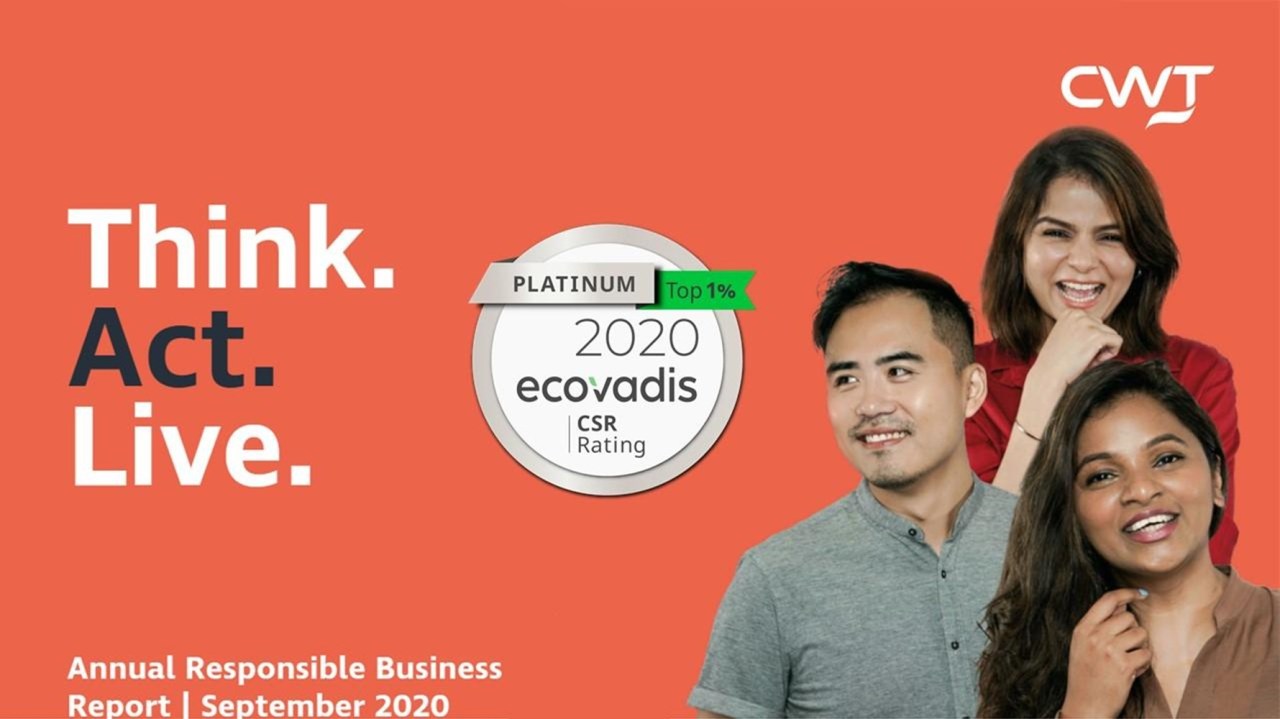
CWT’s eighth annual Responsible Business Report shows sustained momentum and continued recognition
CWT, the Business-to-Business-for-Employees (B2B4E) travel management platform, has today published its September 2020 Responsible Business Report, showing continued momentum, including being awarded the newly established EcoVadis Platinum sustainability rating and maintaining the United Nations (UN) Global Compact Advanced Level.
“Maintaining our leadership position takes commitment and hard work from our colleagues across the globe,” said CWT President & CEO, Kurt Ekert. “We are deadly serious in our intent and I am delighted to see that we continue to push the envelope.”
The report covers CWT’s main 2019 achievements in its seven Corporate Social Responsibility (CSR) areas: Ethics & Business Behavior; Human Resources and Human Rights; Environment; Responsible Products and Services; Community Involvement and Responsible Business Strategy and Governance.
Key highlights include actively:
- campaigning against human trafficking;
- organizing responsible and carbon-neutral internal meetings;
- reinforcing diversity & inclusion programs;
- increasing training levels for our code of conduct, non-discrimination & unconscious bias;
- engaging with multiple global and local community projects;
- restating UN Women’s Empowerment principles commitment; and
- reinforcing CWT’s responsible purchasing program.
View the full September 2020 CWT Responsible Business Report
Note to Editor:
Last month CWT announced the creation of ECO – short for Employee Wellbeing, Climate Impact and Organizational Performance – a new responsible travel consulting framework to help companies look beyond compliance and cost management, and build more balanced travel programs.
CWT is a leading global partner in business travel, meetings, and events. Operating across six continents, we deliver sustainable, tailored solutions that help organizations connect, engage, and thrive in an evolving world. Our myCWT platform integrates advanced technology with human expertise to simplify travel and enhance traveler and attendee experiences. Extensive global coverage, seamless data integration, AI-driven analytics, and carbon-conscious travel tools enable businesses to optimize their travel and meetings programs while delivering measurable value.
With 150 years of industry experience and a deep commitment to partnership, CWT collaborates with clients to shape the future of business travel and events, making them more efficient, responsible, and impactful.
-

Stronger together: A simple step for better mental health
The World Health Organization estimates that around one in four of us will be affected by a mental health disorder at some stage of our lives, while the World Economic Forum has noted that mental health disorders are on the rise in every country in the world. Worryingly, both of these observations were made before the current worldwide pandemic arose, which can only have exacerbated things. According to a survey by mental health charity Mind, more than half of adults and over two-thirds of young people said their mental health has become worse during periods of lockdown restrictions.
I am regularly reading that emotional distress is widespread as people grapple with diverse experiences such as anxiety, fear, and isolation brought about by the social dislocation with which we are all living.
So as we look at recognizing the issue this Saturday, on the 28th World Mental Health Day, we should realize that this is not a tick-the-box acknowledgment. It can be difficult to know what to do if you are worried about someone, but we can do many things for our families, friends and colleagues. And perhaps the easiest is one I can speak about from experience – I have seen first-hand the importance of not waiting and simply hoping that someone will reach out. Talking is often a good first step to take when you suspect someone is going through a hard time. And even if they are not, why not reach out to people and ask how they are and see if there is anything you can do to help. We may not be in a position to give advice, but aphorisms such as “a problem shared is a problem halved,” are based on success and handed down through the years – because they contain truth. Mental health is not a stigma – it is a reality of today’s world. So rather than make this a once a year initiative, keep your eyes and ears open, and gently reach out?
Image credits: Adobe Stock
-
Ready for Take-off: 2 mindset shifts for modern travel
The internet is awash with travel tips – roll your clothes to save space, change your money before you depart, and pack extra socks. Travel hacks published last year now read like old books found in a charity shop. Now, we’re hot washing clothes, using cards instead of cash, and packing extra face masks.
Over halfway through 2020, travelers are up-to-speed with practical tips but less so how to navigate matters of the mind. So what if you have packed your suitcase like a professional organizing consultant if your meeting is threatened by a potential local lockdown? Controlling what you can and focusing on what’s important can help you feel better about business travel in a time of transition, and even imbue your business trip with more purpose than ever before.
Certain as can be
“The only thing certain in life is uncertainty,” the saying goes; but psychologists will attest to the power of certainty. If one’s brain doesn’t know what’s around the corner, it can’t keep out of harm’s way; the lizard brain is on high alert, ready to pounce or scurry to safety. When the brain can’t assimilate a strange situation it goes into freeze, fight or flight mode. 2020 is the embodiment of that strange situation.
One way to instantly offset some of the work of scanning for threats – however subtle or low-level – is to book through your company’s travel program. “Duty of care has become top of mind for HR and travel teams,” says Belinda Hindmarsh, CWT’s VP Global Sales Effectiveness, “companies need to know now more than ever, where travelers are and need them to book within policy.”
Take comfort in adhering to any pre-trip approval processes, programs, and protocols that are all designed to prioritize your safety. That way, you’ll know you have taken the necessary precautions and can focus on a productive trip.
Travel with a mission
The pillars of international travel—open borders, open destinations, and visa-free travel—won’t return in the short term. Perhaps, the additional hurdles are what make your trip more meaningful? Indeed, Covid has reinforced the need for a human element in business.
Futurist Ben Hammersley believes that travel will take on a deeper meaning in a post-Covid future when many of us will have become used to remote collaboration and video conferencing. He told BA Highlife, “the very thing lacking, the very thing those of us who mourn the loss of our travel-centric lifestyles are concerned with, is not the ritualized meet and greet but the serendipitous discovery. Travel of any form will broaden the horizon, but business travel can make this a specific mission.” With that in mind, consider saving the technicalities and planning for remote meetings and use your trip to truly connect with clients and colleagues on a level we have all been missing.
Image credits: Adobe Stock
-
CWT M&E makes small meetings easy with new global direct booking platform
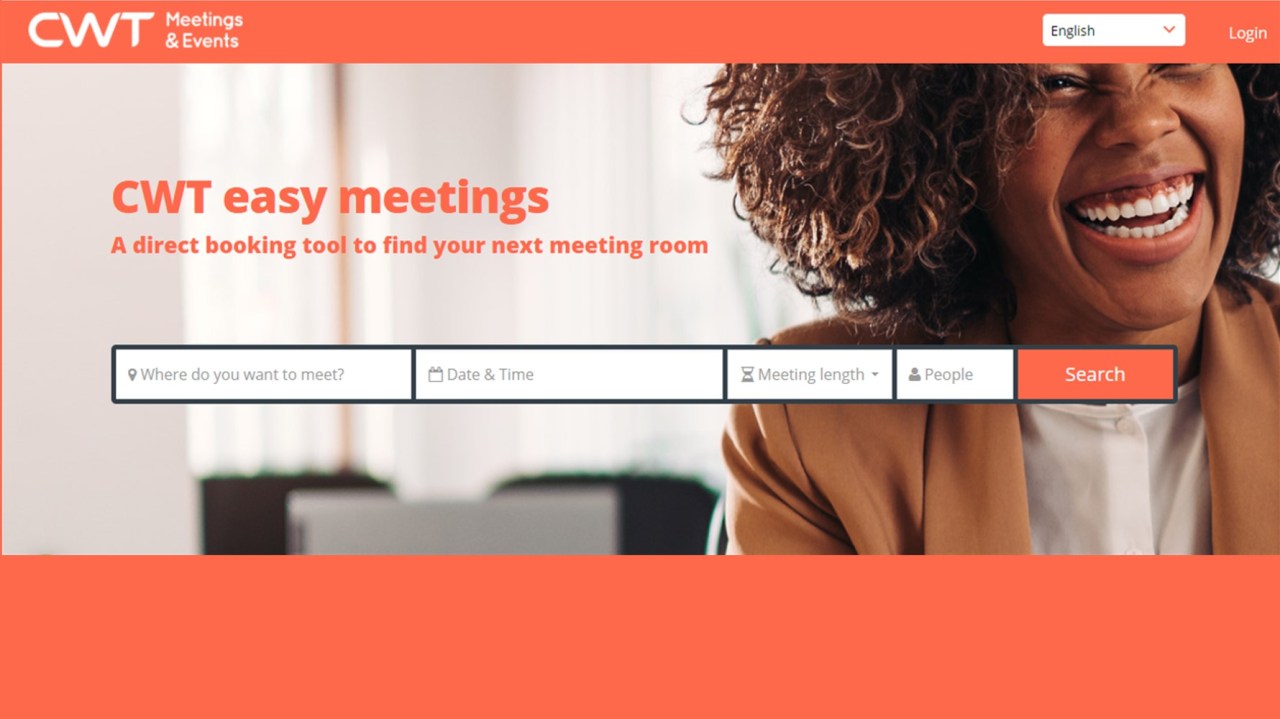
CWT Meetings & Events, the global M&E division of CWT, the B2B4E travel management platform, has launched CWT easy meetings, a direct-booking platform for small meetings. The platform gives meeting organizers access to over 250,000 meeting rooms in hotels (both independent and chain) as well as unique venues & event spaces in more than 90 countries.
A convenient one-stop-shop, CWT easy meetings enables meeting planners to source and book venues, AV equipment and food & beverage packages in minutes. It also provides companies with greater visibility and control over their small meetings so they can better manage costs, compliance, and employee safety and security.
“Before the pandemic, many of our clients spent up to 70% of their meetings and events budget on small meetings,” said Chris Bowen, Senior VP & Managing Director CWT Meetings & Events. “As the desire for real engagement grows and face-to-face business meetings gradually resume, we expect this figure to increase due to restrictions on group sizes and safe distancing requirements. Surprisingly however, most organizations still don’t have any standardized processes or solutions to manage small meetings, the way they do for large events or transient business travel.’
“With CWT easy meetings, we’re making the search and booking process simple and efficient for meeting organizers, eliminating the need for them to manually search for open and available venues. At the same time, we’re helping companies consolidate crucial information about their meetings spend and activities that will enable better cost control and risk management.”
The standard version of the platform, which is ideal for one-off meetings, is free for any meeting organizer to use and allows planners to easily search, compare and instantly book meetings. It is globally accessible via a website that is desktop, tablet and mobile-enabled, and is available in eight languages. Payments can be made using a credit card, virtual card, or lodge card, and bookings can be easily modified or cancelled through the platform.
CWT M&E will also be offering a customizable option for large companies looking to automate their meeting booking processes, while consolidating spend in one centralized hub. The look and feel of the platform can be tailored to match their own corporate branding. Organizations can upload pre-negotiated rates and unique venues that can only be accessed by their employees. Preferred venues and partners can be highlighted within the tool and made to appear at the top of the search results. Payment modes can also be configured so that users don’t have to enter this information every time they book. In terms of reporting and business intelligence, personalized dashboards and reports give full visibility of bookings made by the organization’s employees using the platform, and provide the ability to track bookings, cancellations, volumes and spend by supplier, user or meeting location.
Following a successful European customer pilot, CWT easy meetings, powered by MeetingPackage, is now available worldwide.
CWT is a leading global partner in business travel, meetings, and events. Operating across six continents, we deliver sustainable, tailored solutions that help organizations connect, engage, and thrive in an evolving world. Our myCWT platform integrates advanced technology with human expertise to simplify travel and enhance traveler and attendee experiences. Extensive global coverage, seamless data integration, AI-driven analytics, and carbon-conscious travel tools enable businesses to optimize their travel and meetings programs while delivering measurable value.
With 150 years of industry experience and a deep commitment to partnership, CWT collaborates with clients to shape the future of business travel and events, making them more efficient, responsible, and impactful.
CWT Meetings & Events
CWT Meetings & Events (M&E) is an award-winning global corporate events management service. Representing all industry sectors, CWT M&E delivers comprehensive live, virtual and hybrid event solutions for thousands of customers every year. Ranging from end to end productions of some of the world’s largest and complex global conferences, through to intimate national teambuilding experiences.
Follow us on LinkedIn, Facebook and Twitter.MeetingPackage
Founded in 2014, MeetingPackage is a meeting space booking platform designed for Meeting Planners and Meeting Venues. The company integrates with venues’ existing PMS, S&C and back-office solutions while delivering products to all customer facing channels. Products include a Venue & Sales Management platform, an online Booking Engine for venues own channels and a Meetings & Events specific Distribution Network.